Vietnam’s live hog market is still sliding, with five localities now trading at 50,000 dong per kilogram and the national range compressed to 50,000-53,000 dong, a signal that pork supply remains ample while producers face thinner margins.
Vietnam hog prices fall to 50,000 dong per kg
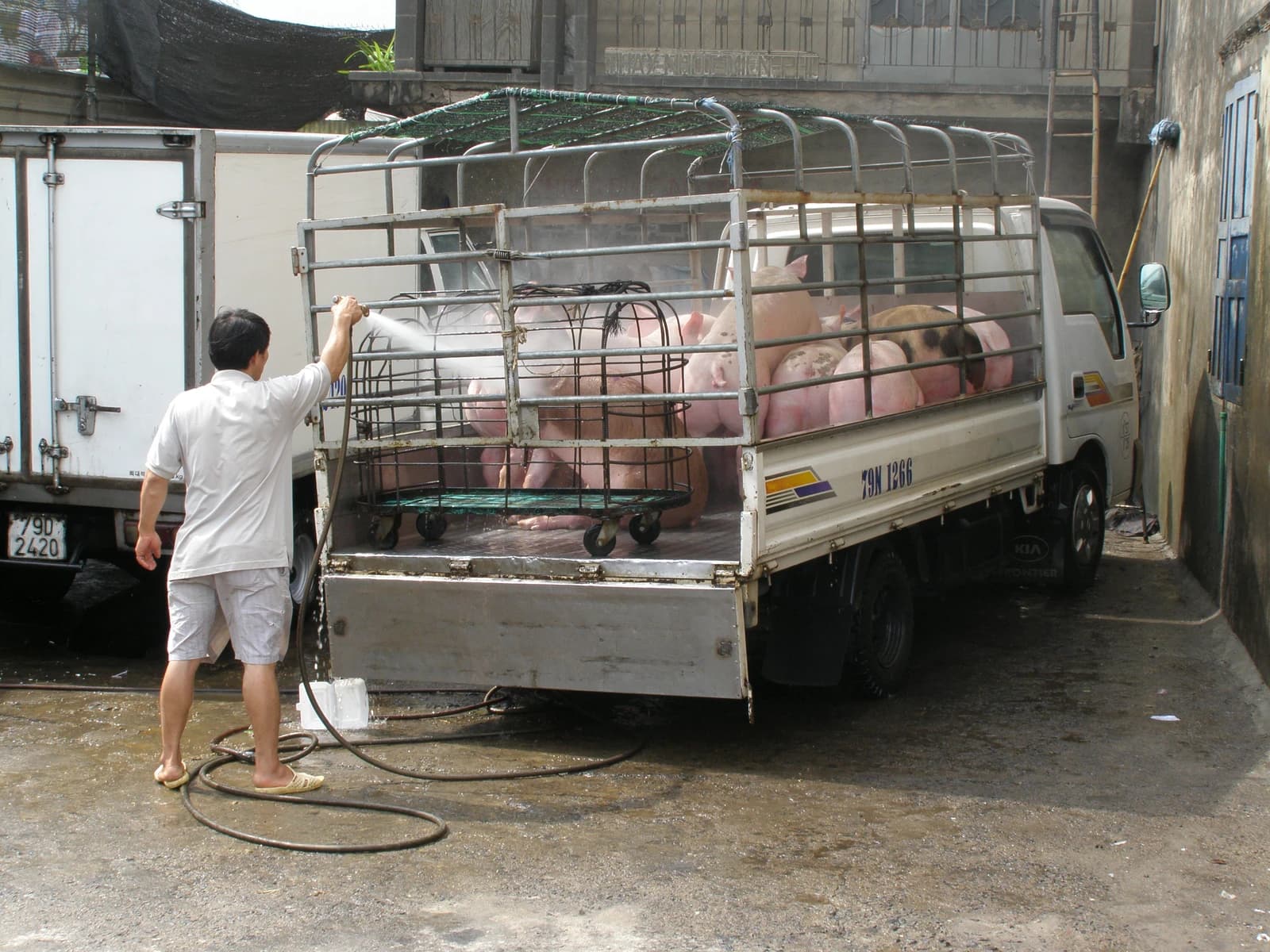
That matters because hog prices set the tone for one of Vietnam’s most important food chains. When farmgate prices keep easing across all three regions, slaughterhouses, traders and feed suppliers all feel the squeeze, while pig farmers lose pricing power just as input costs and financing burdens remain elevated.
The latest move was broad-based. In the north, six provinces, including Tuyen Quang, Cao Bang, Thai Nguyen, Ninh Binh, Dien Bien and Phu Tho, each fell 1,000 dong a kilogram, narrowing the regional trading band to 51,000-52,000 dong. Dien Bien, Cao Bang and Thai Nguyen have now dropped out of the 53,000 dong tier entirely.
In central Vietnam and the Central Highlands, prices also weakened in Thanh Hoa, Quang Tri, Hue and Da Nang, with Da Nang slipping to 50,000 dong and expanding the number of low-price localities to four. Lâm Đồng remained the top of the region at 53,000 dong, but the broader market there is now clustered between 50,000 and 53,000 dong.
The south was no different. Vinh Long, Ca Mau and Dong Thap all eased by 1,000 dong, with Vinh Long falling to 50,000 dong. The strongest quotes in the region remain at 53,000 dong in Dong Nai, Tay Ninh and Ho Chi Minh City, but most other southern provinces are sitting at 51,000 dong.
For investors, the important read-through is not the one-day price change. It is the direction of the cycle. A softer hog market can support processors and retailers if retail prices stay firm, but it is a negative for producers with weak balance sheets and a warning sign for agri-business earnings that depend on stable livestock margins. It also raises the odds of industry calls for policy support if feed, energy and logistics costs remain sticky.
That is why the current weakness deserves attention beyond Vietnam. In a region where protein demand is growing, a persistent farmgate decline usually ends one of two ways: a supply response that eventually tightens the market, or a period of margin stress that forces consolidation among smaller breeders. Either outcome creates opportunity for better-capitalized operators, while smaller farms remain vulnerable.
The market is underestimating how quickly this can become an earnings story. If hog prices hold near the 50,000 dong floor while consumer pricing stays elevated, integrated processors and larger livestock groups can defend margins. But if farmgate weakness spreads further, the pressure shifts to producers first — and to the broader meat supply chain next.
| Entity | Gains | Losses |
|---|---|---|
| Consumers | ▲Lower pork prices | ▼None in the near term |
| Large integrated meat producers | ▲Better margin discipline | ▼Smaller upside from higher farmgate prices |
| Pig farmers | ▲None | ▼Lower selling prices |
| Feed and input suppliers | ▲Potentially steadier volumes | ▼Weaker sector profitability |