Bengkulu’s export story in 2026 is still being written by coal and rubber, with the Indonesian province shipping most of its non-oil and gas goods to India, Pakistan and Bangladesh even as India trims coal imports on stronger domestic production.
Bengkulu Exports Depend on Coal Shipments to India
Coal
That matters because the figures show a small regional economy remaining highly dependent on a narrow commodity base and on Asian buyers that are themselves changing their energy mix and import behavior. For investors and traders, it points to a trade flow that is still intact for now, but increasingly exposed to volatility in coal demand, freight costs and policy shifts in the region.
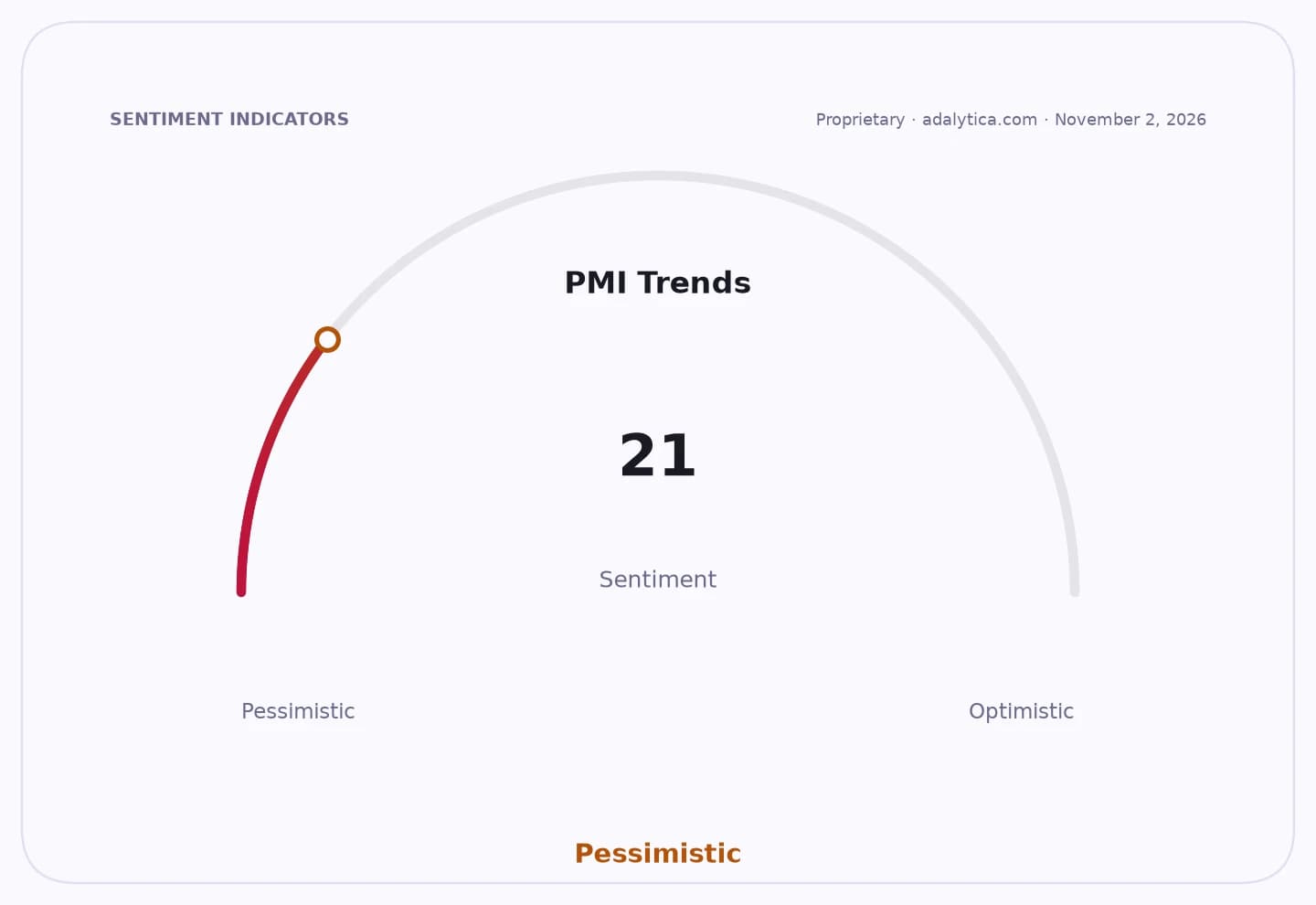
Sentiment Indicators
Indonesia’s statistics agency said Bengkulu’s non-oil and gas exports reached $64.61 million in January-September 2026, with India the top destination at $26 million, followed by Pakistan at $9.32 million and Bangladesh at $9.10 million. The three countries accounted for 68.74% of the province’s non-oil and gas exports. Coal made up the bulk of shipments to India, worth $25.34 million or 97.48% of exports to that market, while the remainder was rubber. Exports to Pakistan and Bangladesh were entirely coal.
The concentration underscores both the strength and the fragility of Bengkulu’s external accounts. On one hand, the province is successfully plugging into large South Asian demand centers, helping it post a trade surplus of $64.61 million over the period, with no imports recorded in September. On the other, its export base is unusually reliant on a single commodity and a handful of overseas buyers, leaving local earnings vulnerable if coal demand softens or rubber prices weaken.
That risk is not theoretical. India, the main customer, has been lifting domestic coal production and cutting imports for blending at power plants, a shift that can eventually pressure seaborne demand across Asia. A broader regional backdrop of fluctuating oil prices and cautious coal sentiment also suggests exporters may face a choppier market even if near-term volumes hold up.
The logistics picture also shows how dependent Bengkulu remains on a single export corridor. Pulau Baai port handled 95.04% of September shipments, or $8.9 million, reinforcing its role as the province’s main gateway to overseas markets. Any disruption at that port would quickly ripple through local trade and revenue.
For investors, the takeaway is twofold: coal continues to anchor cash flow for Indonesian regional exporters, but the durability of that income stream will depend on whether Asian buyers keep absorbing imports at current levels. The comparison with India’s rising domestic output suggests the market is not tightening evenly, and exporters with limited product diversification may be the first to feel any slowdown.
If coal demand from India and neighboring markets stays resilient, Bengkulu’s surplus can remain supported. If not, the province’s reliance on one commodity and a few destinations will turn from a strength into a constraint.
| Entity | Gains | Losses |
|---|---|---|
| Bengkulu exporters | ▲Surplus and hard-currency inflows | ▼Commodity concentration risk |
| India, Pakistan, Bangladesh | ▲Reliable coal supply | ▼Import dependence exposure |
| Pulau Baai port | ▲Higher throughput | ▼Bottleneck risk |
| Coal importers elsewhere in Asia | ▲— | ▼Potentially weaker demand if regional coal trade eases |