The yen’s grip on global carry trades is slipping, and that is pushing investors toward the Swiss franc and Swedish krona as the next low-cost funding currencies.
Yen Weakens as Carry Trade Funding Currency

That matters because carry trades are built on leverage, cheap borrowing and stability. When the funding currency strengthens, the economics of the trade deteriorate fast. Japan’s intervention to support the yen, combined with rising Japanese bond yields and a clear policy drift toward a stronger currency, has made the yen less dependable as the funding leg for high-yield bets in places such as Australia and elsewhere in the G10.
Sentiment IndicatorsⓘProprietary · adalytica.com · September 19, 2026
This is a snapshot — live sentiment, awareness and momentum for 130+ markets update continuously in the dashboard.Open AlphaPulse
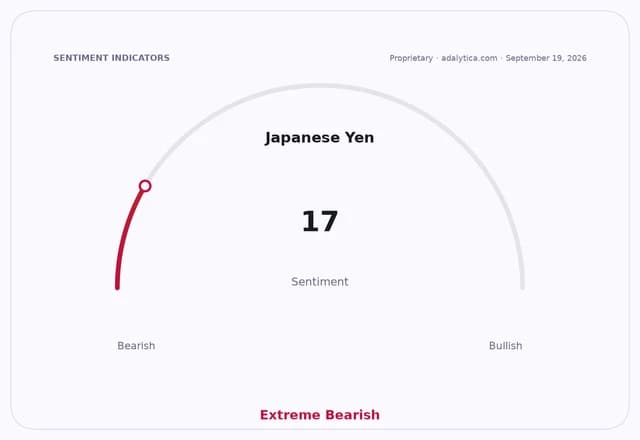
The market is already showing the strain. Selling yen to buy the Australian dollar, the highest-yielding G10 currency, has lost 1.3% since July after gaining 9% in the first half of the year. By contrast, financing with Swiss francs has delivered a 14% gain this year, underscoring why money managers are rethinking the old playbook.
Russell Investments and Allianz Global Investors are leaning toward the franc, while JPMorgan’s currency strategists favor the Swedish krona and the Canadian dollar as alternatives. The logic is straightforward: Japan has signaled that it wants a stronger currency and higher rates, while Switzerland has signaled the opposite, keeping policy at zero until the end of 2027 and appearing willing to tolerate franc weakness to protect exporters.
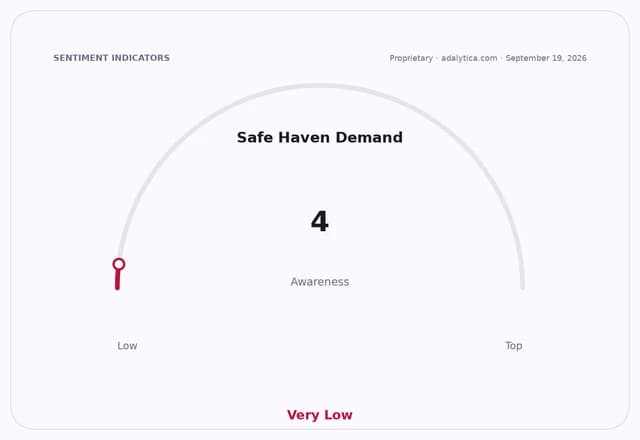
For investors, this is more than a currency footnote. A shift in the preferred funding currency changes the return profile across a wide range of cross-asset trades, from equities and bonds to emerging markets and commodity currencies. It also lifts the appeal of safe-haven currencies during periods of geopolitical stress, because the franc tends to rally when risk appetite fades.
That makes the franc a potentially powerful secular beneficiary, even if the yen remains more liquid. Liquidity still gives the yen an edge in crowded markets, but the direction of policy and valuation now matter more than habit. The recent 3% monthly gain in the yen and the doubling of Japan’s two-year yield this year show that the old funding machine is being rewired.
The Swedish krona also deserves attention, even if it is more cyclical. It remains the weakest G10 currency versus both the dollar and the euro this year, and that weakness is exactly why it can still work as a funding currency when global rates are rising. JPMorgan argues it is among the most vulnerable to higher global yields because of its low carry and sensitivity to growth.
Our thesis is simple: the market underestimates how disruptive this funding-currency rotation can be. If the yen no longer provides the cleanest source of cheap capital, then the next opportunity is not to chase the old trade — it is to own the currencies and assets that benefit from the rerouting of leverage. That favors the Swiss franc as a relative safe haven and selective exposure to high-yielding currencies that still offer positive carry.
The key catalyst now is whether Japan keeps pressing for a stronger yen while European political risk, including French and Italian elections next year, fuels demand for havens. If that happens, the franc could move from backup role to central funding alternative, and that shift would ripple through every major carry trade on the market.
| Entity | Gains | Losses |
|---|---|---|
| Swiss franc | ▲Becomes preferred funding currency | ▼Faces stronger safe-haven demand swings |
| Swedish krona | ▲Attracts carry-trade funding flows | ▼Remains weak and rate-sensitive |
| Japanese yen | ▲Gains from intervention and higher yields | ▼Loses status as dominant funding currency |
| High-yield currencies | ▲Benefit from renewed carry demand | ▼Hurt if funding costs rise |