Energy investors who bought the sector for dividends and valuation are being reminded that the real driver is still the commodity tape, and right now that tape looks a lot better for producers than it did a few months ago.
XLE Holds Above Key Averages as Oil Rises

Oil is back above $107 a barrel, U.S. 10-year Treasury yields are near 5%, and the Energy Select Sector SPDR Fund, or XLE, has surged to the low $60s after a powerful run from below $45 late last year. For long-term investors, that matters because it changes the math on the old “cheap value” argument: when crude rises and rates stay elevated, the cash flow behind those dividends can improve fast enough to keep share prices supported, even after a big rally.
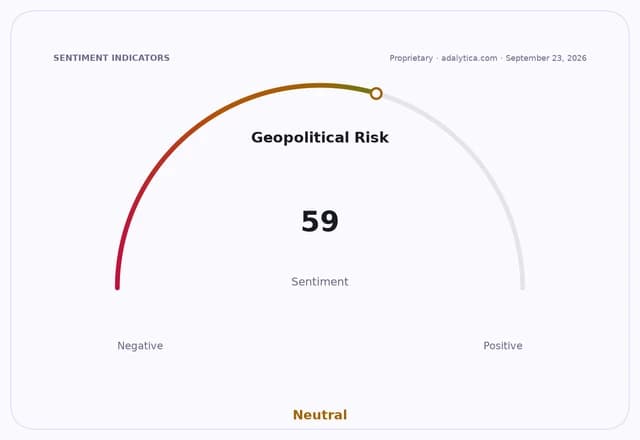
Sentiment IndicatorsⓘProprietary · adalytica.com · September 23, 2026
This is a snapshot — live sentiment, awareness and momentum for 130+ markets update continuously in the dashboard.Open AlphaPulse

XLE closed at $62.46 on Sept. 21, still above its 50-day moving average of $60.97 and well above its 200-day average of $55.08. That tells you the sector’s uptrend remains intact even after a pullback from its Sept. 15 peak near $65.54. The fund’s RSI has cooled to 44.4 from overbought levels above 70 earlier in the month, which is a reminder that energy stocks can pause without necessarily breaking the longer-term trend.
The bigger story is fundamental. West Texas Intermediate crude has climbed from about $101.27 on Sept. 11 to a forecast $107.82 on Sept. 16, as geopolitical tension keeps traders focused on supply risk. At the same time, the 10-year Treasury yield has moved to roughly 4.96%, a level that keeps pressure on most dividend stocks but can still leave integrated oil companies looking attractive because their payouts are backed by free cash flow rather than bond proxies.
That is where the value debate gets interesting. If you owned energy for income, you once had to argue that the sector was cheap because the dividend was high and valuations were low. Now investors have to ask whether the stocks are still cheap after oil’s move and the sector’s own rally. In many cases, the answer is not that they are as dirt-cheap as they were, but that they may still be reasonably valued if crude stays firm and capital discipline holds. Companies like ConocoPhillips and Exxon Mobil have continued to emphasize returns to shareholders through buybacks and dividends, which supports the case for owning the group over a multi-year horizon.
There is also a broader macro angle. Global energy security is getting more important, not less, as Southeast Asia and other fast-growing regions work to diversify supply amid shipping disruptions and geopolitical strain. That tends to favor producers, LNG exporters, and the infrastructure names that can help move molecules when supply chains get messy. It also helps explain why energy shares can stay bid even when the market worries about growth.
For investors, the takeaway is straightforward: energy is no longer just a “cheap dividend” story. It is a cash-flow and geopolitics story, and those can last longer than the market expects. If you think in years rather than weeks, the sector still deserves a place on your watchlist — especially if you want income with a built-in inflation hedge and the potential for another leg higher if crude stays elevated.
| Entity | Gains | Losses |
|---|---|---|
| XLE holders | ▲higher cash flow support | ▼less bargain appeal |
| Oil producers | ▲stronger realized prices | ▼consumer demand pressure |
| Bond proxies | ▲little near-term help | ▼higher-rate competition |
| Consumers/importers | ▲— | ▼higher fuel and input costs |