Wheat futures slipped as traders cut bullish positions, even as China’s rapidly rising purchases of Russian grain are reshaping global trade flows and keeping the market alert to where the next supply shock could emerge.
Wheat Futures Slip as China Buys More Russian Grain
The immediate price action looks like a classic position-clearing move: the U.S.-listed WEAT proxy fell to $25.86 on Sept. 18 from $26.55 two sessions earlier, with the RSI dropping to 28.9, a level that points to short-term oversold conditions after a sharp run-up. But the bigger story is not the one-day decline. It is the way geopolitical buying patterns are redirecting demand toward Russia and away from the routes and origins the market has historically leaned on, forcing funds to reassess how much upside is already priced in.
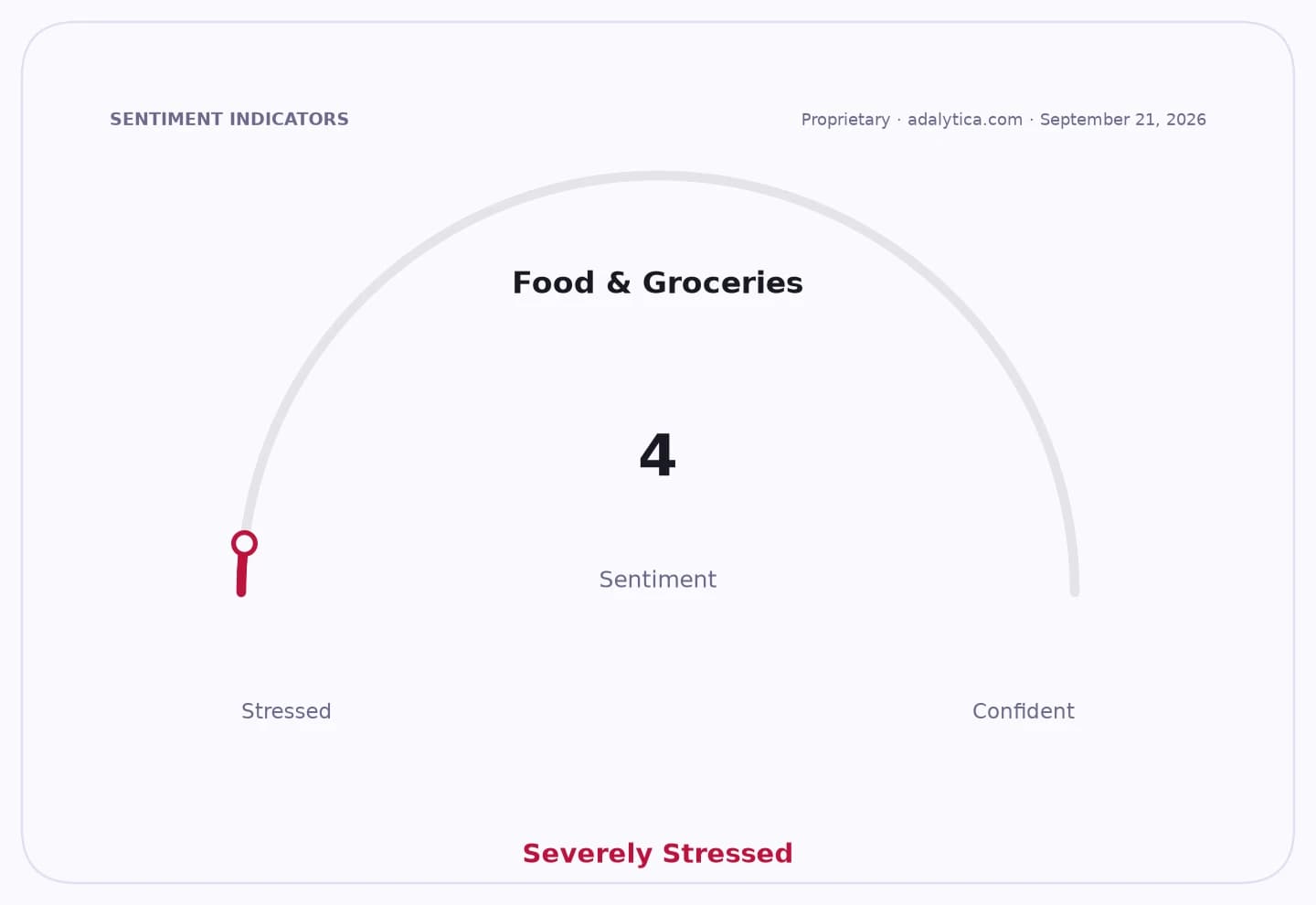
Sentiment IndicatorsⓘProprietary · adalytica.com · September 21, 2026
This is a snapshot — live sentiment, awareness and momentum for 130+ markets update continuously in the dashboard.Open AlphaPulse
China has sharply increased wheat imports from Russia, with purchases reportedly surging sevenfold in recent months. That matters because China is not just another buyer: it is the world’s largest grain consumer and a swing force in global agricultural demand. When Beijing shifts sourcing, it changes freight flows, export premiums and the bargaining power of competing exporters such as the U.S., Canada and Australia. For the wheat market, that means the old playbook — betting purely on crop weather and Black Sea headlines — is giving way to a more structural trade reordering.
Investors should care because wheat is becoming less of a simple harvest story and more of a geopolitics-and-inventory story. If China keeps leaning on Russian supply, Russia gains pricing leverage and scale, while other exporters may be forced to compete harder on discounts or logistics. That can pressure margins across the grain complex even when benchmark prices remain firm. It also raises the odds of periodic bursts of volatility as buyers front-run policy shifts, shipment constraints or any renewed disruption in the Black Sea corridor.
The market is already showing signs of a tug-of-war between trend and exhaustion. WEAT still trades above its 200-day moving average, which suggests the broader uptrend has not broken, but the pullback from the recent high near $26.96 shows traders are unwilling to chase after the latest rally. In other words, the market is pausing, not capitulating. That is often where the next move is set by fundamentals rather than momentum.
For investors, that creates a selective opportunity. Grain prices may not explode higher on every headline, but the structural beneficiaries of persistent trade fragmentation remain the same: farmers with exportable surplus, logistics networks tied to global grain movement, and commodity exposures that can capture volatility rather than fight it. The losers are the traditional sellers who depend on smooth, centralized trade routes and stable buyer relationships.
The next catalyst is whether China’s Russian buying proves temporary replenishment or a durable sourcing shift. If it is the latter, wheat’s volatility may stay elevated longer than the market expects — and that favors disciplined, tactical exposure rather than complacent short positioning. In this market, the real trade is not just wheat prices. It is the rerouting of global food power.
| Entity | Gains | Losses |
|---|---|---|
| Russia | ▲Larger export share | ▼Less pricing pressure |
| China | ▲Supply diversification | ▼Less reliance on one source |
| U.S./other exporters | ▲Higher competition | ▼Lost market share |
| Wheat bulls | ▲Volatility opportunities | ▼Overcrowded longs |