Volkswagen has slashed its profit outlook for 2026 after a roughly 10 billion-euro hit from a Porsche write-down, a worsening China business and restructuring costs underscored how the carmaker is being squeezed by weaker demand in its biggest market and a more hostile global trade environment.
Volkswagen cuts 2026 profit outlook after Porsche write-down

The downgrade matters because it shows the German auto industry’s transition is becoming a margin problem, not just a technology challenge. Volkswagen now expects operating margin to be no more than 1%, down from a prior forecast of 4% to 5.5%, while still guiding for about 315 billion euros in revenue. That compares with an operating margin of 2.8% last year and suggests the group is struggling to protect earnings even as sales hold near previous expectations.
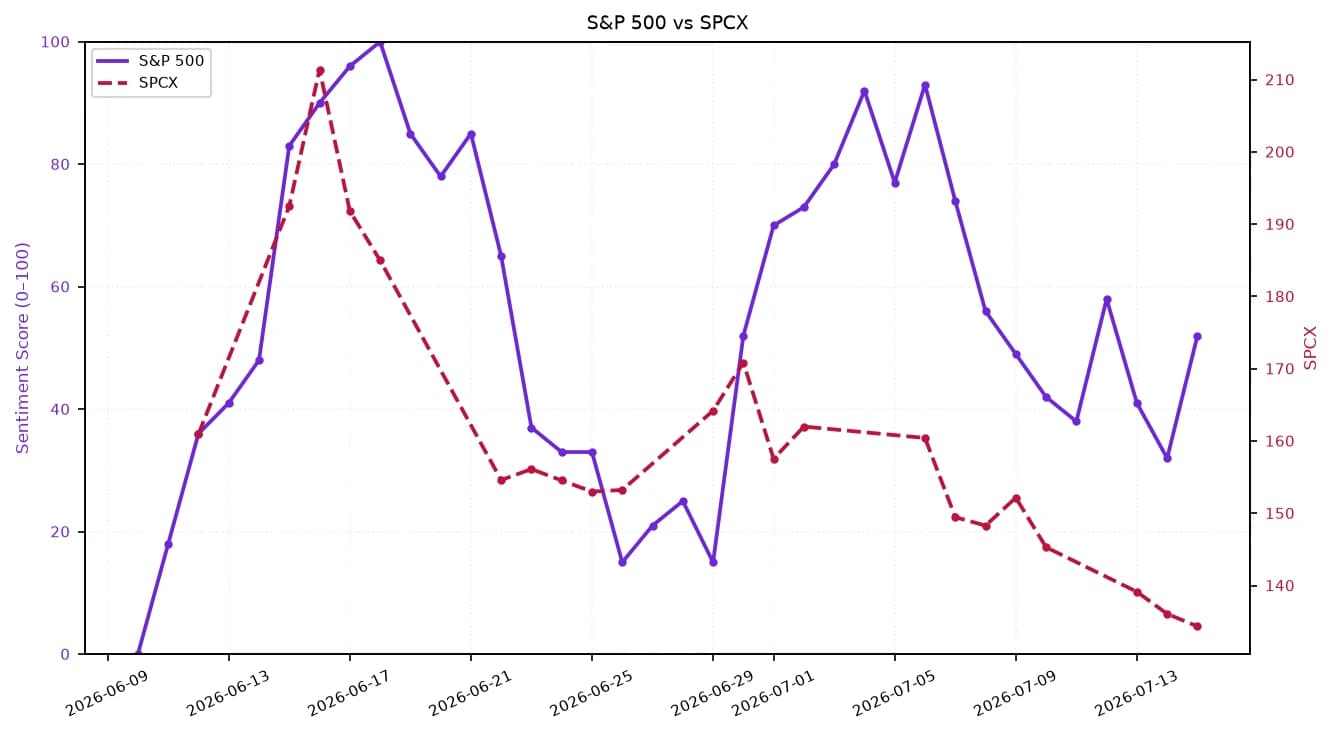
Sentiment IndicatorsⓘProprietary · adalytica.com · September 21, 2026
This is a snapshot — live sentiment, awareness and momentum for 130+ markets update continuously in the dashboard.Open AlphaPulse

At the center of the disappointment is Porsche, once one of Volkswagen’s most profitable assets and now its biggest drag. VW said the long-term valuation of its Porsche stake has been marked down by 10% to 15%, creating a 6 billion-euro charge at the group level. The sportscar maker has been hit by a faltering shift to electric vehicles, with some models discontinued after early demand faded. For investors, that is a warning that premium brands are not immune to the same EV economics pressuring the broader industry: higher battery costs, weaker pricing power and a harder path to scale.
China is the other major fault line. Volkswagen said the world’s largest auto market has fallen by about 20%, a brutal contraction for a company that has long relied on the country for growth and profits. The problem is not just cyclical. Chinese rivals are exporting aggressively into Europe at low prices, while Volkswagen’s own EV push in the region has struggled to match local competition. That combination raises the risk that Europe’s incumbent manufacturers lose share at home while their historical profit engine in China keeps eroding.
The group also flagged added restructuring expenses, including expanded early-retirement offers and the planned sale of its Osnabrück plant, which together will weigh on second-half results by about 2 billion euros. Beyond company-specific execution issues, Volkswagen said the geopolitical backdrop remains unsettled, pointing to the Middle East and to U.S. tariffs, which are still set at 15% under the current EU-U.S. arrangement but could rise if trade tensions intensify.
For shareholders, the message is that Volkswagen’s earnings recovery depends on several moving parts breaking the right way at once: Porsche stabilizing, China improving, tariff risk contained and EV demand supporting volumes without destroying margins. The stock and its peers are likely to remain highly sensitive to any sign that price competition in China is easing or that cost cuts are finally catching up with the EV transition. Until then, the group’s lower profit bar suggests Europe’s auto sector is still paying the price for a strategic reset that is proving slower and more expensive than planned.
| Entity | Gains | Losses |
|---|---|---|
| Chinese EV makers | ▲Export share | ▼VW and German rivals |
| Porsche investors | ▲— | ▼Write-down risk |
| Volkswagen cost cutters | ▲Margin discipline | ▼Near-term earnings |
| Consumers in Europe | ▲Lower-priced EVs | ▼Incumbent auto profits |