The United Nations rights chief warned that artificial intelligence is being concentrated in the hands of a few technology companies, arguing that the imbalance is creating a democratic deficit that could shape markets, regulation and civil liberties for years to come.
UN warns on AI concentration in big tech
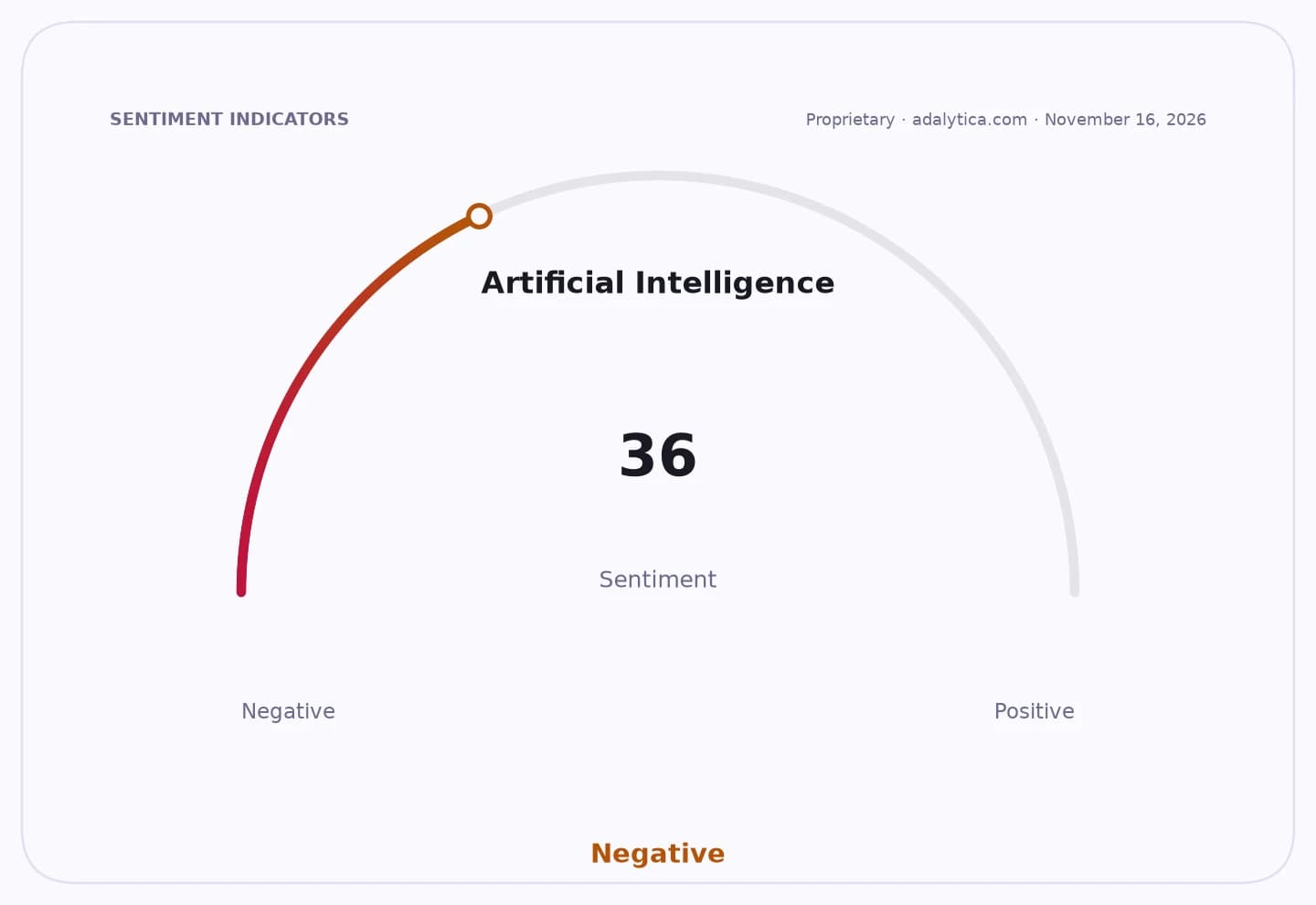
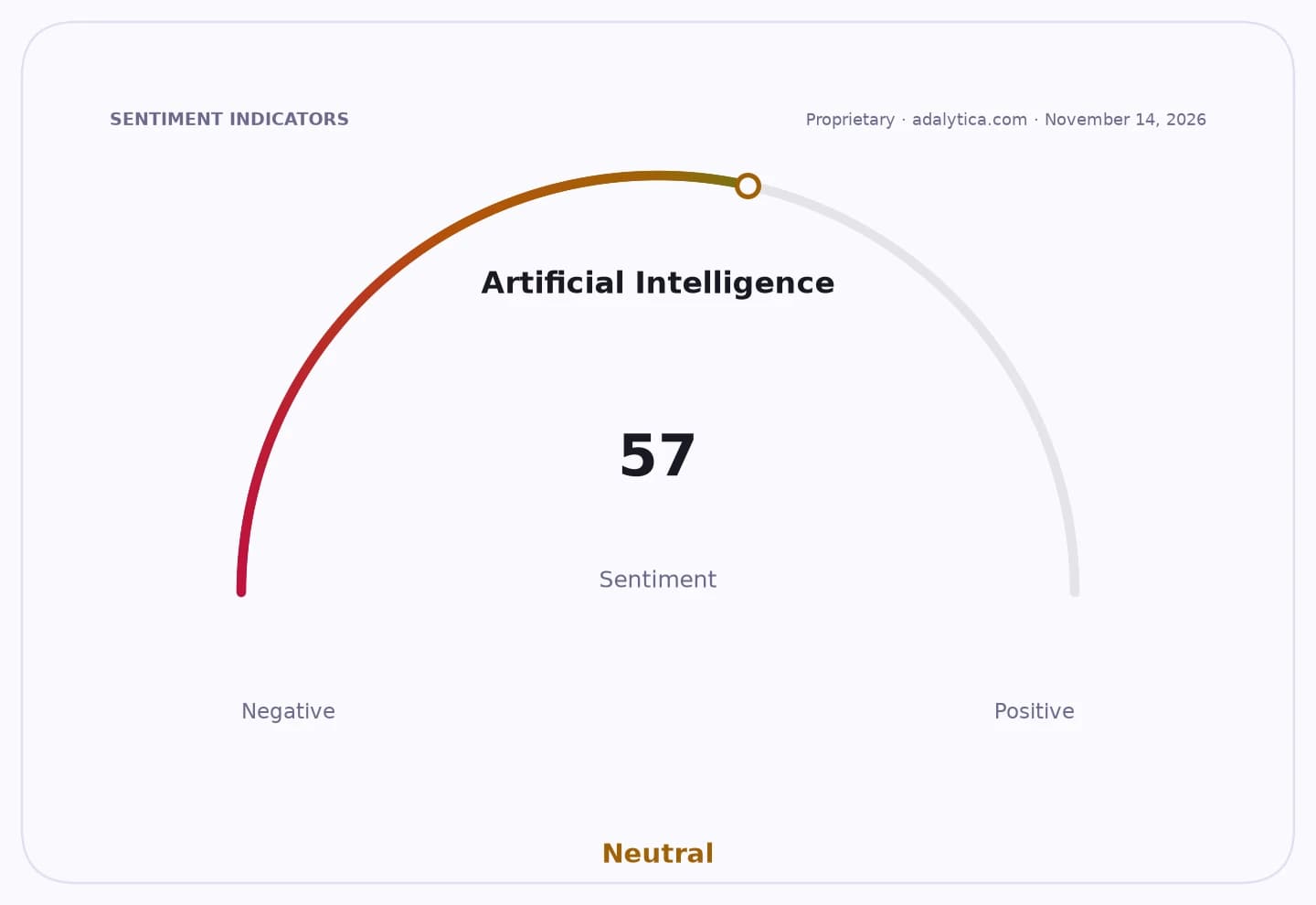
Artificial Intelligence
Volker Turk, the UN high commissioner for human rights, said in Geneva that five technology companies control more than 70% of global AI computing capacity, leaving “virtually no checks, no balances, no participation, and no accountability” around the systems increasingly influencing public debate, infrastructure and individual decisions.
Sentiment Indicators
His comments matter because AI has moved from a software story to an infrastructure story. Whoever controls chips, cloud capacity, data and model distribution controls the bottlenecks of the next industrial platform. That concentration has direct economic consequences: it raises barriers to entry for smaller developers, strengthens pricing power for the biggest cloud and semiconductor firms, and increases the policy risk that governments eventually move to curb market power in AI.
The remarks also land at a sensitive moment for investors. The AI trade has already been driven by a small group of companies tied to the buildout of computing capacity, and the debate is shifting from how fast demand grows to who captures the value. A more interventionist regulatory backdrop could affect capital spending, partnerships, model access and the economics of scaling frontier AI. For chipmakers and cloud providers, that concentration is a source of revenue and leverage; for smaller software firms and independent model developers, it is a competitive constraint.
Turk framed the problem as one of governance as much as technology, saying AI is increasingly shaping people’s lives, often without their knowledge, and can distort public debate in subtle ways. He also warned that biased algorithms could reproduce injustice at scale and that critical infrastructure from transport to food and healthcare is becoming more digitised, raising questions about resilience if AI systems are misused or fail.
The UN rights chief called for rights-centred regulation and said he had written to frontier AI companies urging stronger safeguards. His comparison of AI oversight to milk production underscored his point that a technology with systemic risks should not be left to voluntary standards alone. The message to markets is clear: the next phase of AI growth may be defined not only by compute demand and earnings growth, but by antitrust scrutiny, compliance costs and the political push for broader access to the infrastructure underpinning the industry.
| Entity | Gains | Losses |
|---|---|---|
| Big tech AI leaders | ▲More control over compute and data | ▼Greater scrutiny and regulation |
| Small AI startups | ▲Potential calls for fairer access | ▼Higher barriers to scale |
| Governments / regulators | ▲Stronger mandate for oversight | ▼Pressure to act faster |
| End users / civil society | ▲Better rights protections if rules tighten | ▼Less benefit if innovation slows |