An AI answer that reads like legal advice is becoming a bigger business risk because the law still does not treat the software like a licensed professional, and that gap is widening just as companies rush to monetize AI-powered assistants.
AI Legal Advice Risk Rises for Microsoft, Alphabet
The core issue is not whether large language models can draft a convincing contract clause or a polished response. It is who pays when the output is wrong. In the Romanian legal commentary surfaced here, the distinction is blunt: a tool that looks like legal advice does not come with the guarantees of a legal service, because it cannot hold a license, carry professional responsibility insurance, or be disciplined the way an attorney can.
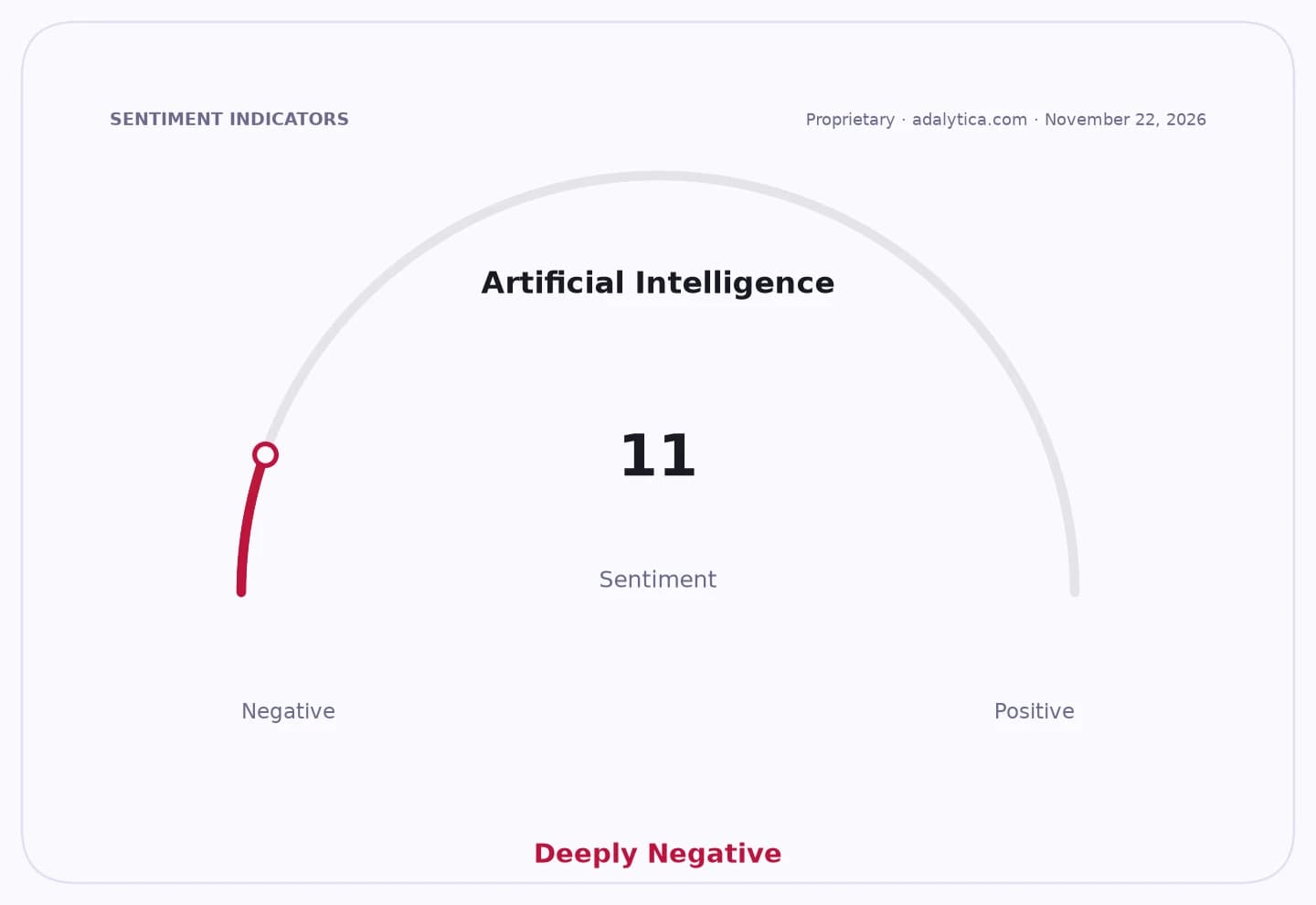
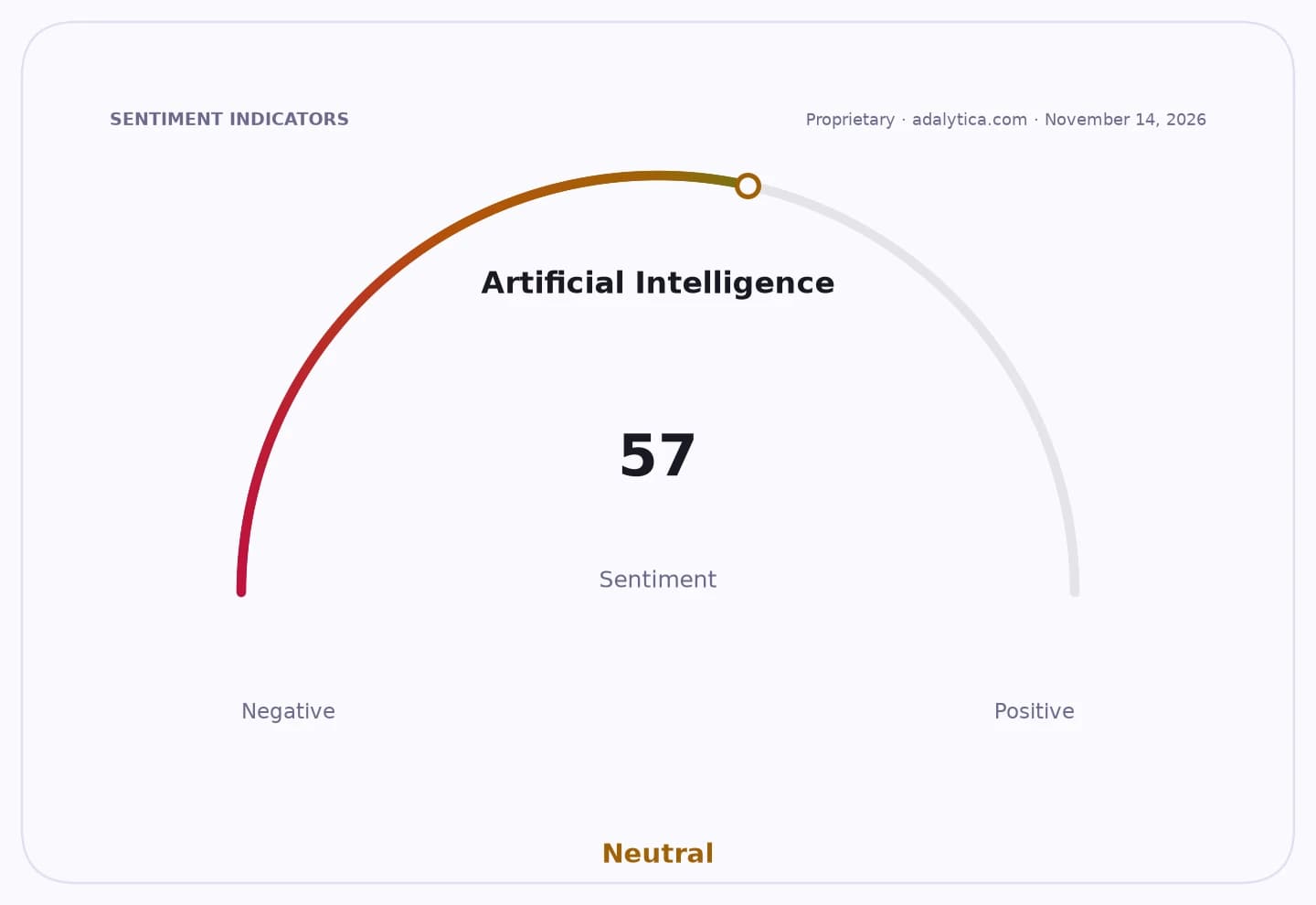
Sentiment Indicators
That matters economically because the AI industry is moving from novelty to regulated utility. Once a system is marketed as “instant legal consulting” or “AI lawyer,” the commercial promise can collide with consumer protection law, professional-services rules and product-liability risk. If a user suffers a loss, the burden shifts back to the vendor, the deployer or the platform operator — not the model itself. For investors, that raises the cost of capital for AI applications that touch advice, compliance, healthcare and finance, where a bad output can become an expensive claim.
The market is already pricing some of that risk into the biggest names in AI infrastructure. Microsoft has been hammered in recent sessions, with the stock down to $523.88 from a recent high above $555 and short-term technical readings weakening, including RSI at 46.9, while its earnings sentiment on Adalytica has fallen to “Extreme Fear.” Nvidia has taken an even sharper hit, sliding to $162.85 after a brutal selloff that pushed its RSI to 19.1, signaling an oversold market but also a swift de-rating in risk appetite. Alphabet, meanwhile, has slipped to $295.77, below its 200-day average, as investors reassess the legal and regulatory burden tied to AI deployment.
Artificial Intelligence — 30-day sentimentadalytica.com
Explore this data interactively — full history, time series and cross-market comparisons.
The pressure is not just coming from sentiment. In its latest filings, Google warned that deploying AI systems and agents could expose it to competitive harm, regulatory action, legal liability and brand damage. Adobe has made similar disclosures about AI-related reputational harm, liability and uneven regulation across jurisdictions. Nvidia has flagged growing compliance burdens tied to export controls and restrictions on frontier AI hardware. Those are not boilerplate risks anymore; they are the edge of the investable problem.
The economic logic is straightforward. AI infrastructure remains a secular capex boom, but the next phase of the cycle will not reward raw model capability alone. It will reward the companies that can wrap AI in indemnities, audit trails, human oversight, insurance coverage and regulated workflows. That shifts the opportunity set toward the “picks-and-shovels” of trusted enterprise software, cybersecurity, compliance tooling, identity verification and document-management platforms — businesses that make AI usable in courtrooms, boardrooms and regulated industries.
My view is that the market underestimates how quickly this liability debate becomes a margin issue. If AI is sold as a substitute for professional judgment, the provider inherits some of the economics of the profession without having the same legal shield. That is where pricing power can disappear and legal reserves can appear. The winners will be the firms that position AI as an assistant, not a replacement, and build products that preserve human sign-off.
For investors, the takeaway is clear: stay bullish on AI infrastructure, but be selective on AI applications that imply regulated advice. The next multibagger opportunities are likely to sit in compliance, verification and enterprise workflow software — not in tools that promise legal judgment without legal accountability.
| Entity | Gains | Losses |
|---|---|---|
| Compliance software providers | ▲Higher demand | ▼None |
| Microsoft | ▲Copilot adoption if controlled | ▼Liability and trust risk |
| Alphabet | ▲Enterprise AI monetization if governed | ▼Regulatory and legal exposure |
| Nvidia | ▲AI capex cycle | ▼Sentiment if AI risk broadens |