Russia fired 400 drones and 110 missiles at Ukraine in one of the war’s biggest attacks to date, killing at least eight people and deepening the strain on civilian infrastructure and emergency services.
Ukraine drone and missile barrage raises market risk
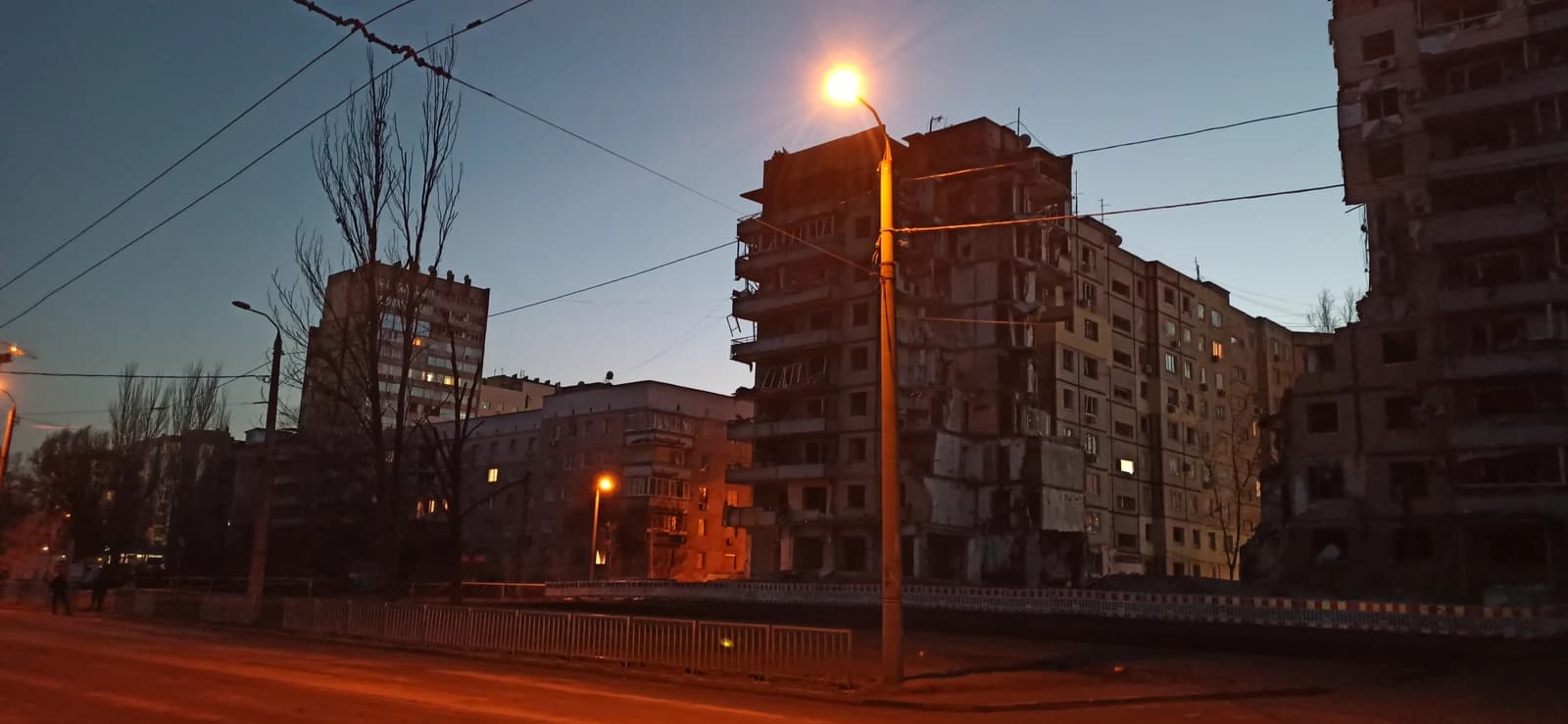
The scale and timing of the barrage matter because they point to a conflict that is becoming more destructive, more dispersed and harder to defend against. President Volodymyr Zelenskiy said Russia used “fragmentation warheads,” an allegation that, if confirmed, would add to concerns about the targeting of civilians and the use of munitions banned by more than 100 countries under the Convention on Cluster Munitions. Russia is not a signatory, nor is the United States.
Sentiment Indicators
Geopolitical Risk
Zelenskiy said the assault hit “absolutely all targets” that were ordinary civilian infrastructure, including in Kyiv, where six people were killed, three bridges were damaged and total injuries rose to 30 from an earlier estimate of 15. He said the strikes were staggered in 20- to 30-minute waves, complicating rescue work and making it harder for emergency crews to respond before follow-on blasts.
That matters economically because repeated attacks on power, transport and other basic infrastructure raise the cost of keeping Ukraine functioning, slow repair work and increase the need for external funding, air defense systems and reconstruction support. For Kyiv, each major strike is not only a human toll but also a fresh hit to logistics, public services and investor confidence in any postwar recovery path.
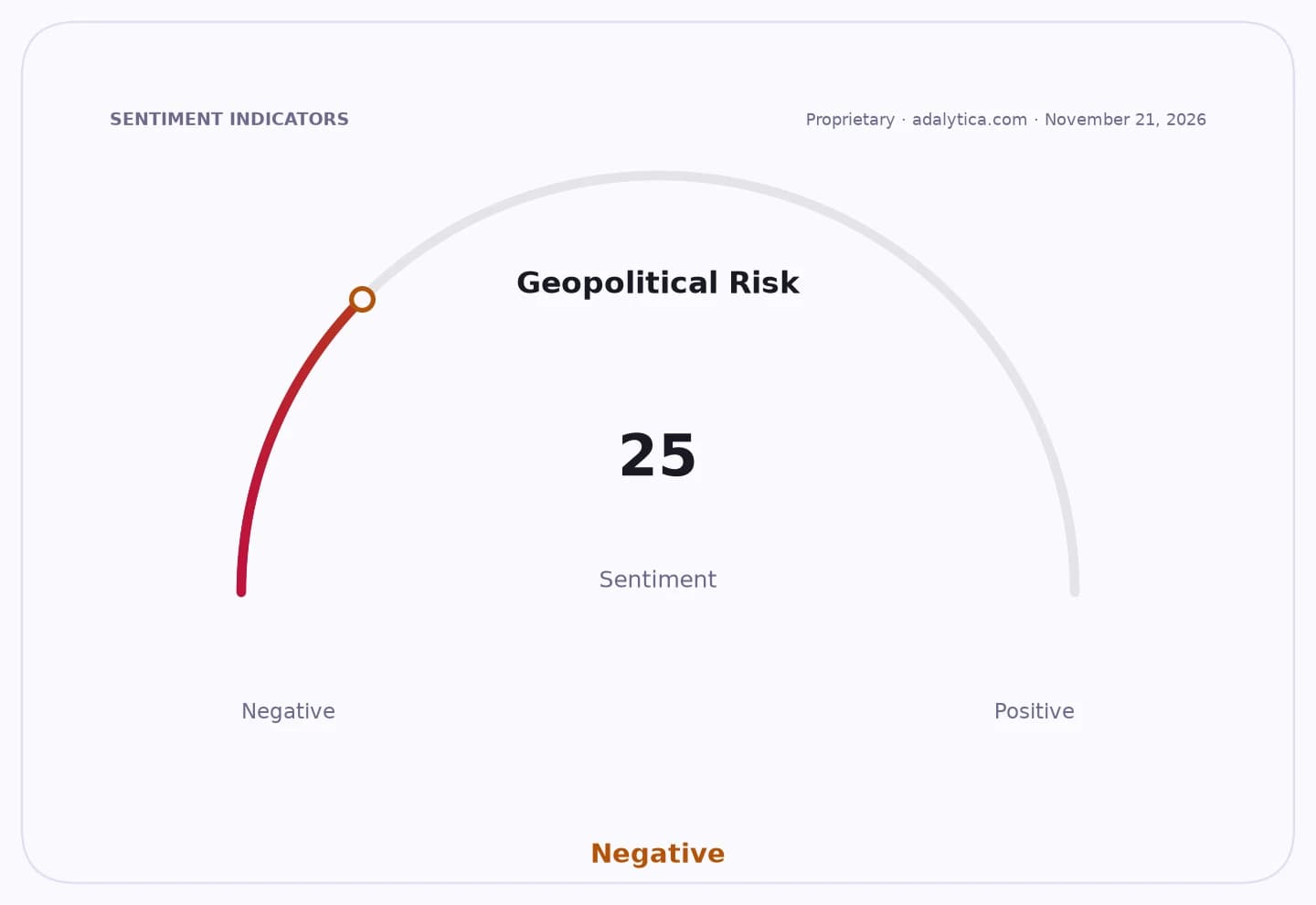
Geopolitical Risk — 30-day sentimentadalytica.com
Explore this data interactively — full history, time series and cross-market comparisons.
Geopolitical Risk
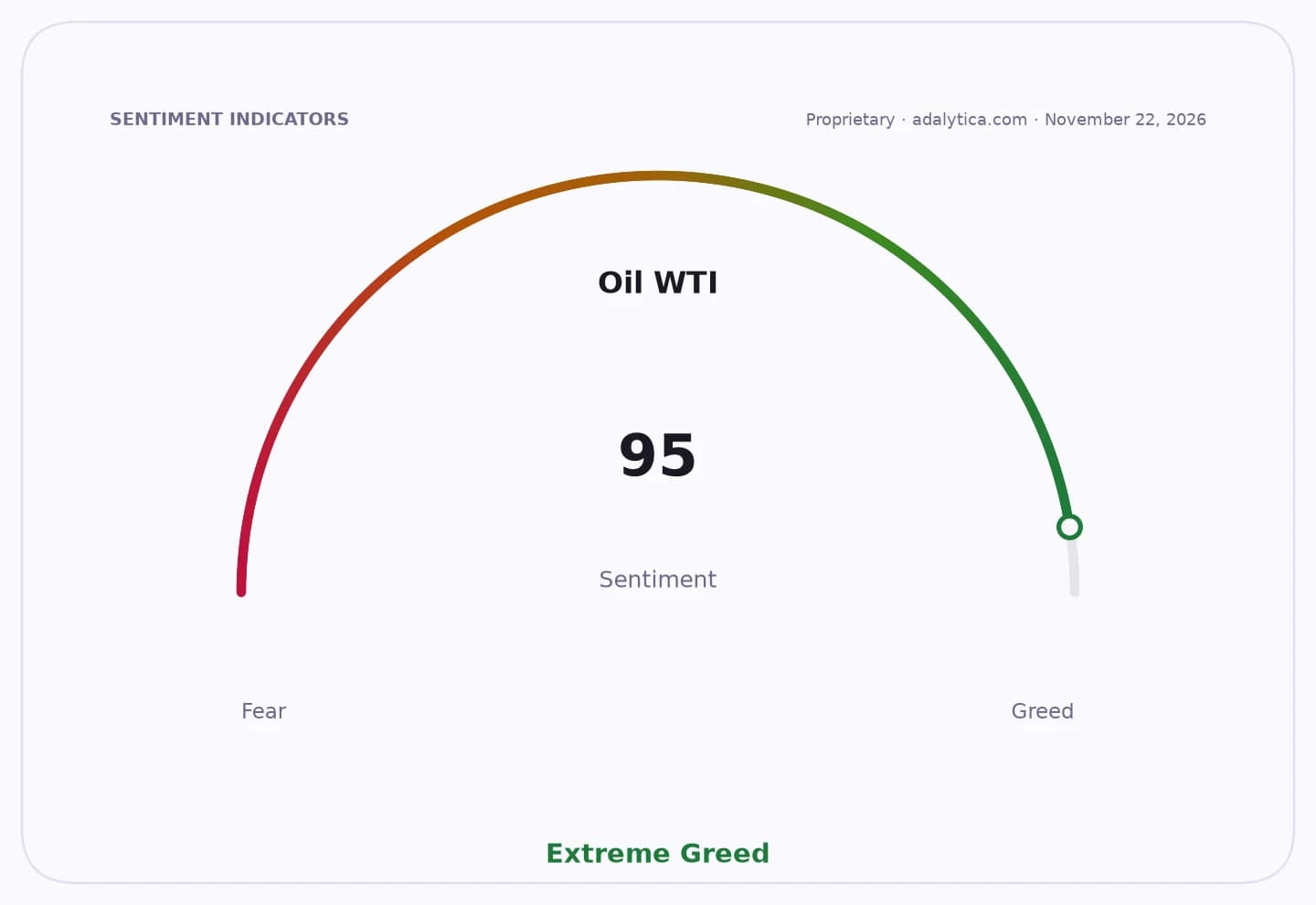
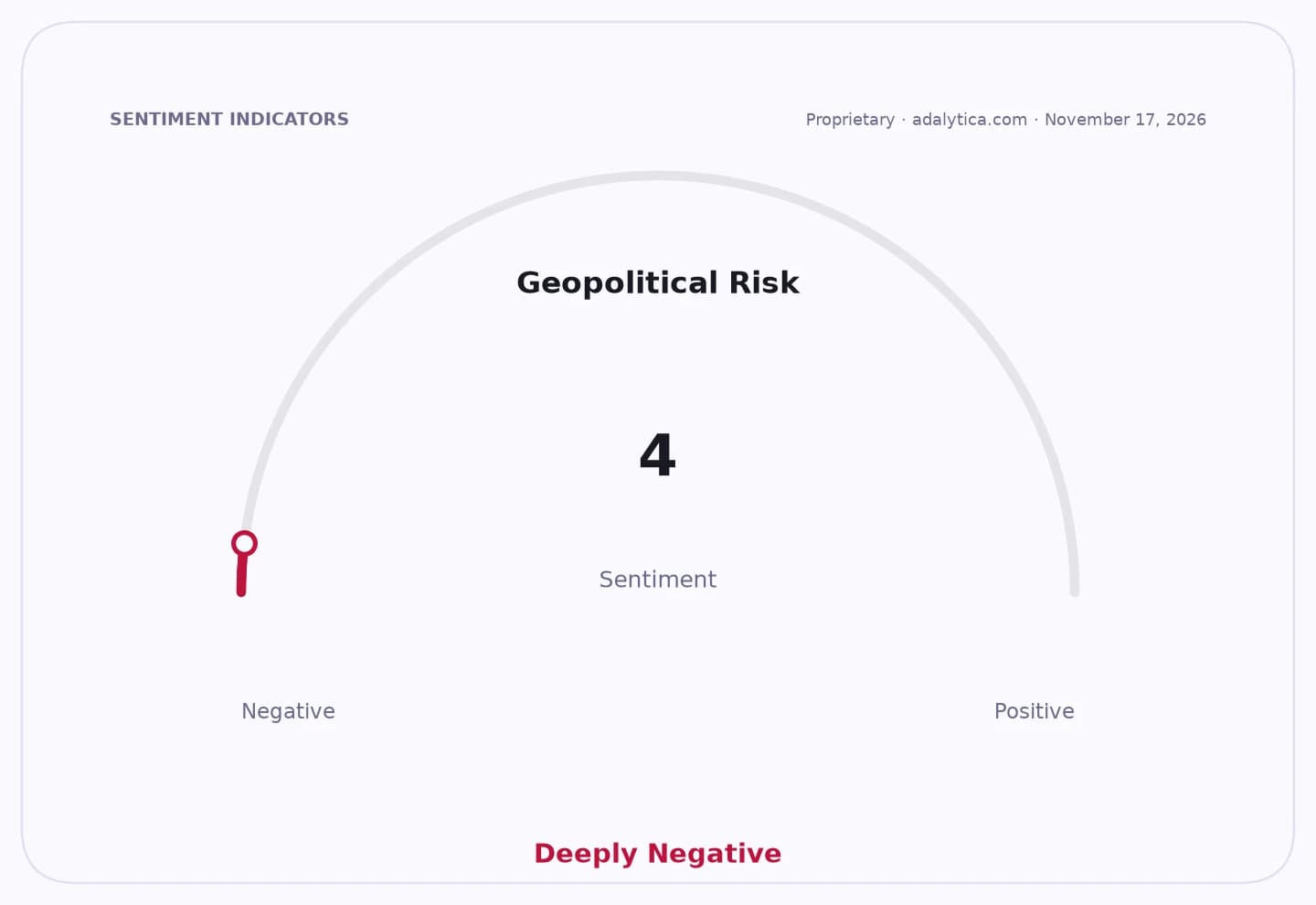
For markets, the immediate transmission channel is geopolitical risk rather than direct commodity disruption. Global Stability sentiment on Adalytica has plunged to 4, or “Extreme Fear,” while awareness remains elevated, underscoring how quickly risk appetite can deteriorate when the war escalates. In energy, USO’s Adalytica trade signals show “Extreme Greed,” reflecting how traders continue to price in the possibility of supply shocks from a widening conflict even as the broader macro backdrop remains uncertain.
Gold, by contrast, has become the cleaner haven trade. GLD’s technical indicators show the fund trading well below its 50-day moving average and its 200-day moving average, but the metal’s fear-and-greed reading sits at “Extreme Fear” while awareness is at “Extreme Greed,” a combination that often appears when investors are alert to geopolitical shocks but are not yet fully positioned for a sustained flight to safety. That leaves room for further moves if the conflict escalates or if Western responses tighten sanctions, defense aid or energy-market restrictions.
The bigger narrative is that Moscow is trying to raise the cost of endurance for Ukraine by attacking broad civilian and municipal targets, while Kyiv is under pressure to absorb repeated waves of damage without allowing its war economy to break. Zelenskiy linked the latest bombardment to Vladimir Putin’s vow of a “painful” response after Ukraine’s strike on the Crimean bridge, suggesting the cycle of retaliation remains firmly in place.
| Entity | Gains | Losses |
|---|---|---|
| Russia | ▲Tactical pressure on Ukraine | ▼International condemnation |
| Ukraine’s government | ▲Western sympathy | ▼Civilian infrastructure |
| Oil and defense assets | ▲Higher risk premium | ▼Peace-dividend trades |
| Gold buyers | ▲Haven demand | ▼Risk-on positioning |