Russia’s return to hard-power revisionism was never a sudden Putin-era surprise — it was a slow-moving geopolitical revenge story that markets, policymakers and much of the West chose to misread for more than 30 years.
Russia Geopolitical Risk Raises Defense and Energy Demand
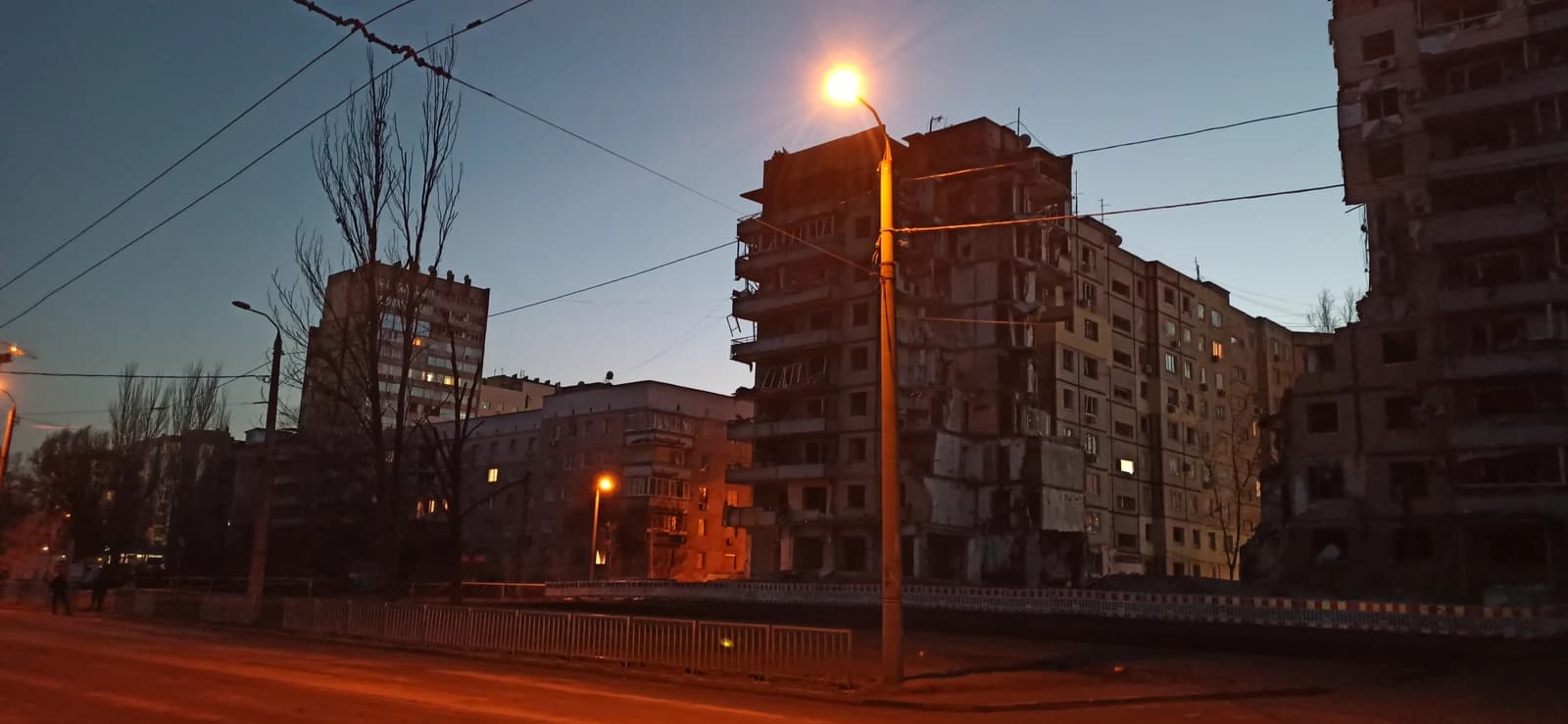
That misreading now carries a real economic price. Energy markets, defense budgets, European industrial policy and sovereign risk across the continent are all being reshaped by a conflict that should have been recognized as a long-cycle threat, not a temporary post-Cold War anomaly. The latest fighting in Ukraine, Russian advances in Kharkiv and Donetsk, and strikes that have cut power to 850,000 Ukrainians show that this is not a frozen conflict. It is an ongoing test of Europe’s security architecture — and of the West’s appetite for paying the bill.
Sentiment Indicators
The core mistake was strategic complacency. After the Soviet collapse in 1991, Western capitals convinced themselves that Russia’s imperial instinct would fade along with communist ideology. Instead, Moscow inherited the key instruments of state power intact: the military, the nuclear arsenal, the intelligence apparatus, the energy machine and the political networks that had long served an imperial system. What changed was the branding, not the operating logic.
That distinction matters economically because the Kremlin used recovery, oil and gas revenues and Western commercial ties to rebuild leverage. The “change through trade” thesis, especially in Europe, assumed interdependence would moderate Russian behavior. It did not. It financed Russian state capacity while making Europe more vulnerable to coercion. The lesson for investors is blunt: a supplier that also behaves like a strategic adversary is not a normal counterparty. It is a source of tail risk.
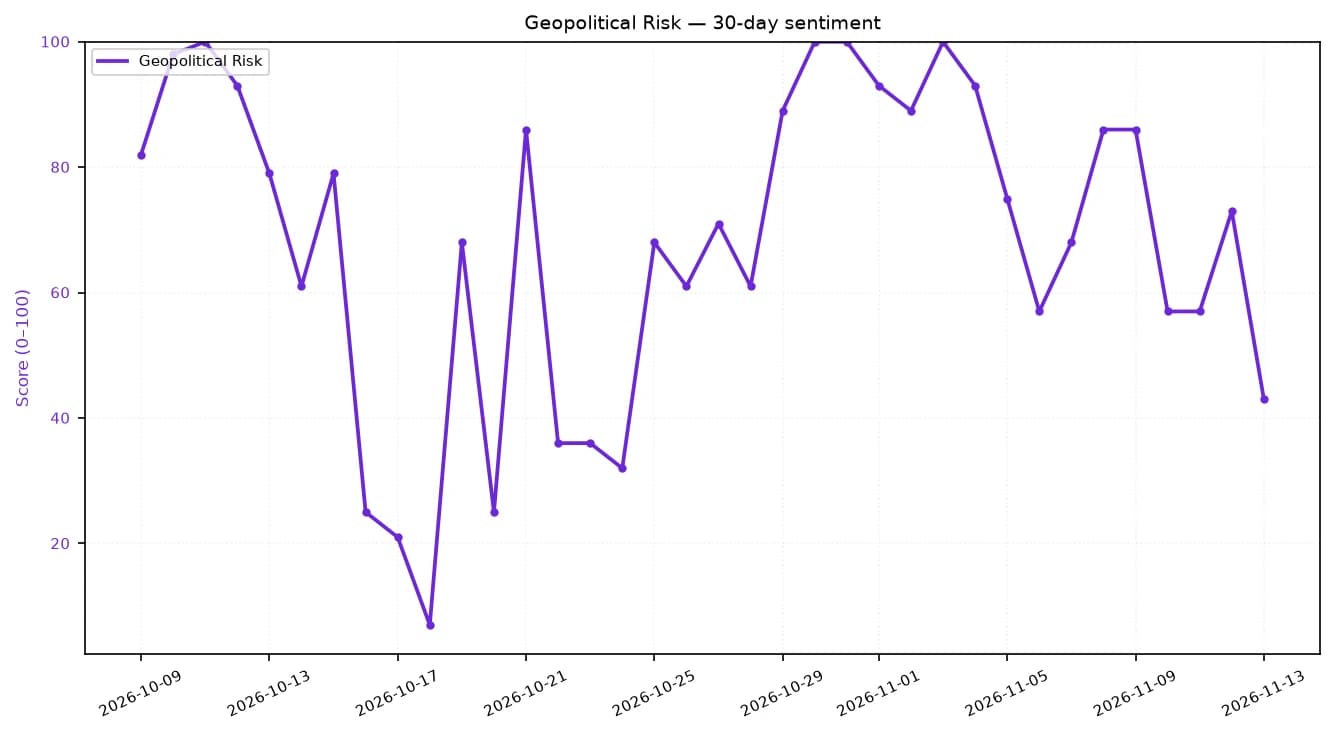
Geopolitical Risk — 30-day sentimentadalytica.com
Explore this data interactively — full history, time series and cross-market comparisons.
The timeline of warning signs was clear. Vladimir Putin’s 2007 Munich speech was an open challenge to the post-Cold War order. The 2008 Georgia war was another. So was Russia’s 2014 seizure of Crimea, followed by the full-scale invasion of Ukraine in 2022. Yet Western policy kept reverting to the hope that trade, diplomacy and partial sanctions would be enough. That hope has been the market’s most expensive illusion in Europe, because it delayed the pivot into rearmament, energy diversification and industrial de-risking.
We are already seeing the asset-price consequences. Oil is trading with a fear premium again, with WTI around $89.5 a barrel in the latest data, and sentiment on Adalytica’s WTI signal sitting at 95, or “Extreme Greed,” even as geopolitical risk remains elevated. Energy stocks have already reflected that pressure: the XLE ETF, which had run as high as 70.02 in late October, has fallen to 60.51, but its longer-term setup still reflects a structural repricing of hydrocarbons as strategic assets, not just cyclical commodities.
That is where the investment opportunity becomes asymmetric. The market keeps oscillating between short-term peace optimism and long-term security reality. I believe the latter wins. Europe cannot undo the fact that it built decades of growth around cheap Russian energy and low defense spending. Now it must rebuild both the energy system and the security system at the same time. That means defense contractors, missile-defense suppliers, cyber firms, LNG infrastructure, grid hardening, nuclear service providers and commodity producers remain the clearest beneficiaries of this new regime.
The currency and fixed-income signals reinforce the same story. The yen remains weak by historical standards, with FXY hovering near 57.84, while Treasury yields around 5.1% show that capital is demanding compensation for a more fractured world. Adalytica’s Global Stability Sentiment is sitting at 4, “Extreme Fear,” a reminder that geopolitical stress is no longer a background theme — it is becoming part of the market’s baseline.
For investors, the real issue is not whether the war ends in a negotiated pause. It is whether Europe and the West will finally price in the fact that Russia’s strategic behavior is structural, not episodic. If that realization sticks, then the winners are clear: energy producers, defense names, infrastructure rebuilders and select commodity exposures. The losers are just as clear: countries, companies and portfolios still built on the assumption that geopolitical risk is temporary and that trade alone can tame revisionist power.
The actionable takeaway is simple: stop treating Russia as a headline risk and start treating geopolitical fragmentation as a durable investment theme. Own the picks-and-shovels of rearmament and energy security, not the illusion of a return to the old post-Cold War order.
| Entity | Gains | Losses |
|---|---|---|
| Defense contractors | ▲Higher NATO spending | ▼Budget complacency |
| Energy producers | ▲Strategic oil/gas premium | ▼Cheap-energy assumption |
| Ukraine | ▲More Western support | ▼Infrastructure damage |
| European importers | ▲None | ▼Supply insecurity |