President Donald Trump’s attack on the Supreme Court over tariff rulings lands at a moment when trade policy is already feeding into higher costs, weaker visibility for exporters and a more fragile market backdrop for risk assets.
Trump Tariff Attack Raises Trade Policy Risk

The economic issue is bigger than the constitutional argument. By framing court rulings as having “cost US trillions,” Trump is signaling that tariff policy remains a central lever of industrial and geopolitical strategy, even as the legal foundation for some levies has been challenged. That matters because tariffs are no longer a narrow trade dispute: they are now shaping pricing power, supply chains, inflation expectations and the earnings outlook for multinational companies.
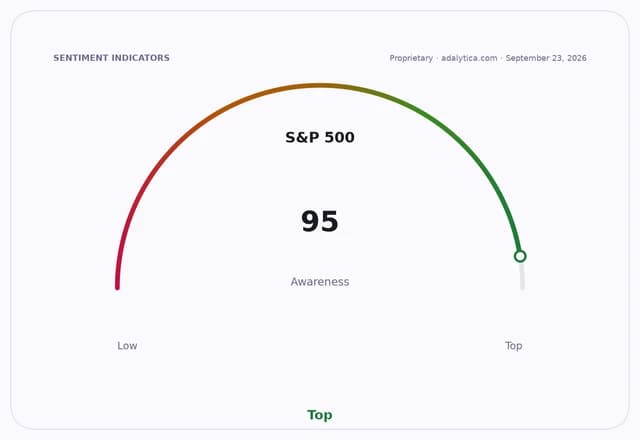
Sentiment IndicatorsⓘProprietary · adalytica.com · September 23, 2026
This is a snapshot — live sentiment, awareness and momentum for 130+ markets update continuously in the dashboard.Open AlphaPulse

The latest flashpoint is the threat of a 100% tariff on Indian goods, a move that would hit one of Asia’s fastest-growing export bases and intensify pressure on firms exposed to South Asia manufacturing and sourcing. Reuters reported India is moving to protect its trade and economic interests and diversify sourcing, underscoring how quickly bilateral friction can spill into corporate planning and capital allocation. For exporters, the risk is not only lower volumes but also delayed shipments, margin compression and a forced rerouting of supply chains at a time when global demand is uneven.
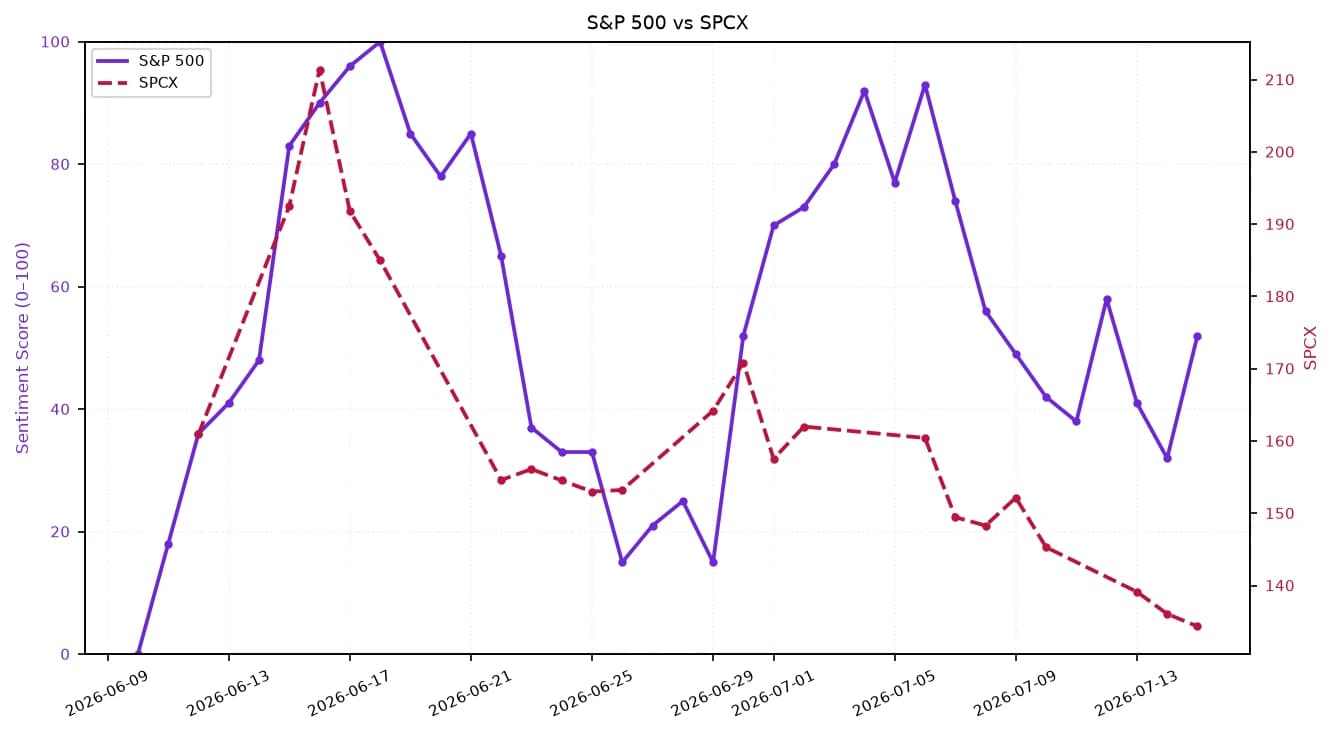
The market response has been telling. The SPY ETF, tracking the S&P 500, has rebounded to 773.5, above its 50-day and 200-day moving averages, suggesting investors have so far treated tariff shocks as manageable. But the move has come with a more cautious tone in broader risk gauges: U.S. dollar trade signals sit at “Extreme Greed,” while Congressional gridlock sentiment points to a policy environment where fiscal and trade decisions may be harder to resolve cleanly. That combination can support the dollar in the short term, but it also reflects the market’s preference for liquidity and defensive positioning when policy uncertainty rises.
US Dollar — 30-day sentimentadalytica.com
Explore this data interactively — full history, time series and cross-market comparisons.Open AlphaPulse
The clearest losers are the companies and countries most exposed to imported goods, especially those with thin margins or complex cross-border supply chains. Apple has already disclosed that tariffs and other measures can materially affect supply chains, rare-earth access and operating results, while Walmart says less than a third of what it sells in the U.S. is imported but still relies heavily on China, Vietnam, Mexico, India and Canada. That makes trade policy a direct earnings input, not a background risk. Even if some firms can pass on costs, the burden often arrives with a lag, leaving a window of margin pressure before prices adjust.
There is also a macro channel. Long-dated U.S. Treasury yields are back near 5%, while the 10s/2s curve has steepened modestly to about 25 basis points, reflecting a market that expects policy volatility to keep growth and inflation risks alive. If tariffs broaden, they can add to price pressure just as investors are trying to judge whether the economy is slowing enough for the Federal Reserve to ease later. That makes trade policy relevant not just to earnings, but to rates, the dollar and equity multiples.
For investors, the central question is whether tariff escalation remains a negotiating tool or becomes a sustained tax on commerce. The bull case is that aggressive rhetoric eventually gives way to selective exemptions, legal constraints or bargaining that limits the damage. The bear case is that repeated tariff shocks become embedded in supply-chain decisions, pushing up costs, compressing margins and keeping volatility elevated across equities, currencies and commodities.
The next catalyst is whether the administration expands tariff threats beyond India and how the courts respond to challenges around the legal basis for levies. Until then, markets are likely to keep treating trade policy as both a headline risk and a valuation risk — one that can hit exporters, retailers and manufacturers long before it shows up in the macro data.
| Entity | Gains | Losses |
|---|---|---|
| Trump administration | ▲Negotiating leverage | ▼Trade credibility |
| US importers/retailers | ▲Possible exemptions | ▼Higher input costs |
| Indian exporters | ▲Diversification push | ▼Tariff shock and margin pressure |
| S&P 500 investors | ▲Supportive liquidity bid | ▼Policy-driven volatility |