President Donald Trump’s latest push to cap credit card interest rates at 10% could materially reshape a $1.23 trillion consumer debt market if he can turn a campaign promise into legislation with Democrats now poised to control Congress.
Trump backs 10% credit card interest cap
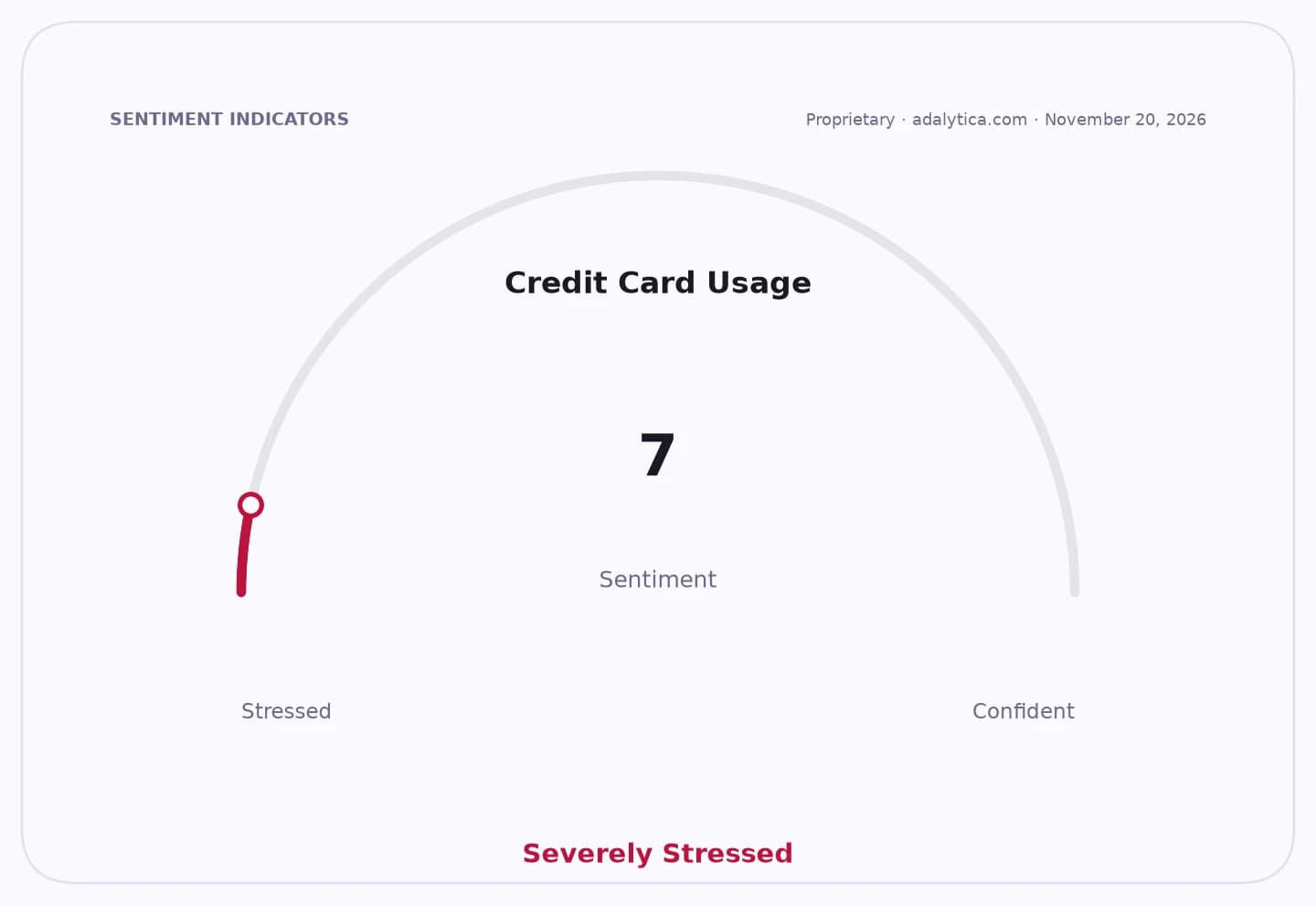
The proposal matters because the gap between the current cost of borrowing and the proposed cap is wide: the median credit card rate is about 22.2%, according to the New York Federal Reserve, more than double the level Trump is now saying he would back. A 10% ceiling would sharply cut interest income for card issuers, but it would also reduce a major expense for millions of households carrying revolving balances.
Sentiment Indicators
Trump said on Fox News Channel he would work with the incoming Democratic Congress on the idea, aligning himself with Sen. Elizabeth Warren, who is expected to chair the Senate Banking Committee and has long advocated the same cap. That bipartisan overlap makes the proposal more than a campaign flourish, even if it still faces a difficult path through the banking lobby and internal debate over whether lenders would respond by trimming rewards or tightening access to cards for riskier borrowers.
The economics are straightforward. Researchers cited in prior studies of the pledge estimated Americans could save roughly $100 billion a year in interest if rates were capped at 10%. The CFPB says about 195 million Americans had credit cards in 2024 and were charged $160 billion in interest, underscoring how much revenue is at stake for banks, card networks and specialty finance firms.
For investors, the biggest question is whether the proposal becomes a real earnings risk or remains a populist bargaining chip. Card-heavy lenders such as American Express, Capital One, and Synchrony would face the most direct pressure on net interest income, interchange-linked customer economics and rewards funding. Broader bank shares were already under scrutiny as consumer credit performance has softened in places, with federal filings from issuers flagging the risk of government action on interest-rate caps. The financial sector ETF XLF has also weakened recently, with its relative strength fading even as the fund remained above its 200-day moving average, while regional-banking gauges KBE and KRE have pulled back and their momentum indicators have turned lower.
There are offsets. A hard cap could force issuers to reprice risk, reduce credit availability or pare back perks, which may soften the political appeal of the policy and limit the true gain to consumers. It could also encourage lenders to emphasize transactors over revolvers, changing the business mix rather than eliminating profitability outright. For households, though, the policy would be a direct transfer of income from lenders to borrowers at a time when revolving balances remain elevated and affordability remains a potent political issue.
The next test is legislative. If Democrats use their control of Congress to advance the measure, investors will need to reassess card issuers’ earnings power, underwriting standards and customer acquisition economics. If the proposal stalls again, it will still have highlighted how exposed the consumer credit model is to the politics of affordability.
| Entity | Gains | Losses |
|---|---|---|
| Credit card borrowers | ▲Lower interest costs | ▼Less card access if standards tighten |
| Card issuers | ▲Possible volume offset | ▼Interest income and rewards economics |
| Democrats / Sen. Warren | ▲Policy momentum | ▼Pressure to compromise on the cap |
| Bank and financial stocks | ▲None | ▼Valuation risk from earnings uncertainty |