Trip.com has moved the most expensive publicly offered space tourism package in China into the market, underscoring how far premium travel is being pushed even as price and safety remain major investor and consumer questions.
Trip.com Sells China Space Tourism Package
The six-day itinerary, sold through Trip.com’s luxury arm HHtravel, is priced at 5.1 million yuan, or about $760,000, and includes four days of training in the U.S. before a 90-minute suborbital flight operated by Virgin Galactic from New Mexico. The package, which has already drawn two bookings, is not just a marketing stunt: it is a test of whether China’s affluent travelers will pay six figures for an ultra-exclusive experience and whether Trip.com can turn rarefied demand into a new high-margin category.
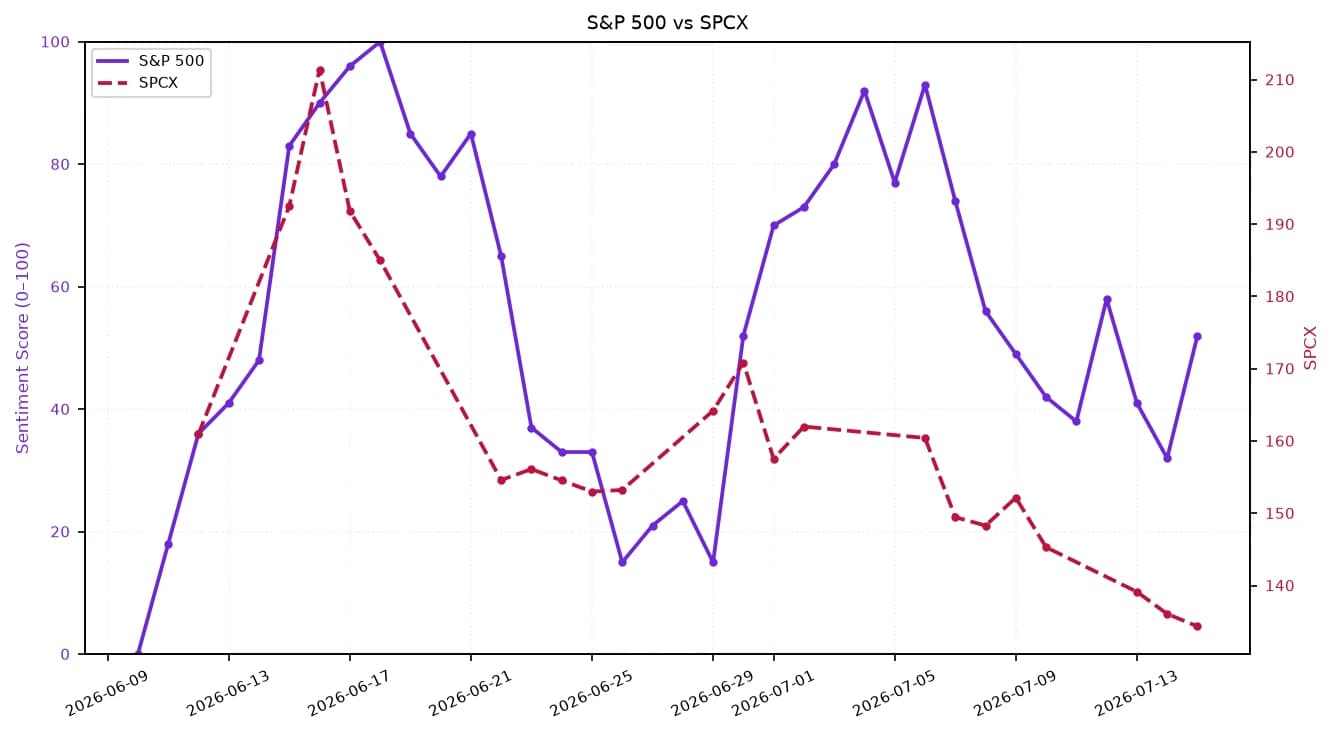
Sentiment IndicatorsⓘProprietary · adalytica.com · September 21, 2026
This is a snapshot — live sentiment, awareness and momentum for 130+ markets update continuously in the dashboard.Open AlphaPulse
For Trip.com, China’s largest online travel agency, the move extends its push beyond hotels and flights into experiences, where it already has scale and where incremental revenue can be more profitable than traditional booking businesses. The company said in its latest quarterly filing that marketing for its experiences business rose 12% in the first half of 2026, even as spending on hotels and other core products fell. With Trip.com handling more than 1 trillion yuan of bookings globally in 2025 and controlling more than half of China’s online hotel market, the company has the distribution to commercialize niche products that smaller rivals cannot easily match.
The larger economic story is that space tourism is becoming part of the premium travel economy rather than a science-fiction novelty. Virgin Galactic has already sold out a batch of 50 seats at $750,000 each, adding more than $50 million to expected future revenue, while other operators from Blue Origin to Axiom Space are building a private-space market that remains small but increasingly defined. In China, where commercial space tourism has yet to produce a flight, the Trip.com offering puts a mainstream consumer internet company in the middle of an emerging global luxury category and could help establish price points for domestic competitors Deep Blue Aerospace and CAS Space.
For investors, the case cuts both ways. The bull argument is that the headline-grabbing product can deepen Trip.com’s brand in high-end travel, boost mix, and support a broader experiences strategy that is less commoditized than hotel search. The bear case is that the business is too niche to move financials materially, while regulatory, operational and reputational risks rise sharply when a consumer platform sells a product tied to aerospace safety. Social-media debate in China has already focused on whether four days of preparation are enough, who would be responsible if something went wrong and whether the experience justifies the cost.
That tension matters because the space tourism trade is still in its early commercialization phase. Virgin Galactic’s flights remain short and suborbital, not orbital, and the experience is defined as much by training and novelty as by distance or duration. If China’s wealthy consumers keep booking anyway, it would strengthen the case that premium leisure spending is resilient even in a slower-growth economy. If skepticism wins out, the episode will reinforce the view that space tourism remains more of a prestige branding exercise than a scalable travel segment.
| Entity | Gains | Losses |
|---|---|---|
| Trip.com / HHtravel | ▲Premium brand lift | ▼Reputational risk |
| Virgin Galactic | ▲Future revenue bookings | ▼Safety scrutiny |
| China’s wealthy travelers | ▲Exclusive access | ▼Very high cost |
| Rival space-tourism firms | ▲Market validation | ▼Pressure to justify pricing |