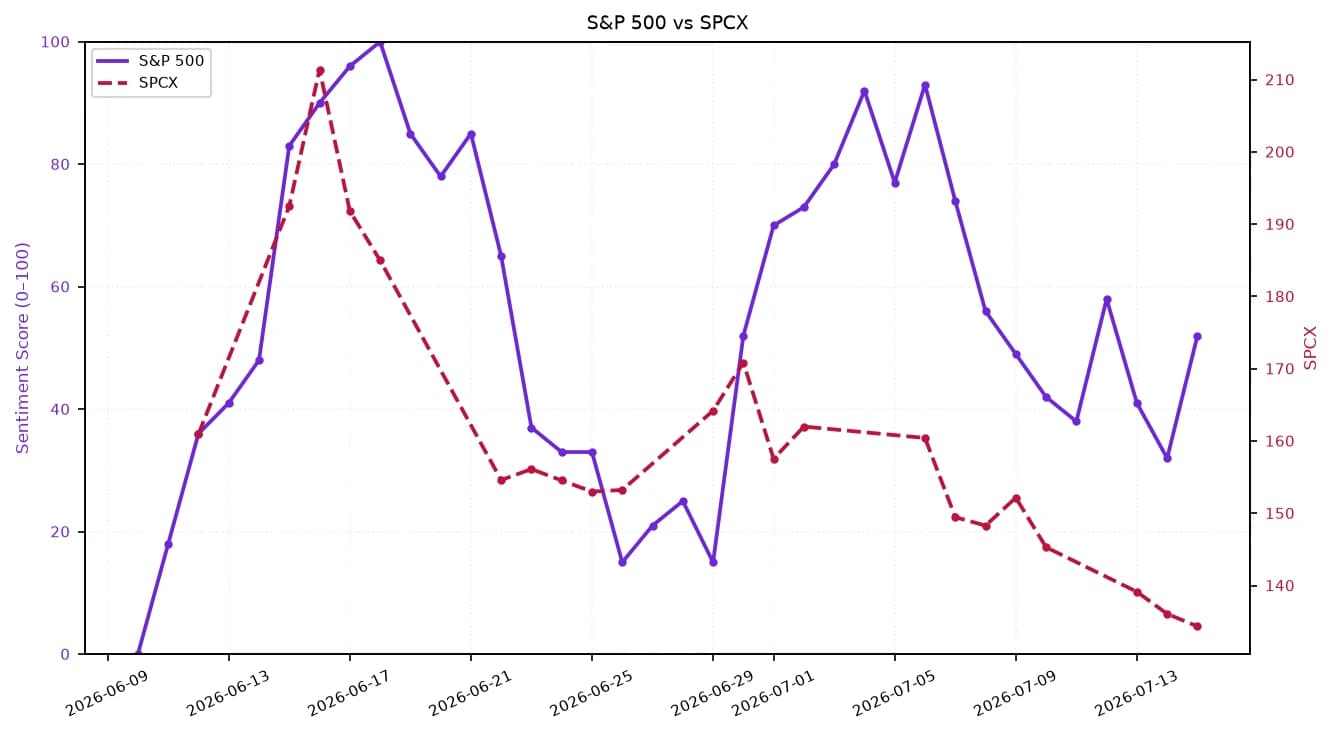
Treasury yields are holding near the highest levels in years, keeping pressure on corporate financing costs and leaving investors to weigh whether a flatter yield curve can still support risk assets.
Treasury Yields Near 5% Pressure Corporate Borrowing

The 10-year Treasury yield was last at 4.96%, while the 2-year sat at 4.76%, a spread of only about 20 basis points. That is a narrow curve by any historical standard and an expensive backdrop for issuers that need to refinance debt, extend maturities or fund capex. For corporate America, the message is simple: the market is no longer offering cheap long-duration money, and every basis point matters.
Sentiment IndicatorsⓘProprietary · adalytica.com · September 22, 2026
This is a snapshot — live sentiment, awareness and momentum for 130+ markets update continuously in the dashboard.Open AlphaPulse

That matters economically because the Treasury coupon-issue and corporate bond yield curves are the pricing backbone for the entire credit market. When government yields stay elevated, investment-grade and high-yield borrowers must pay up to clear new deals, especially if they come to market with longer maturities. The corporate bond curve, which tracks how yields rise across maturities, tends to stay anchored to the Treasury term structure. With both the 2-year and 10-year near 5%, the cost of capital is still restrictive enough to slow marginal borrowing and reward companies with strong cash flow and short-dated funding needs.
The pressure is already visible in credit-market behavior. High-yield spreads are only around 2.66 percentage points, which tells you investors are still willing to take credit risk, but not cheaply enough to offset the Treasury backdrop. In other words, the market is not panicking — it is simply demanding a higher all-in return for lending. That is a mixed setup for issuers: refinancing windows remain open, but the days of easy leverage are gone.
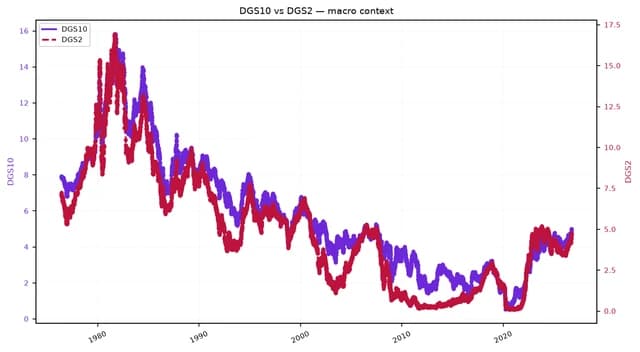
For bond investors, that makes duration and quality the key trade-off. Treasury-heavy assets such as TLT remain under strain even after recent stabilization, with the ETF trading around 81.75, below both its 50-day and 200-day moving averages. The technical picture is still weak but improving, with RSI recovering toward neutral territory and MACD narrowing, suggesting a market that is trying to bottom rather than break out. That is consistent with the broader rate narrative: yields have stopped spiraling higher, but they have not fallen enough to restore the old bond bull market.
Equities are telling a similar story. SPY has pushed to 773.38, well above its 50-day and 200-day moving averages, showing that stocks can still climb even with rates near 5%. But that rally rests on a narrow foundation: megacap growth, resilient earnings and a market willing to look through financing costs. The more rate-sensitive corners of the market — highly levered companies, small caps and low-quality credit — remain the most exposed if Treasury yields stay this high for longer.
The investable takeaway is clear. The current curve favors lenders over borrowers, cash-rich balance sheets over leveraged ones, and short-duration credit over long-duration promises. I believe the market is still underestimating how persistent this yield environment can be for corporate America, which means the best opportunities are likely in companies that can self-fund growth, not those that depend on cheap debt. If Treasury yields stay pinned near 5%, the winners will be the balance-sheet winners — and the losers will be the refinancing stories.
| Entity | Gains | Losses |
|---|---|---|
| Treasury buyers | ▲Higher income | ▼More price volatility |
| Corporate borrowers | ▲Strong balance sheets | ▼Refinancing pressure |
| Short-duration credit | ▲Better carry | ▼Less upside if yields fall |
| Levered companies | ▲— | ▼Higher funding costs |