The Villages is moving ahead with a $180 million bond sale to expand its retirement community in central Florida, betting that demand from older Americans will hold up even as the state’s housing market cools and borrowing costs stay high.
The Villages Plans $180 Million Bond Sale
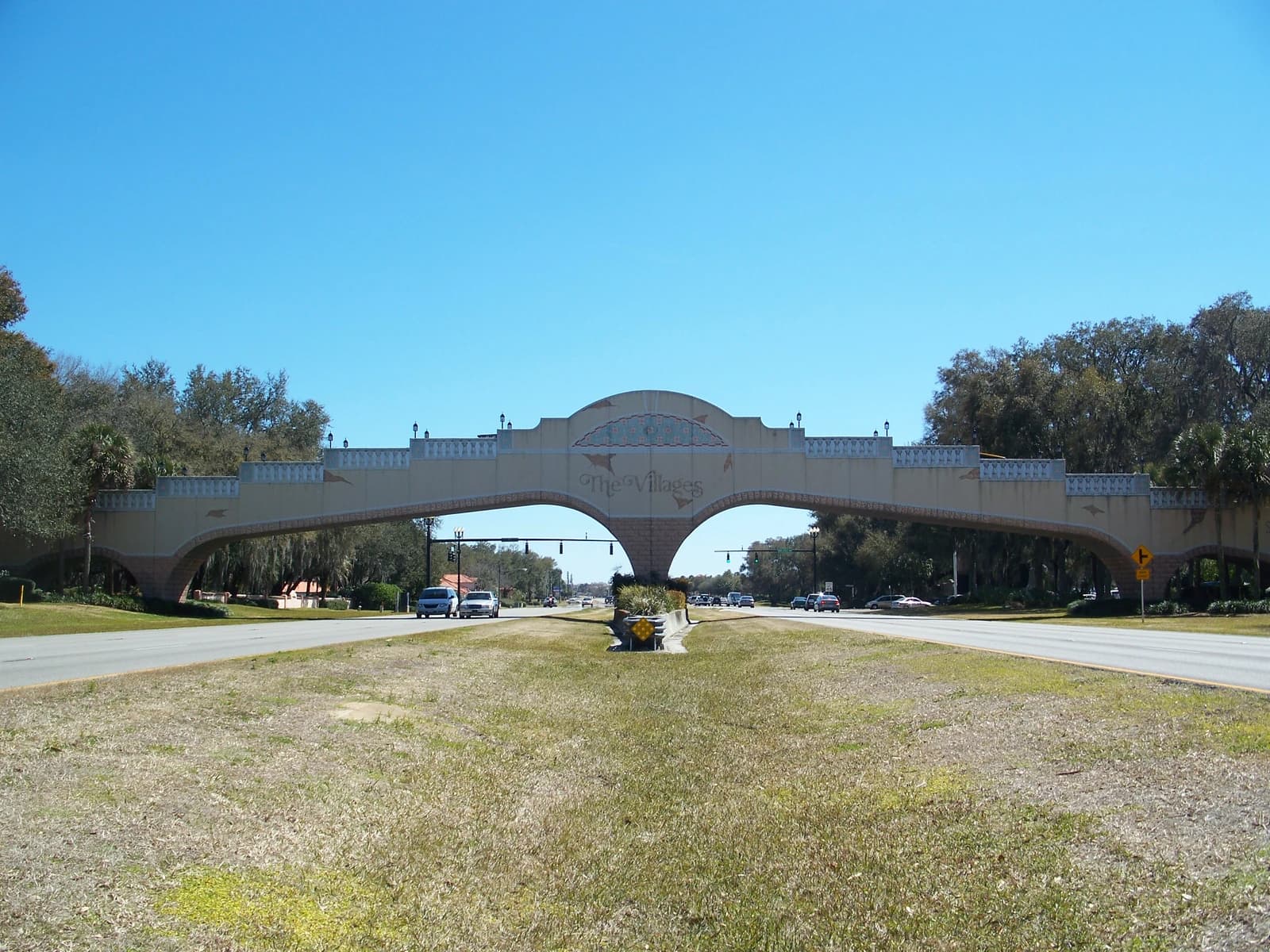
The planned high-yield offering will help finance 3,860 new homes, along with more golf courses and recreation centers, according to an investor presentation cited by Bloomberg. The development already spans 57,000 acres, supports roughly 170,000 residents and has become the country’s largest retirement community.
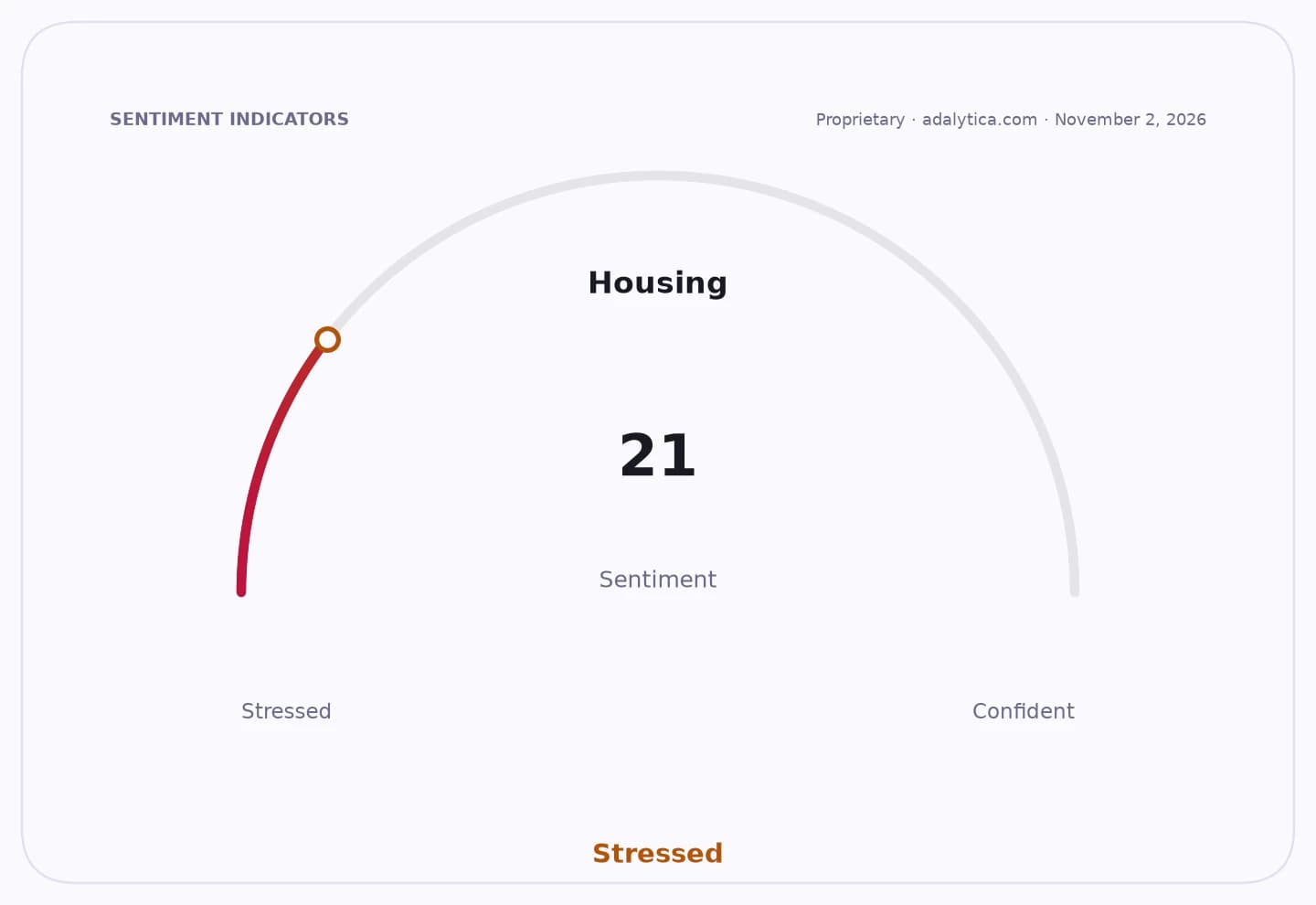
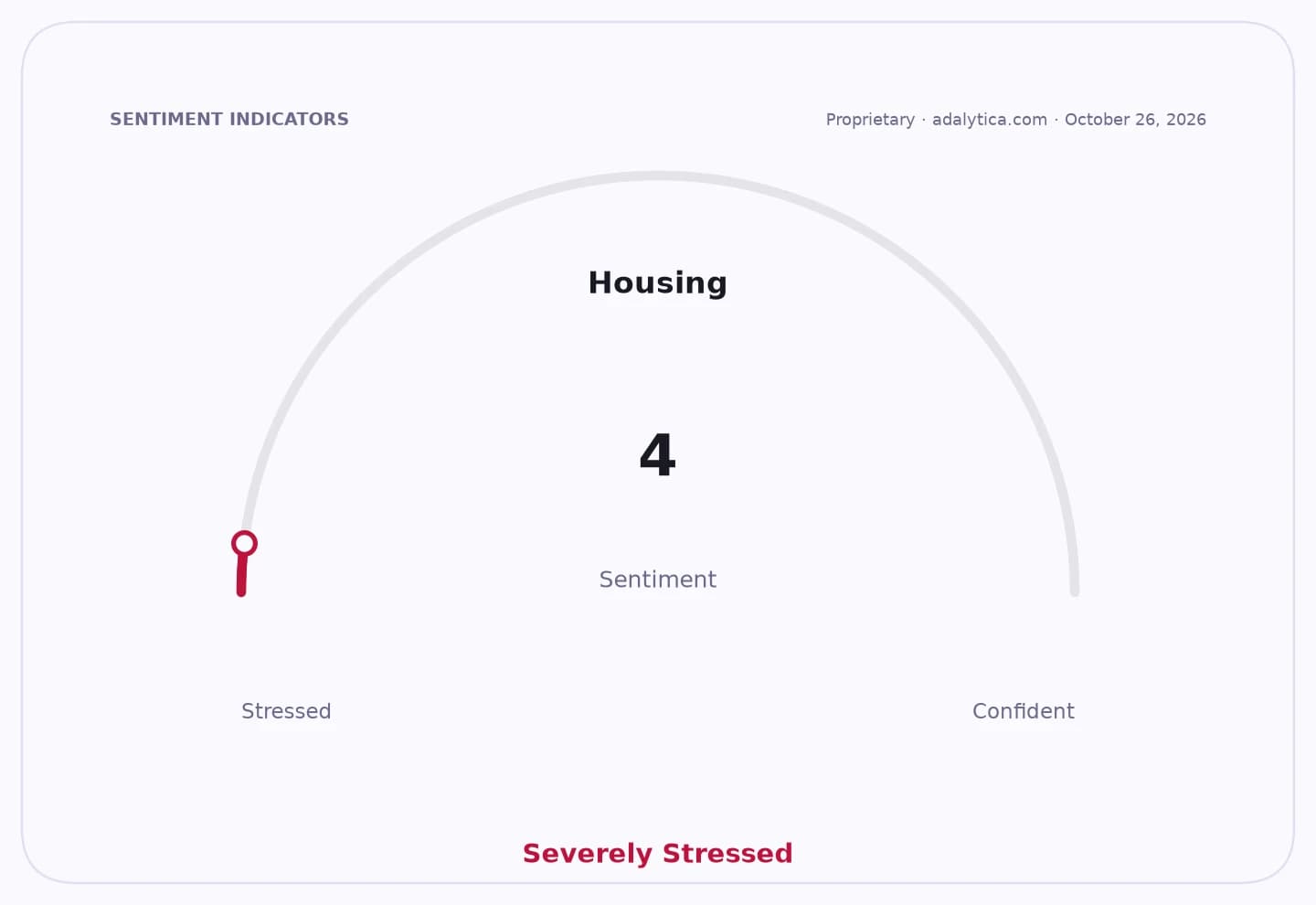
Sentiment Indicators
The timing is the key risk for investors. Florida existing single-family home sales fell 3.5% in September from a year earlier, according to the Florida Realtors Association, while higher mortgage rates and elevated home prices continue to pressure the broader housing market. Net migration into Florida also slowed sharply from the pandemic-era surge, raising questions about how much fresh demand remains for large-scale retirement projects.
Even so, The Villages is leaning into the same features that have made it a draw for years: weather, low taxes, recreation and a tightly built social network. Its expansion plan envisions as many as 260,000 residents and more than 130,000 homes by 2045, a buildout that would keep construction, services and infrastructure spending flowing for years if demand materializes.
The community’s sales still show some underlying resilience. More than 2,100 homes have sold there this year at an average price of just under $500,000, suggesting buyers are still willing to pay up for the master-planned lifestyle even in a sluggish market.
For investors, the deal is a wager on whether retirement housing can keep outpacing a weaker Florida real estate backdrop. It also puts a spotlight on debt markets, where high-yield borrowers face tougher scrutiny as Treasury yields remain elevated and financing costs rise.
| Entity | Gains | Losses |
|---|---|---|
| The Villages | ▲Capital for expansion | ▼Higher leverage and financing costs |
| Retiree homebuyers | ▲More housing options and amenities | ▼Risk of higher prices |
| Bond investors | ▲Yield from high-yield debt | ▼Credit and demand risk |
| Florida home sellers | ▲Limited benefit from new demand | ▼Slower sales and weaker pricing |