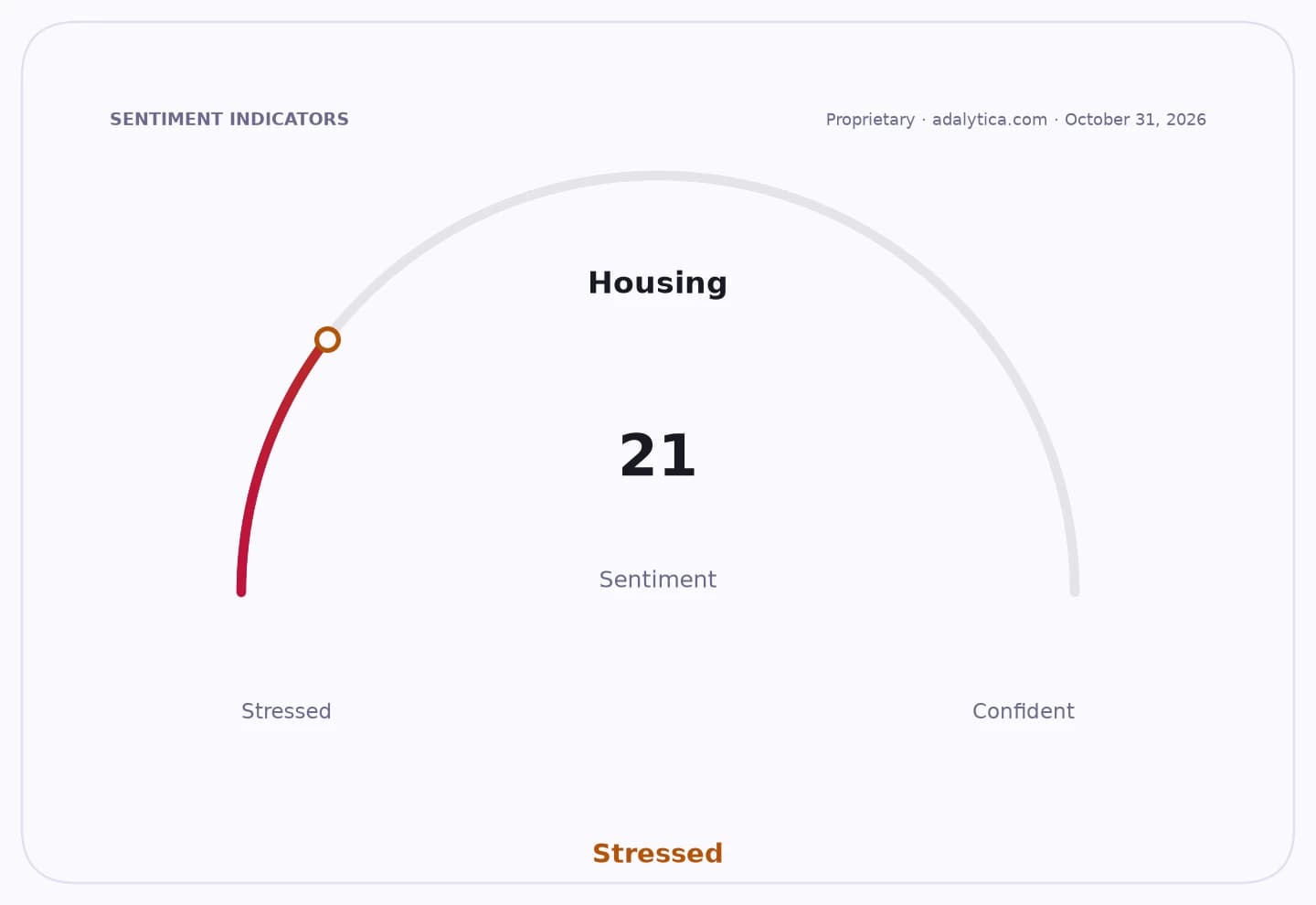
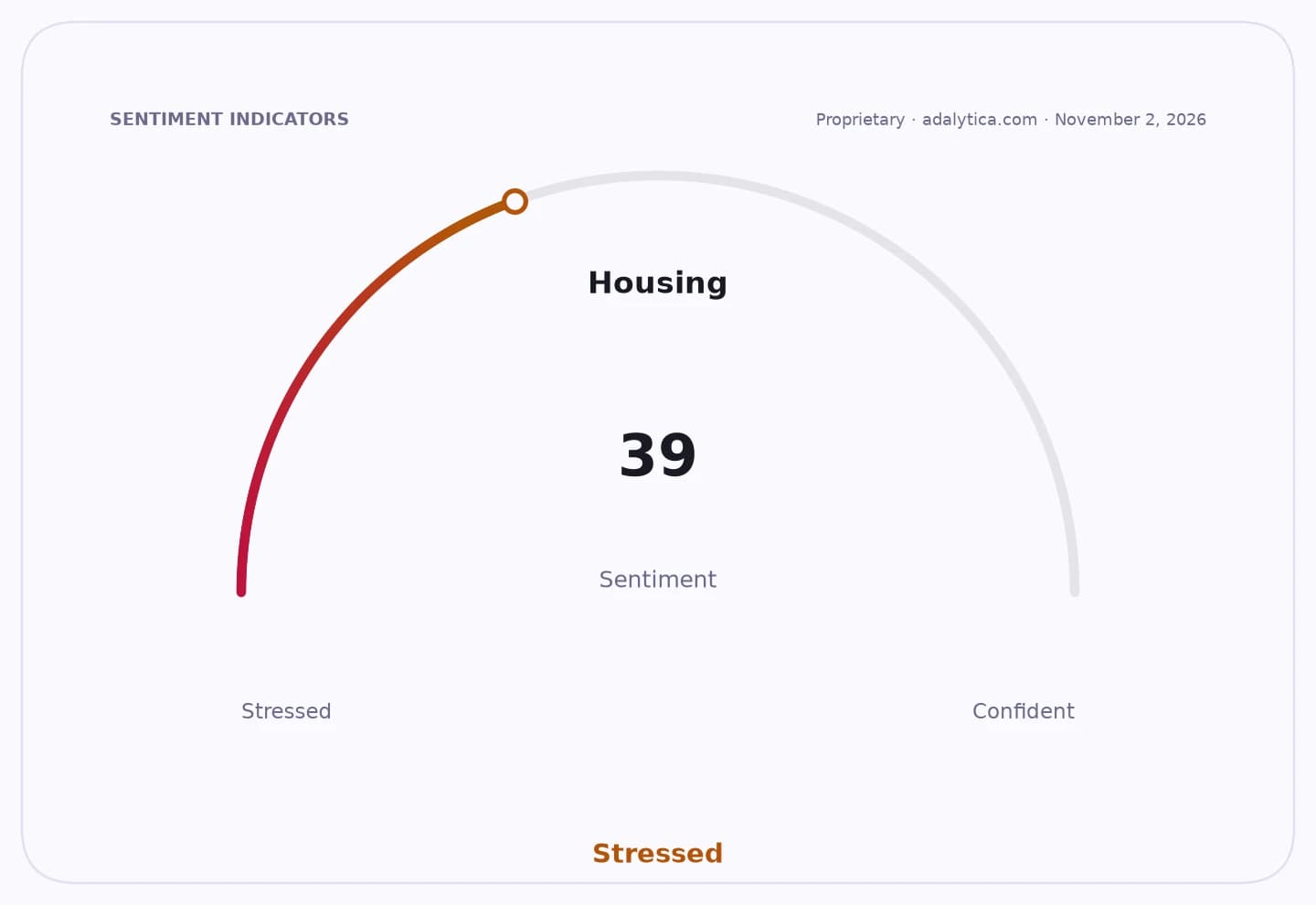
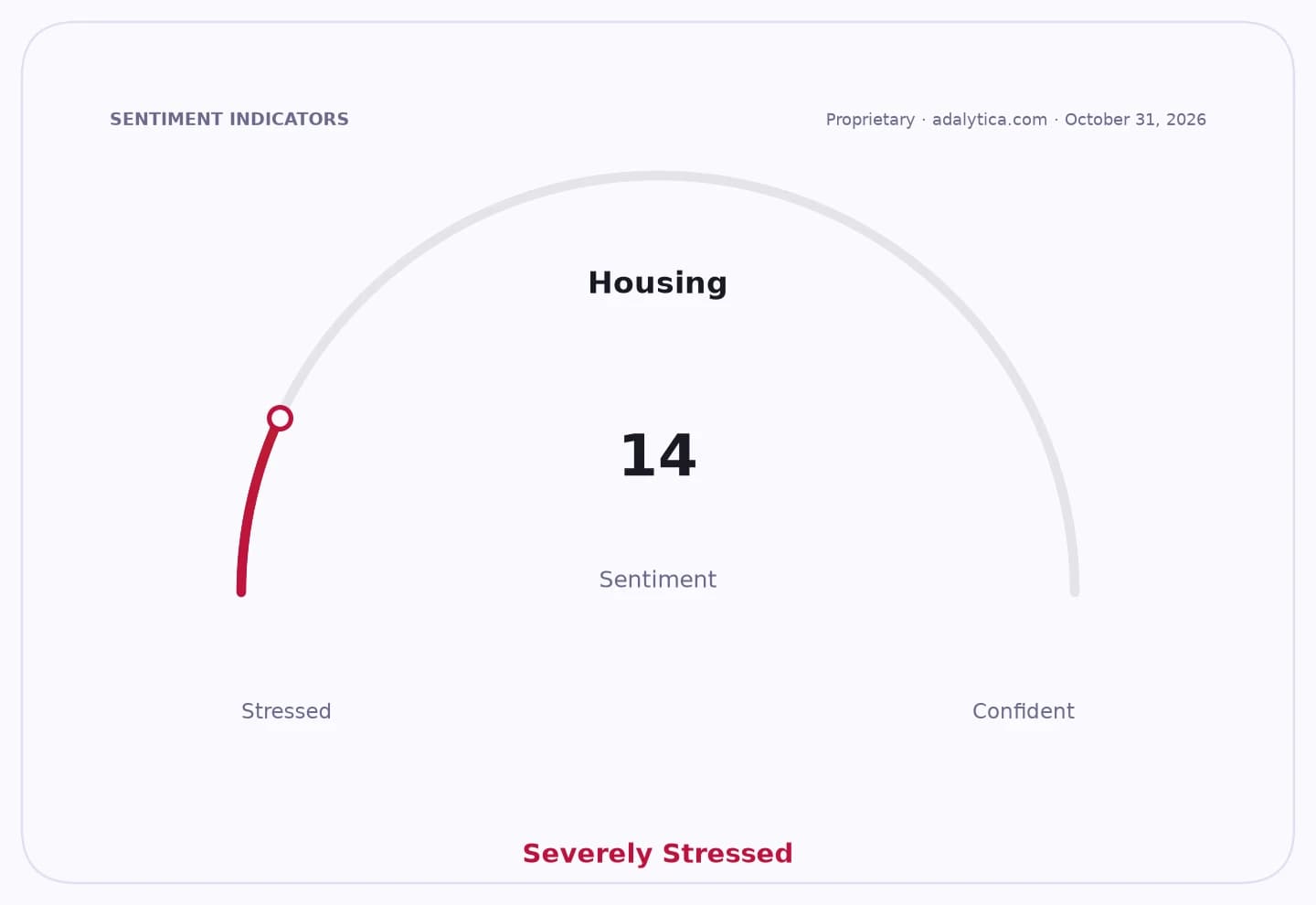
Mortgage buyers are still paying more than most refinancers on the most common home loan, with the average 30-year fixed purchase rate at 7.10% on Monday versus 7.06% for refinancing, underscoring a housing market where borrowing costs remain elevated even as some lenders compete harder for existing homeowners.
Mortgage rates stay higher for buyers than refinancers
Housing
The gap is small, but it matters: higher purchase rates keep monthly payments pinned near recent highs and continue to pressure affordability, while lower refinance pricing suggests lenders are still willing to chase balance-sheet-friendly borrowers who already own homes. For would-be buyers, that means the hurdle to enter the market remains steep; for current homeowners, there is at least a sliver of opportunity if their existing loan rate is still well above today’s levels.
Sentiment Indicators
On a $300,000 mortgage, the 30-year purchase rate would translate to a monthly principal-and-interest payment of about $2,016, with roughly $425,795 in total interest over the life of the loan. The 15-year fixed purchase rate is 6.45%, compared with 6.48% for refinancing, while the 5/1 ARM purchase rate of 7.03% sits 25 basis points above the refinance equivalent of 6.78%.
The rate backdrop remains tied to Treasury yields and expectations for Federal Reserve policy. The 10-year Treasury yield was around 4.99% in the latest data, while the 2-year note sat near 4.61%, levels that keep mortgage pricing well above the sub-6% era buyers enjoyed earlier in the decade. That leaves housing demand sensitive to every incremental move in rates, home prices and incomes.
The strain shows up across the market. U.S. housing starts were forecast at 1,277,900 for October after a September reading of 1,221,000, while the S&P CoreLogic Case-Shiller home price index continued to run above 330, indicating values remain elevated even as financing stays expensive. That combination keeps affordability tight and reduces the odds of a quick rebound in transaction volumes.
Mortgage lenders and housing-related equities are watching closely. Rocket Companies shares have been volatile but recently rallied, while UWM Holdings remains deeply below its 200-day moving average even after a recent bounce, reflecting a market still uncertain about how much refinancing and purchase activity can recover. A sustained pullback in Treasury yields would give the sector relief; until then, mortgage borrowers are likely to keep seeing rates in the high-6% to low-7% range.
| Entity | Gains | Losses |
|---|---|---|
| Existing homeowners with low rates | ▲Better refinance options | ▼Little immediate urgency |
| Mortgage lenders | ▲Refinance volume potential | ▼Purchase demand remains capped |
| Homebuyers | ▲Slightly lower 15-year refi pricing | ▼High monthly payments |
| Housing stocks | ▲A rate pullback would help | ▼Elevated yields and weak affordability |