Crude oil and LNG shipments through the Strait of Hormuz climbed to their highest level in six months, a sign the world’s most important energy chokepoint is still functioning even as the war in the Gulf keeps flows below prewar levels.
Strait of Hormuz shipments rise to six-month high

The pickup matters because Hormuz remains the route for about a fifth of globally traded oil and gas, so any sustained disruption would quickly tighten physical supplies, lift freight and insurance costs and feed through to fuel prices. CENTCOM commander Admiral Brad Cooper said the main transit lanes are clear of mines and that US forces have helped move more than 1 billion barrels of crude out of the Persian Gulf over the past two months while coordinating protection for more than 2,000 commercial ship transits.
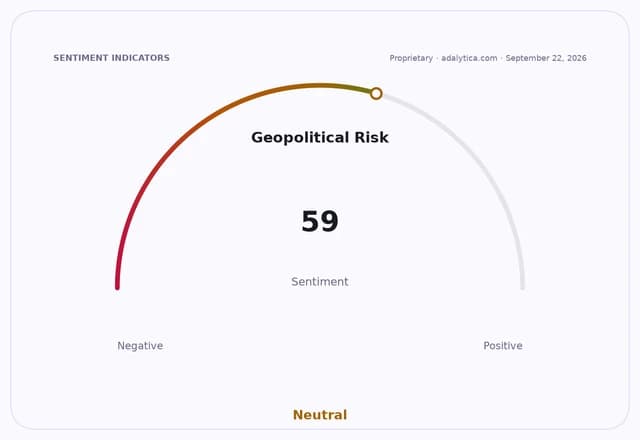
Sentiment IndicatorsⓘProprietary · adalytica.com · September 22, 2026
This is a snapshot — live sentiment, awareness and momentum for 130+ markets update continuously in the dashboard.Open AlphaPulse
The latest figures, which come from the US military, suggest the market has avoided a worst-case supply shock for now. Still, Washington says shipments remain well below prewar levels and Iranian attacks on shipping continue to threaten the route, underscoring how fragile the recovery is.
For investors, the message is two-sided. More stable Hormuz traffic removes some near-term upside pressure on oil and LNG prices, but the situation keeps a geopolitical risk premium embedded in energy markets, tanker rates and insurers’ pricing. That risk is visible in energy equities and commodity funds: US crude ETF USO remains elevated and volatile, while natural gas ETF UNG has also been active as traders price in Middle East supply uncertainty.
The broader market backdrop is one of still-tight energy conditions rather than outright scarcity. US Energy Secretary Chris Wright said last week the market is still dependent on Hormuz flows, estimating transit at 10 million barrels a day of crude and products, while describing the market as tighter than desirable but not in acute shortage.
That leaves the trade vulnerable to any escalation. If the security corridor holds, refiners, LNG buyers and shipping companies should benefit from calmer logistics and lower disruption costs; if it fails, oil, gas and tanker markets could reprice quickly given how much supply still moves through the strait.
| Entity | Gains | Losses |
|---|---|---|
| US and Gulf security forces | ▲More shipping leverage | ▼Higher operational burden |
| Oil refiners and LNG buyers | ▲More predictable supply | ▼Less disruption-driven pricing power |
| Tanker insurers and shipowners | ▲More traffic volumes | ▼Elevated war-risk exposure |
| Iran | ▲Less market leverage | ▼Weaker ability to choke flows |