Saudi Arabia’s main stock index fell 0.56% in midday trading Sunday, with pressure from the banking and basic materials sectors dragging the benchmark to 10,717.27 points as investors turned more cautious amid softer crude prices and broad weakness across the market.
Saudi TASI Falls 0.56% on Banks, Materials
The Tadawul All Share Index was down 59.44 points by 1 p.m. Riyadh time, with turnover reaching about 1.6 billion riyals across 98.26 million shares in more than 204,000 trades. The decline came as 237 stocks lost ground, versus just 25 gainers, underscoring a broad pullback rather than a move isolated to one or two names.
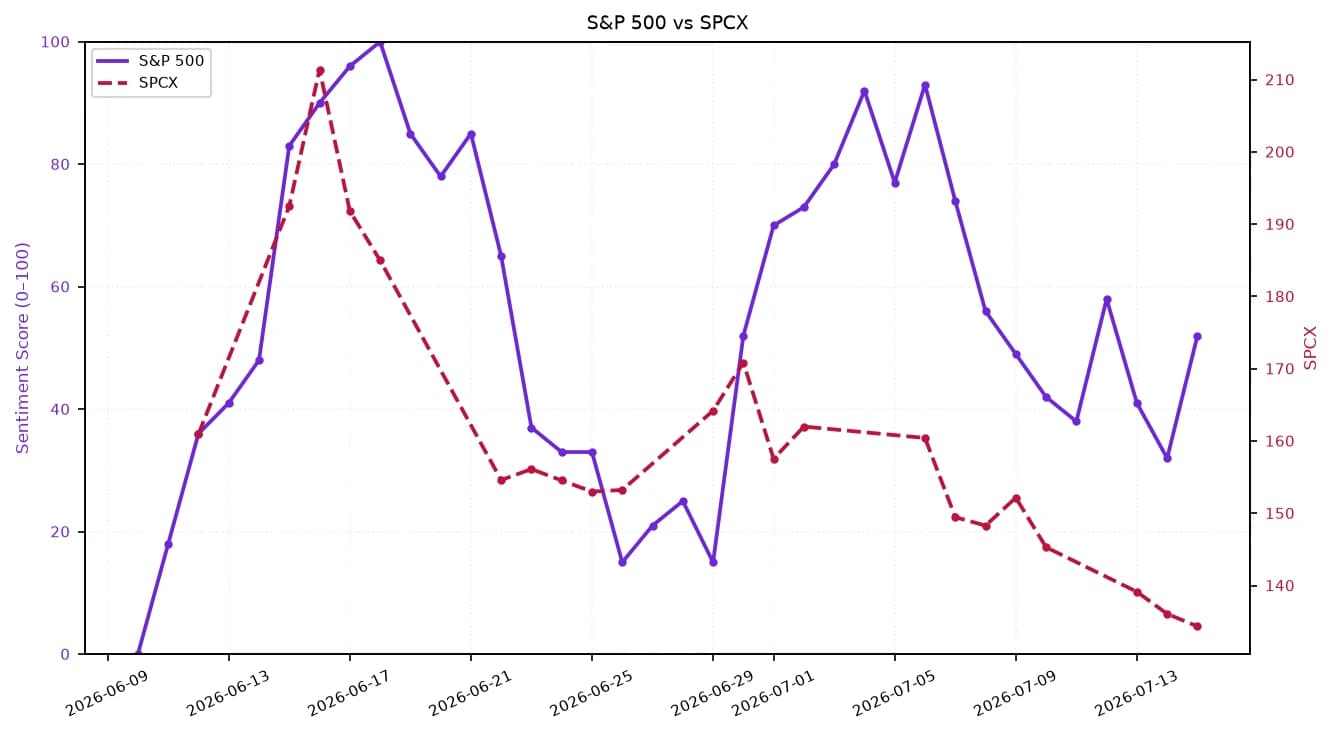
Sentiment IndicatorsⓘProprietary · adalytica.com · September 23, 2026
This is a snapshot — live sentiment, awareness and momentum for 130+ markets update continuously in the dashboard.Open AlphaPulse
Basic materials and banks were among the main drags, slipping 0.43% and 0.41%, respectively. That matters because the two groups carry heavy weight in Saudi market performance and are closely tied to the outlook for domestic lending, commodity prices and investor appetite for risk.
The slide also tracked a weaker tone in oil markets after Brent crude fell about 3% as Saudi Arabia resumed indirect crude exports, easing earlier supply fears. For Saudi equities, that is important because lower oil can quickly translate into softer sentiment around fiscal spending, earnings momentum and liquidity in cyclical sectors.
Losses were wider in pharmaceuticals and utilities, which fell 2.24% and 2.06%. Among individual stocks, Al Kathiri dropped 6.12%, followed by Ladan and Marna, while Al Rajhi was the most actively traded name at 166.39 million riyals.
On the upside, telecoms, capital goods and energy posted modest gains, but not enough to offset the broader retreat. In the near term, traders will be watching whether oil stabilizes and whether banks and materials can regain footing after the latest pullback.
| Entity | Gains | Losses |
|---|---|---|
| TASI index | ▲Liquidity from active trading | ▼Broad midday decline |
| Banks | ▲Limited on the session | ▼Drag on benchmark |
| Basic materials | ▲Mild sector resilience elsewhere | ▼Sector pressure on index |
| Oil-sensitive investors | ▲Relief from steadier supply flows | ▼Lower crude-linked sentiment |