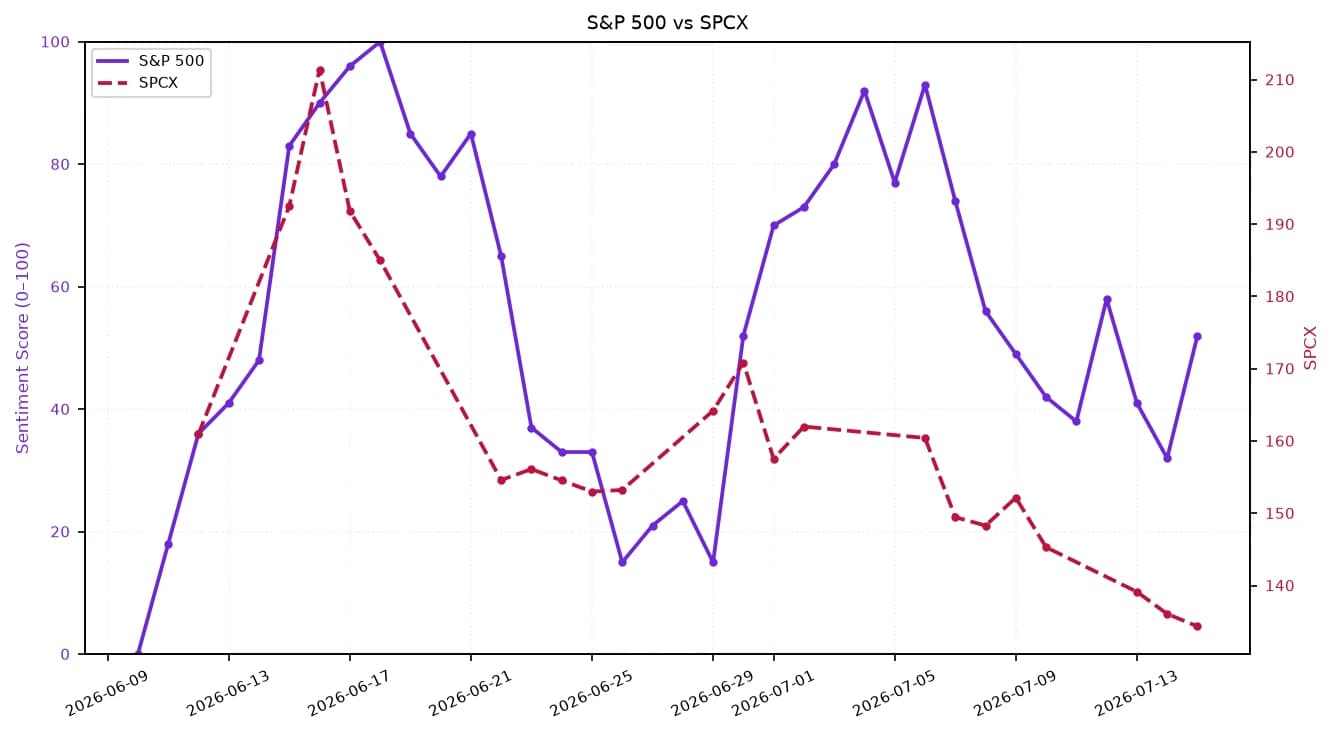
Raiffeisen Bank International’s shares fell sharply, slipping about 7% in a day and more than 11% over the past week, underscoring how quickly investor enthusiasm can fade when a bank’s growth story is tied to volatile markets in Central and Eastern Europe.
Raiffeisen Bank shares fall on CEE growth concerns
That matters because RBI is not just any Austrian lender. It makes a big part of its money from net interest income, fees and corporate banking across markets such as Czechia, Slovakia, Hungary and southeastern Europe, where growth can be stronger than in western Europe but currency swings, political friction and tougher regulation can also hit profits fast.
Sentiment IndicatorsⓘProprietary · adalytica.com · September 18, 2026
This is a snapshot — live sentiment, awareness and momentum for 130+ markets update continuously in the dashboard.Open AlphaPulse
For long-term investors, the key question is whether RBI’s appeal as a diversified CEE bank can keep outweighing the risks. The stock is still up strongly over the past year and remains far above its 52-week low, but the latest selloff shows that valuation gains can be fragile when sentiment turns and traders start reassessing the durability of earnings.
The bank’s model has clear strengths. It has deep local networks, long-standing relationships with exporters and large corporates, and a broad regional footprint that should help it capture lending growth and cross-selling opportunities over time. That gives it a real moat versus smaller local lenders, especially if the region keeps growing faster than the euro area.
But investors should not ignore the risks that come with that footprint. RBI is exposed to changes in bank levies, capital rules, credit quality and exchange rates, and those pressures can show up quickly in net interest margins, cost efficiency and bad-loan ratios. In a sector where the market pays close attention to capital strength and asset quality, even a good franchise can see its share price swing hard.
The larger lesson is straightforward: RBI may still be an attractive buy-and-hold candidate for investors who want exposure to Central and Eastern Europe, but it is best approached as a long-term position in a diversified portfolio rather than a short-term trade. The business can compound nicely when conditions are supportive, yet the market will keep testing how much of that growth is truly durable. Worth watching for patient investors.
| Entity | Gains | Losses |
|---|---|---|
| Long-term RBI shareholders | ▲Regional growth exposure | ▼Short-term volatility |
| RBI management | ▲Higher earnings base | ▼Pressure to prove durability |
| Local CEE competitors | ▲Same growth cycle | ▼Margin pressure from RBI scale |
| Risk-averse investors | ▲Clarity on bank risks | ▼Exposure to FX and regulation |