OpenAI’s plan to burn through $278 billion in cash through 2030 is the clearest sign yet that the AI boom is no longer just a software race — it is becoming a capital-intensive infrastructure cycle that could reshape winners across chips, cloud, power and data centers.
OpenAI cash burn and AI infrastructure spending

That matters because the market is still pricing AI as if the upside sits mainly in model quality and user adoption. OpenAI’s own forecast suggests the real bottleneck — and the real profit pool — is compute. The company now expects negative free cash flow of $278 billion from 2026 through 2030 even as revenue rises roughly tenfold, to $350 billion by 2030 from $36 billion this year. Cumulative revenue is projected at $840 billion over the period, but that still does not come close to covering the scale of spending needed to build and run frontier AI systems.
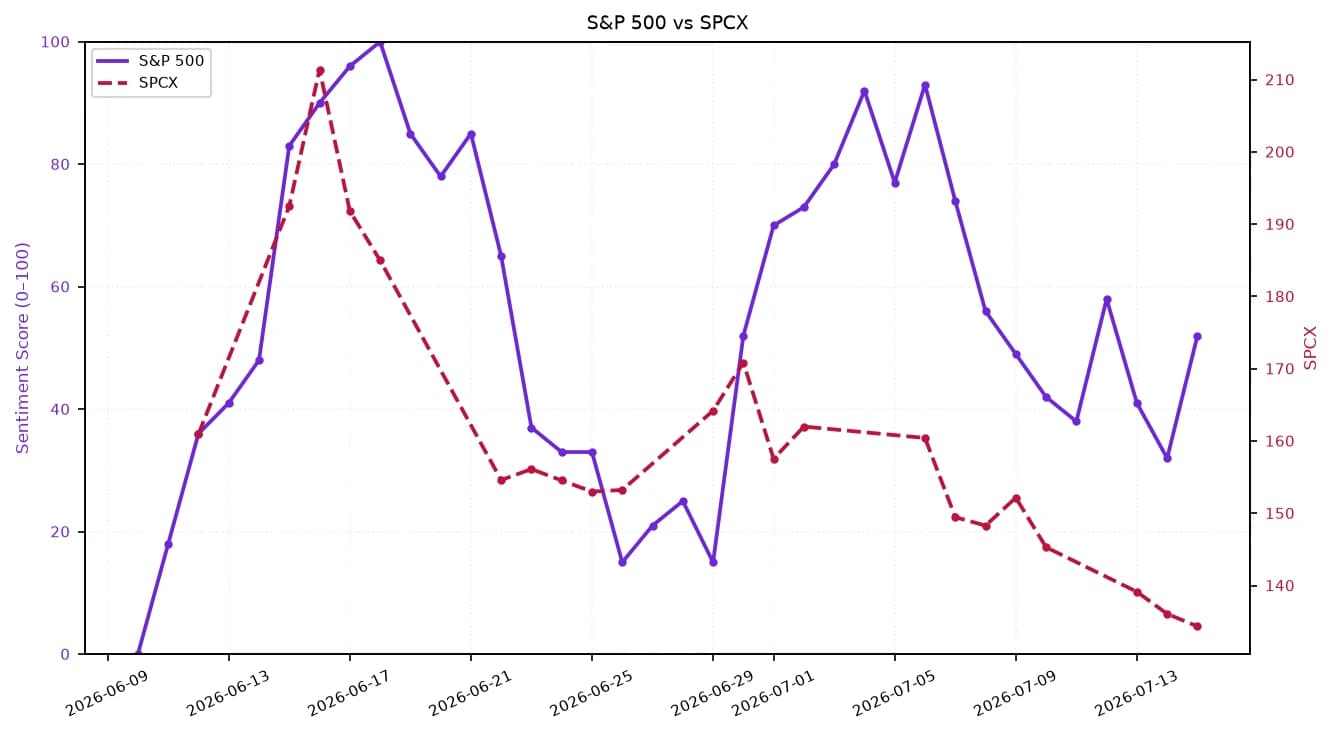
Sentiment IndicatorsⓘProprietary · adalytica.com · September 22, 2026
This is a snapshot — live sentiment, awareness and momentum for 130+ markets update continuously in the dashboard.Open AlphaPulse
The numbers are extraordinary. OpenAI reportedly expects to spend about $856 billion on compute and infrastructure by the end of the decade, making it the largest line item in its cost base. It raised $122 billion in March at an $852 billion valuation, but even that war chest is not enough to carry the company to 2028, according to the report. The financing gap helps explain why the company has been sounding out investors at a possible $1.2 trillion valuation and why capital-markets access is becoming part of the AI story, not a side issue.
For investors, this is the key inflection point: if OpenAI and its peers must keep pouring unprecedented sums into infrastructure, then the biggest beneficiaries are not just the app-layer names but the toll collectors on the AI buildout. Nvidia remains the obvious chip beneficiary, and its stock has reflected that logic. Microsoft, which has a long-term strategic partnership with OpenAI and holds a major claim on the ecosystem, also sits at the center of the capital cycle. Alphabet is another winner through cloud and technical infrastructure spending. The real trade, though, is broader: data-center builders, power suppliers, networking firms, memory vendors and cooling specialists stand to capture the recurring economics of AI expansion.
The pressure on financing also creates a second-order market effect. When the leading AI company is forced to think in terms of trillion-dollar valuations, cash burn and IPO timing, it reinforces the case that this boom will be funded by enormous external capital, not self-sustaining operating cash in the near term. That is bullish for infrastructure spending and potentially inflationary for compute, electricity and land costs. It is also a warning for companies exposed to AI demand but without pricing power, because the race to scale could compress returns even as revenue surges.
The latest stock action fits that split. Microsoft has clawed back above its 50-day moving average and sits comfortably above its 200-day moving average, while Nvidia and Alphabet have also recovered on the assumption that AI capex remains relentless. The broader market, according to Adalytica.com’s S&P 500 trade signals, is still neutral rather than euphoric — a setup that suggests investors are not yet fully positioned for another wave of AI infrastructure orders.
The takeaway is simple: OpenAI’s spending plan is not just a company story, it is a capital-allocation map for the next phase of AI. If you believe the AI buildout still has years to run, the highest-conviction way to play it is to own the picks-and-shovels that earn on every incremental dollar of compute, not the businesses that merely hope to sit on top of the stack.
| Entity | Gains | Losses |
|---|---|---|
| Nvidia | ▲More AI chip demand | ▼Higher valuation risk if capex slows |
| Microsoft | ▲Cloud and OpenAI ecosystem leverage | ▼Bigger capital intensity around AI |
| Alphabet | ▲Cloud infrastructure revenue | ▼Margin pressure from data-center buildout |
| OpenAI | ▲Scale and market leadership | ▼Cash burn and financing dependence |