A new AI tool called Jev is the latest reminder that the next big winner in artificial intelligence may not be the chatbot itself, but the chips, cloud platforms and software ecosystems that make these tools possible.
Nvidia, Microsoft, Google Gain from New AI Tool Jev
That matters because every fresh AI assistant, coding tool or agentic workflow tends to pull more demand through the same handful of infrastructure leaders. For long-term investors, the real story is not whether Jev becomes a household name. It is whether the race to build better AI tools keeps expanding the addressable market for Nvidia’s GPUs, Microsoft’s cloud, and Google’s AI stack.
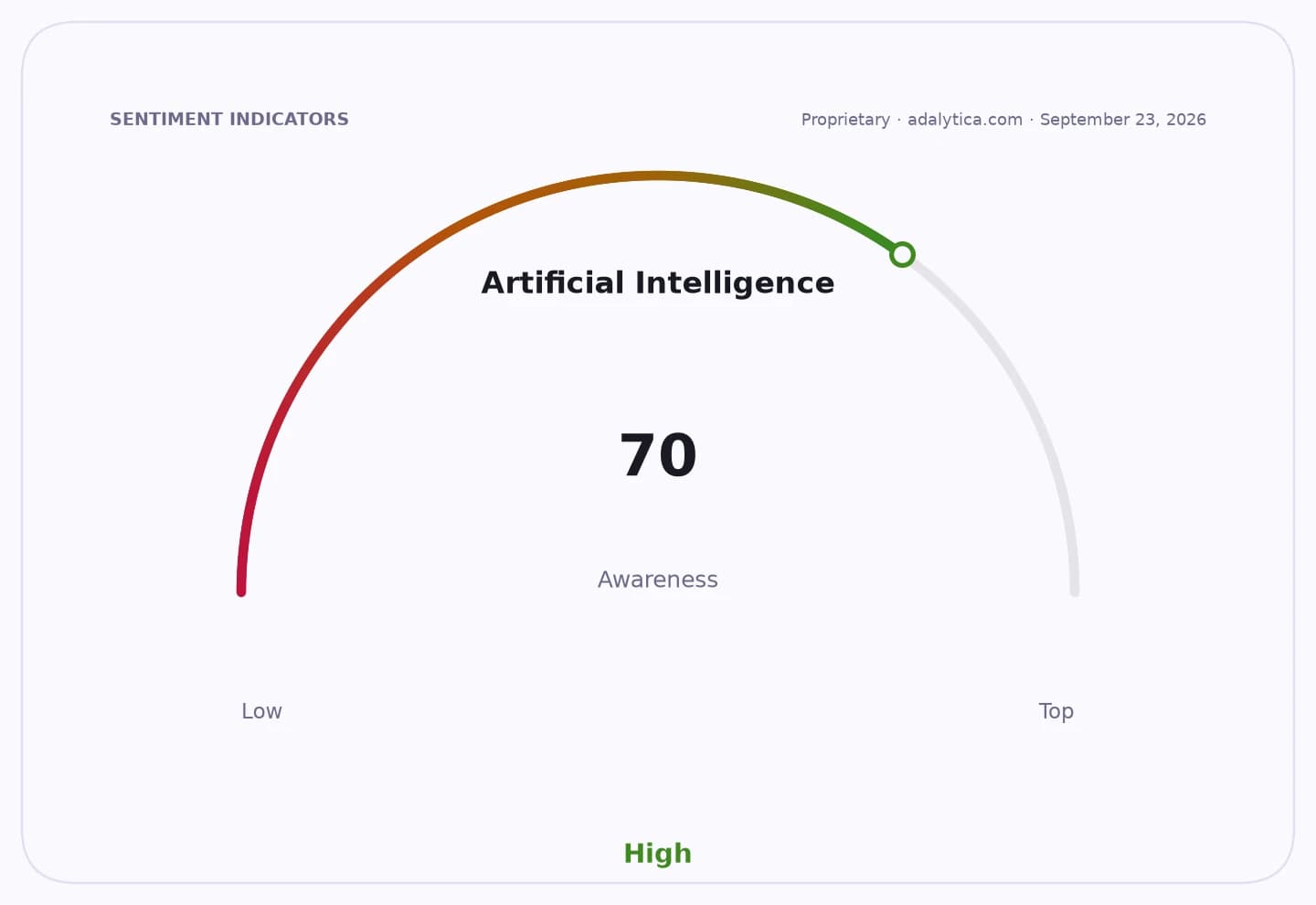
Sentiment IndicatorsⓘProprietary · adalytica.com · September 23, 2026
This is a snapshot — live sentiment, awareness and momentum for 130+ markets update continuously in the dashboard.Open AlphaPulse
Jev was created by one of the co-creators of ChatGPT, which gives it instant credibility in a crowded field of AI products trying to prove they can do more than generate text. The broader signal is that AI innovation is still moving fast enough to keep spawning new interfaces and workflows, even as regulators and enterprise buyers push for more transparency and human oversight.
That tension is important economically. New AI tools can lift productivity, reduce development time and eventually reshape how companies build software, search information and automate repetitive work. But they also reinforce a capital-intensive arms race. The companies best positioned to capture that spending are the ones supplying compute, cloud capacity and distribution — which is why investors continue to watch Nvidia, Microsoft and Alphabet so closely.
The stock tape reflects that story. Nvidia has recovered strongly from earlier weakness, with the shares recently trading above both the 50-day and 200-day moving averages and a market setup that has periodically shown momentum and volatility. Microsoft has also staged a powerful rebound from a sharp midyear selloff, while Alphabet has climbed back toward record territory. In other words, the market is still rewarding the firms that sit closest to AI demand, even when enthusiasm for any one application rises and falls.
For investors, the key lesson is not to chase the newest AI brand in isolation. Tools like Jev may become useful, even popular, but the bigger compounding opportunity usually lies in the picks-and-shovels layer: chipmakers, hyperscale cloud providers and software platforms with entrenched distribution. Those are the businesses that can monetize AI across many use cases, not just one.
There are still risks. Competition is fierce, regulation is tightening around AI-generated content, and the market can quickly punish companies that fail to convert excitement into durable revenue. But if history is any guide, the most valuable outcomes in a technology cycle often accrue to the infrastructure owners, not the flashiest app of the moment.
For investors with a 3- to 10-year horizon, Jev is worth watching mainly as a signal of where AI usage is heading. The bigger opportunity remains the companies enabling the next generation of AI tools, and that is where patient capital should stay focused.
| Entity | Gains | Losses |
|---|---|---|
| Nvidia | ▲More compute demand | ▼GPU supply pressure |
| Microsoft | ▲Cloud and AI usage | ▼Slower AI monetization if adoption stalls |
| ▲Search and AI ecosystem relevance | ▼Share loss if rivals innovate faster | |
| New AI apps like Jev | ▲Visibility and adoption | ▼Must prove lasting utility |