Seyi Makinde’s claim that Nigeria’s current N70,000 minimum wage buys less than the old N18,000 floor underscores a deeper problem for policymakers: nominal pay gains have been overwhelmed by inflation, especially after subsidy removal pushed up transport and living costs.
Nigeria Minimum Wage Falls Behind Inflation
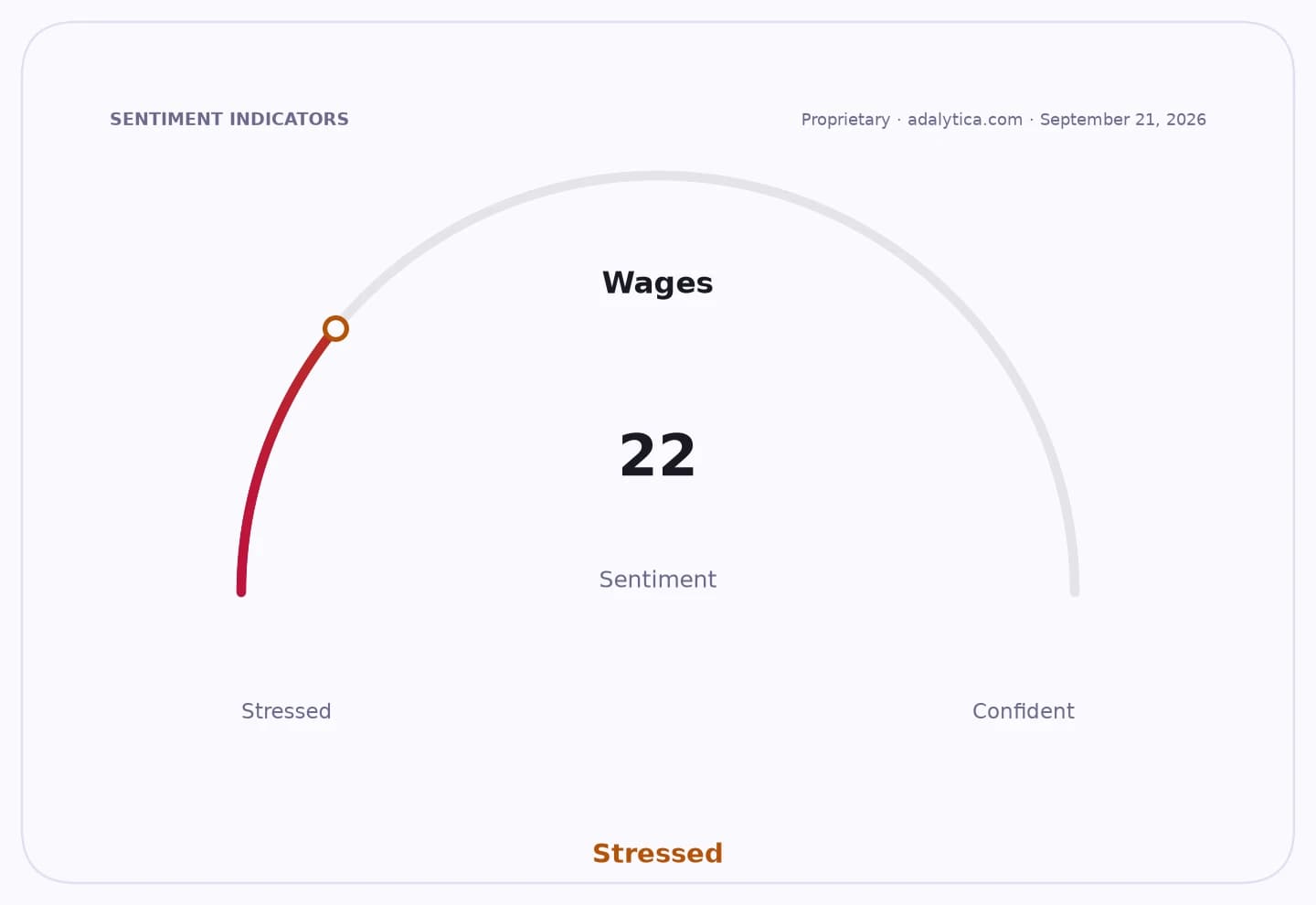
The Oyo state governor and presidential candidate said the Tinubu administration’s economic programme amounted to a “voodoo economy”, arguing that the latest wage increase has not restored workers’ purchasing power. His remarks matter because they capture the central political and economic strain in Africa’s most populous nation — households are getting more naira, but the naira is buying less.
Sentiment IndicatorsⓘProprietary · adalytica.com · September 21, 2026
This is a snapshot — live sentiment, awareness and momentum for 130+ markets update continuously in the dashboard.Open AlphaPulse
Makinde’s comparison is shorthand for a broader inflation story. Nigeria’s headline inflation eased only marginally to 15.39% in August from 15.43% in July, with food prices still almost 20% higher than a year earlier and energy inflation rising to 4.69%. Even as officials point to reform gains, the cost of essentials remains elevated enough to erode any benefit from the minimum wage adjustment.
That is the political risk for President Bola Tinubu. The minimum wage was raised to N70,000 in July 2024 to cushion the fallout from petrol subsidy removal, but workers and state governments have since faced a squeeze: salary bills are rising sharply while real incomes remain under pressure. Makinde said his own state’s monthly wage bill has quadrupled to N18 billion from N4.5 billion when he took office, a reminder that higher public-sector pay is increasingly expensive to fund.
For investors, the episode is a read-through on Nigerian consumer demand, fiscal stress and policy credibility. Weak real wages typically cap spending on discretionary goods, support demand for cheaper staples and keep pressure on transport and utilities subsidies. They also complicate the government’s effort to sell reforms as growth-positive, because the near-term pain is still being felt most visibly in pay packets and food budgets.
The broader narrative is that Nigeria’s reform agenda is trying to reset macro fundamentals, but the social contract is lagging behind. Officials say subsidy removal and related changes have mobilised N15.8 trillion in resources since mid-2023, yet the public debate remains dominated by how much of that gain has reached households. If inflation continues to outpace income growth, pressure for further wage demands, cash transfers or other relief measures is likely to intensify.
Makinde also used the moment to extend wage awards and transport subsidies in Oyo for another three months, signalling that even state governments are leaning on temporary relief rather than a durable fix. For markets, that is a warning that Nigeria’s adjustment remains incomplete: macro indicators may be stabilising, but living standards are still fragile, and that fragility will shape everything from consumer activity to the political durability of the reforms.
| Entity | Gains | Losses |
|---|---|---|
| Nigerian workers | ▲Temporary wage relief | ▼Real purchasing power |
| Tinubu administration | ▲Reform revenues | ▼Public approval on cost of living |
| Oyo state government | ▲Labour peace | ▼Higher wage bill |
| Consumer-facing businesses | ▲Low-end demand resilience | ▼Discretionary spending |