Morocco has finally opened its long-delayed futures market, launching the first contract on the MASI 20 index and giving investors a new way to hedge equity risk, improve liquidity and deepen price discovery on the Casablanca Stock Exchange.
Morocco launches first MASI 20 futures contract
The debut matters because Morocco’s capital market has long lacked a mainstream derivatives layer that larger emerging-market exchanges use to transfer risk, manage portfolios and support more efficient trading. The first session on April 6, 2026 traded 1,295 contracts for about 17 million dirhams in notional value, a modest start but an important proof that the infrastructure can now function in live conditions.
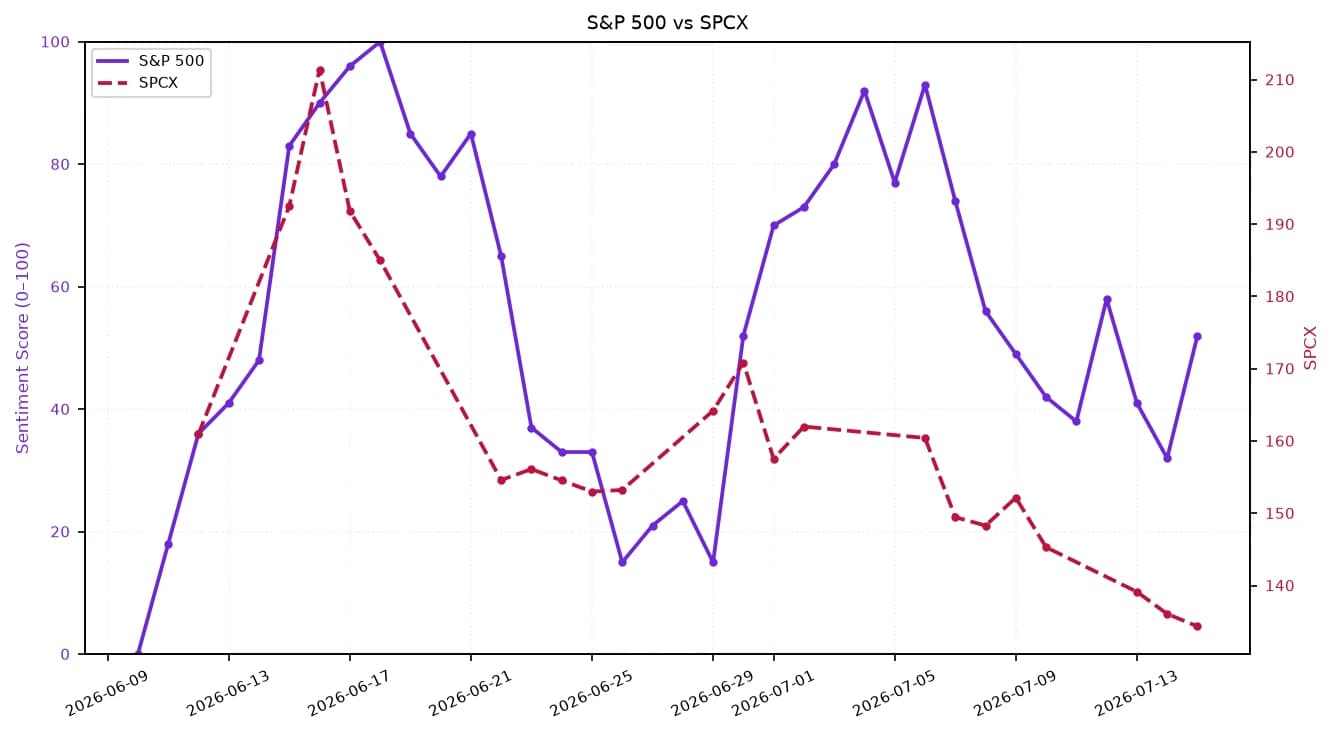
Sentiment IndicatorsⓘProprietary · adalytica.com · September 22, 2026
This is a snapshot — live sentiment, awareness and momentum for 130+ markets update continuously in the dashboard.Open AlphaPulse
The launch caps a seven-year regulatory build that brought together Bank Al-Maghrib, the market watchdog AMMC and the ICMAT coordination body under law 42-12. That architecture was designed not just to permit trading, but to prevent a derivatives market from amplifying stress in a system that has historically been more bank- and cash-market-driven. The result is a heavily regulated framework with strict capital and liquidity thresholds for brokers, clearing members and the clearing house.
Those safeguards matter because derivatives can only broaden market participation if counterparties trust the plumbing. Morocco’s clearing house requires 100% coverage of activity risk, 10% coverage for member-default risk and net capital equal to at least 100% of regulatory capital. Clearing members must hold enough liquidity to cover six months of expenses, while brokers need three months. Position limits and client concentration caps are meant to keep leverage from building too quickly in a market still learning how to price and clear risk.
For investors, the immediate significance is twofold. First, the new contract gives institutions a tool to hedge exposure to the 20 most liquid names among the 40 largest free-float stocks, which should make it easier for funds to stay invested through volatility rather than retreating from the market. Second, the existence of a futures curve can improve the efficiency of the underlying cash market by sharpening views on pricing, reducing transaction costs for larger players and encouraging more active market-making.
The first trading day’s volume suggests the product is still in its infancy, but the participant base is already widening. CFG Marchés, CDG Capital Bourse and BMCE Capital Bourse were the first approved brokers, later joined by Attijari Intermédiation and Upline Securities. On the clearing side, CDG Capital, Attijariwafa Bank and Bank of Africa are in place, giving the exchange the ecosystem needed for gradual scaling.
The launch also fits into a broader restructuring of Morocco’s market infrastructure. The stock exchange operator was transformed into a holding company in 2024, with stakes in the clearing house and Maroclear, a move intended to integrate the trading, clearing and settlement chain more tightly. The World Bank advised on risk management, operational resilience and convergence with EMIR- and ESMA-style rules, underscoring that the market was built to meet international standards rather than local minimums.
The bull case is that a functioning futures market becomes a catalyst for deeper domestic and foreign participation, better hedging and eventually more liquidity in Casablanca-listed equities. The bear case is that usage remains thin if products stay narrowly focused or if market participants are slow to adapt to derivatives trading. For now, the key fact is simpler: Morocco has crossed from design to execution, and Casablanca now has a market mechanism that can change how risk is priced and managed.
| Entity | Gains | Losses |
|---|---|---|
| Moroccan investors | ▲Hedging tools | ▼Unhedged volatility |
| Casablanca Stock Exchange | ▲Deeper liquidity | ▼Thin price discovery |
| Brokerage and clearing members | ▲New fee streams | ▼Higher compliance costs |
| Cash equity traders | ▲Better market efficiency | ▼More competition from hedgers |