Misiones will begin the most consequential phase of its 2027 budget debate on Monday, as the Credit Fund, the Ministry of Finance and the Legislative Branch lay out spending plans that will determine how the province allocates more than $5.2 trillion and whether it can keep social outlays at the center of policy without further straining the fiscal accounts.
Misiones 2027 budget debate starts Monday
The hearing matters because the budget is the province’s main economic policy document: it sets the scale of public investment, the pace of social spending and the room available for payroll, infrastructure and debt service. With roughly 63% of resources earmarked for health, education and social containment, the proposal points to a government still prioritizing household protection and basic services over a sharper retrenchment, even as subnational budgets across the region face tighter financing conditions and stronger pressure to show fiscal discipline.
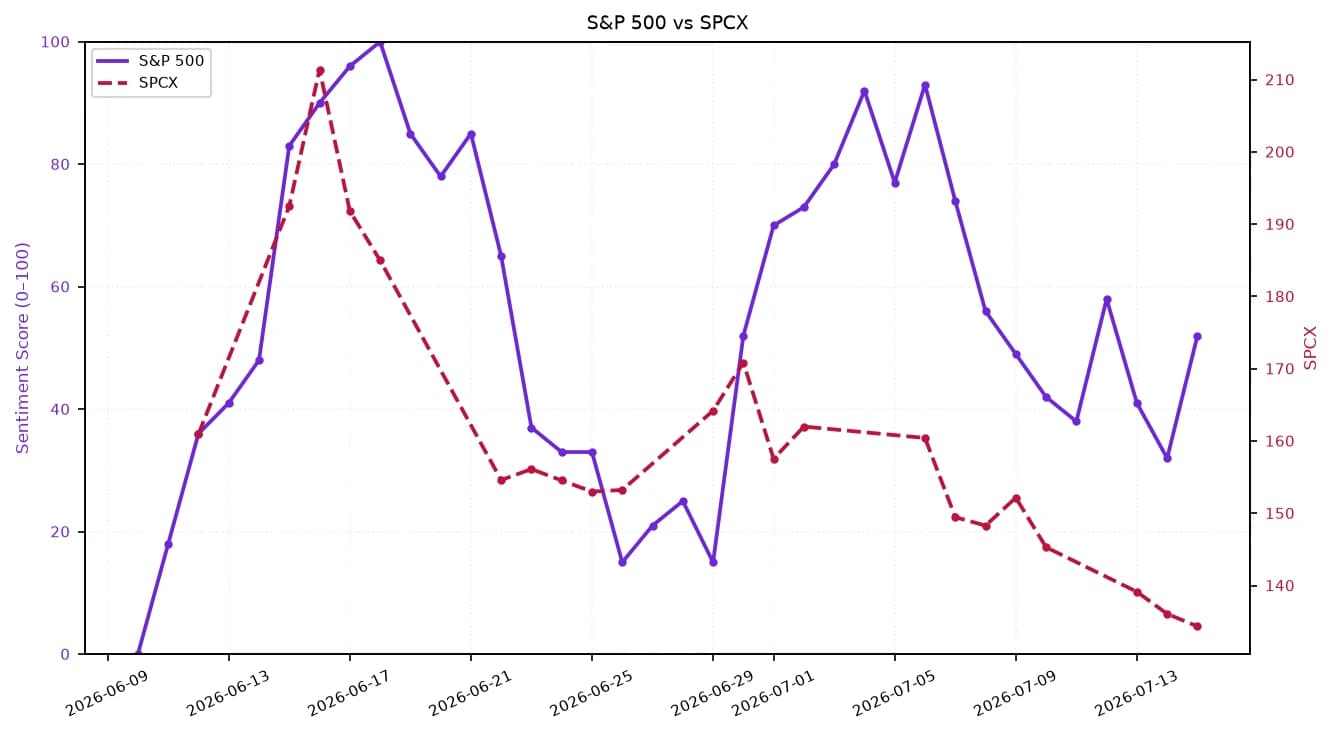
Sentiment IndicatorsⓘProprietary · adalytica.com · September 23, 2026
This is a snapshot — live sentiment, awareness and momentum for 130+ markets update continuously in the dashboard.Open AlphaPulse
Monday’s presentations will be watched for more than the headline figures. The Credit Fund, led by Germán Simes, is expected to clarify the funding conditions behind the province’s financing strategy, while Finance Minister Adolfo Safrán will detail the numbers that shape next year’s revenue and spending assumptions. Their testimony will help determine whether the spending plan is a realistic roadmap or a politically ambitious draft that needs trimming before it reaches the floor.
For investors, the key issue is not simply the size of the budget but its mix. A plan heavily weighted toward social spending usually supports local demand and shields consumption at the margin, but it can also leave less room for capital spending if revenues weaken or financing costs rise. That tension matters for contractors, suppliers and public-sector-linked firms that depend on the pace and composition of government execution, as well as for holders of provincial debt who care about liquidity, rollover risk and the credibility of the fiscal trajectory.
The legislative hearing also takes place against a broader backdrop in which governments are trying to balance austerity with political demands for relief. Misiones is not alone in facing that trade-off: budget talks elsewhere have increasingly focused on housing support, social credits and deficit control, reinforcing the idea that next year’s public finances will be shaped as much by distributional choices as by macroeconomic arithmetic. In that environment, the province’s ability to defend a large spending envelope without weakening its balance sheet will be the central test.
The next catalyst will be the committee’s opinion and any changes made before the bill goes to the chamber. If lawmakers preserve the current structure, the government keeps its social-policy emphasis intact; if they force a tighter version, the market will read that as a sign that fiscal caution is taking precedence over expansion.
| Entity | Gains | Losses |
|---|---|---|
| Misiones government | ▲Policy flexibility | ▼Fiscal headroom |
| Health, education and social programs | ▲Larger funding share | ▼Capital spending |
| Provincial bondholders | ▲Clarity on financing plan | ▼If deficits widen |
| Contractors and suppliers | ▲Spending visibility | ▼If budget is tightened |