Mexico’s inflation has climbed back to a five-month high, underscoring how geopolitics and sticky service prices are keeping the cost-of-living shock alive even as parts of the economy cool.
Mexico Inflation Hits Five-Month High in August
The national consumer price index rose 3.26% in August, while core inflation, which strips out food and fuel, ran at 3.88%, showing that underlying price pressure is still broad enough to matter for households and policymakers. The increase came as war-related disruptions linked to Iran fed through to costs, while tuition, restaurants, insurance and financial services also got more expensive.
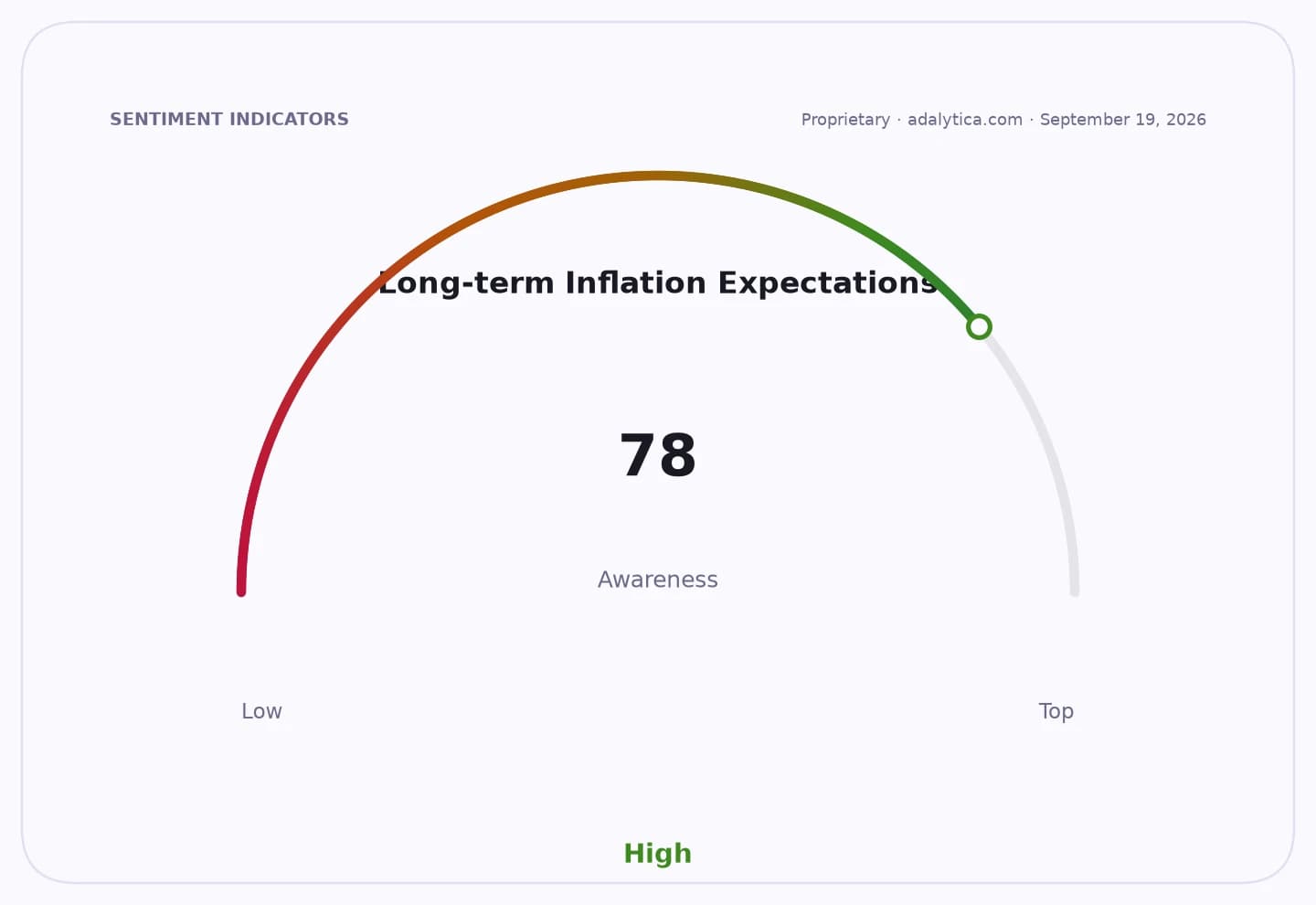
Sentiment IndicatorsⓘProprietary · adalytica.com · September 19, 2026
This is a snapshot — live sentiment, awareness and momentum for 130+ markets update continuously in the dashboard.Open AlphaPulse
That matters because inflation at this level is not just an abstract macro print — it determines how much purchasing power consumers lose and how much room the central bank has to cut rates. For Mexico’s households, the squeeze is showing up where it hurts most: the central daily expenses that are hardest to avoid. For businesses, it raises the risk that demand weakens even if nominal revenues rise.
The policy implication is just as important. Banxico has been trying to balance inflation control against growth support, but a renewed upside surprise in prices can slow the pace of easing or keep rates higher for longer. That is bad news for rate-sensitive sectors, borrowers and smaller companies that depend on cheaper credit to expand.
For investors, the message is that inflation is no longer just a headline about fuel or food. It is becoming a margin and valuation issue across consumer spending, financials and interest-rate-sensitive assets. Firms with pricing power, disciplined costs and exposure to essential services should hold up better than names tied to discretionary demand.
The broader story is one the market cannot ignore: inflation is proving stubborn exactly where it is most damaging, in the recurring costs that shape everyday life. If geopolitical risk keeps feeding import and service inflation, the winners will be lenders, insurers and companies that can reprice quickly; the losers will be consumers, leveraged borrowers and businesses exposed to slower real demand.
| Entity | Gains | Losses |
|---|---|---|
| Banxico | ▲policy credibility | ▼room to cut rates |
| Banks and insurers | ▲wider spreads | ▼rate-cut bets |
| Consumers | ▲none | ▼real purchasing power |
| Rate-sensitive borrowers | ▲none | ▼higher financing costs |