Meta is under fresh global scrutiny after United Nations experts warned that alleged restrictions and uneven visibility on the company’s platforms could affect Brazil’s presidential election, putting the world’s largest social network back at the center of a politically sensitive vote.
Meta Faces Brazil Election Scrutiny

The warning matters because Brazil is one of the biggest democracies in the world and one of Meta’s most important advertising markets, where any perception that the company is shaping election exposure can trigger tighter regulation, legal risk and advertiser caution. For investors, the issue lands as Meta already faces pressure to show it can police content and maintain trust while keeping ad targeting efficient.
Sentiment Indicators
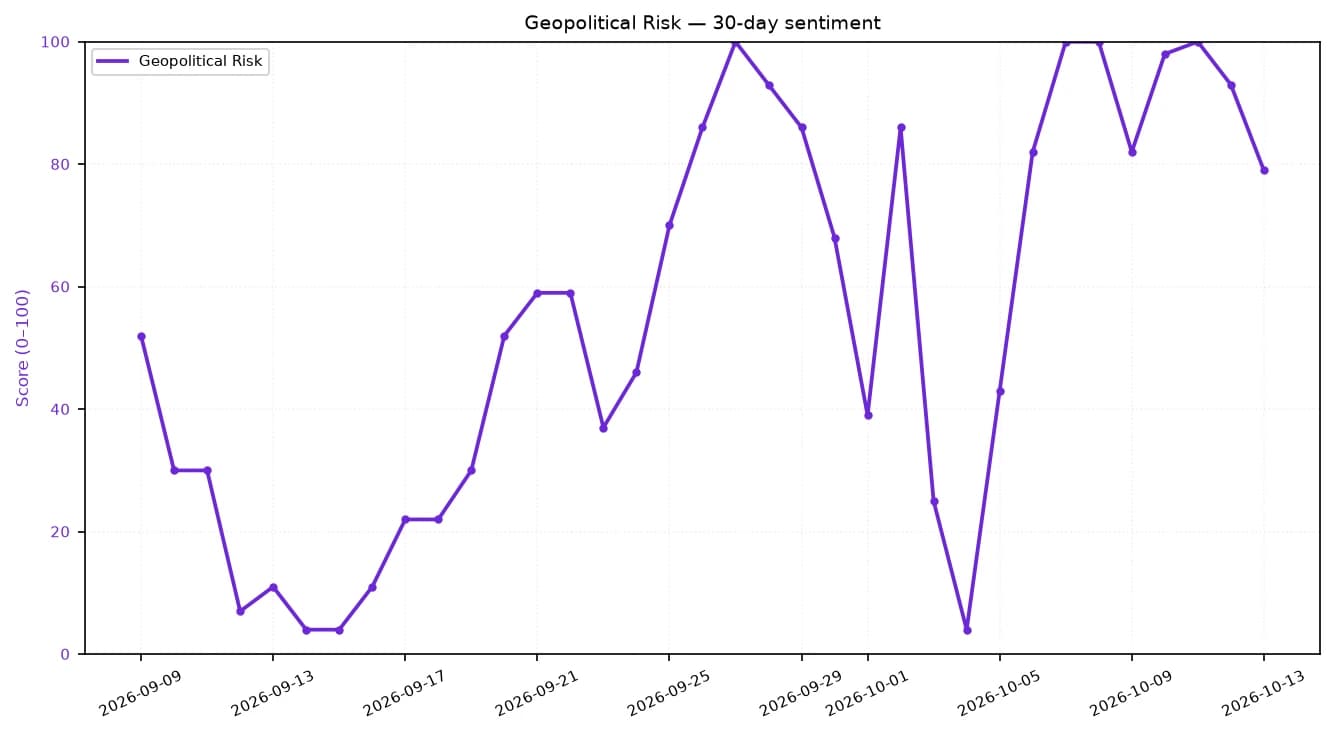
Geopolitical Risk
The concern is not just reputational. Brazil’s election has been tightly fought and operationally messy, with authorities extending voting hours amid logistical disruptions and security concerns. That combination raises the odds of legal challenges, disputes over the integrity of the result and intensified scrutiny of platforms that carry campaign content.
Meta shares have been volatile even before the election controversy. The stock closed at $630.56 on Oct. 26, down from $762.50 on Oct. 13, according to the data provided, while its 50-day moving average sits at $664.40 and its 200-day average at $631.59. The recent selloff has pushed the shares below both benchmarks, and the relative strength index at 23.3 points to technically oversold conditions.
Geopolitical Risk vs METAadalytica.com
Explore this data interactively — full history, time series and cross-market comparisons.
The company has already flagged regulatory and liability risks in recent filings, including obligations in some markets to remove unlawful content and prevent illegal ads or content related to certain crimes. That backdrop makes Brazil especially important for Meta, since election-related allegations can quickly spill from one country into broader policy and enforcement pressure.
For Brazil, the stakes go beyond social media. The outcome will shape how the next government approaches crime, foreign investment and strategic resources, while also influencing relations with the U.S., China and Europe. For Meta, the immediate risk is that a contested election turns into a wider debate over platform accountability, advertising controls and the role of digital networks in democratic politics.
If disputes deepen after the vote, investors will be watching for court action, regulatory fallout and any new government pressure on Meta’s operations in Brazil.
| Entity | Gains | Losses |
|---|---|---|
| Brazil election authorities | ▲More time to administer vote | ▼Higher scrutiny over process |
| Meta | ▲None immediate | ▼Reputational and regulatory risk |
| Investors in META | ▲Potential oversold bounce if risk fades | ▼Election-linked volatility |
| Brazil voters/campaigns | ▲Longer access to ballot | ▼Confusion from disputed platform visibility |