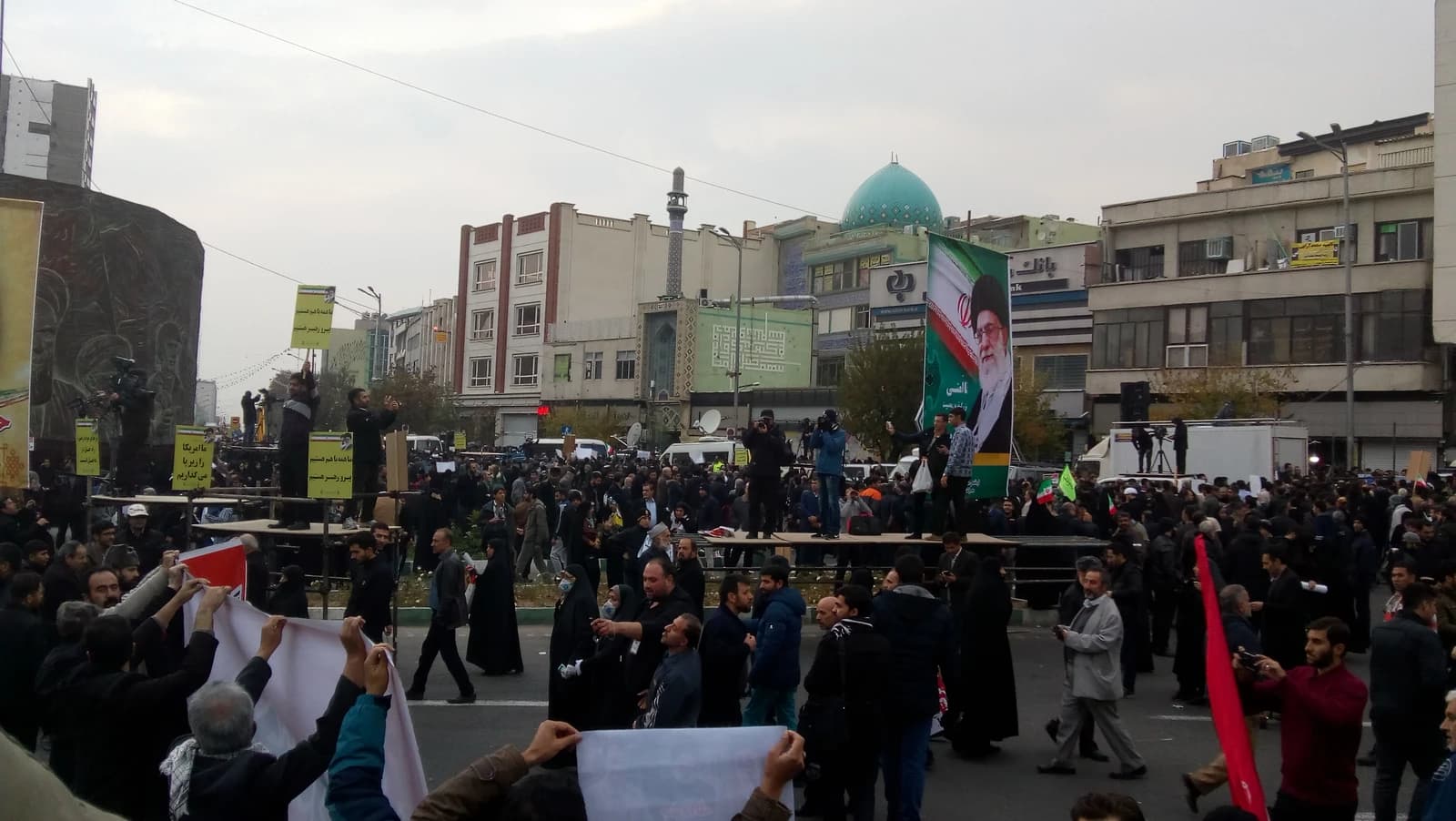
Hundreds of thousands of Iranians marched in Tehran on Monday in a government-organized show of force that matters less as a street demonstration than as a signal that the Islamic Republic is preparing its population for a longer, riskier confrontation with the United States and Israel.
Iran Tehran rally raises oil risk premium
For investors, that is the key takeaway: when Iran mobilizes public support, showcases drones and talks about short military training for volunteers, the chances rise that the standoff stays elevated — and that means a higher premium on oil, shipping and safe-haven assets even if no new strike is immediately underway.
Sentiment IndicatorsⓘProprietary · adalytica.com · September 21, 2026
This is a snapshot — live sentiment, awareness and momentum for 130+ markets update continuously in the dashboard.Open AlphaPulse

President Masoud Pezeshkian, senior commanders and other top officials watched as crowds chanted against the U.S. and Israel. Iranian authorities said the rally was part of a broader campaign called “Janfaday-e Iran,” or “Those ready to sacrifice for Iran,” aimed at recruiting people for short military training courses to help defend the country.
That kind of messaging is economically important because it is designed to harden domestic resolve at a moment when Tehran wants to convince both its own citizens and foreign adversaries that pressure will not force a retreat. In practical terms, the more Iran believes it can absorb sanctions, threats or limited military action, the less likely it is to de-escalate quickly.
Geopolitical Risk — 30-day sentimentadalytica.com
Explore this data interactively — full history, time series and cross-market comparisons.Open AlphaPulse

The stakes are not just political. Iran’s Revolutionary Guard also displayed drones at the march, including models officials said are typically used against ships in the Strait of Hormuz. That matters because the narrow waterway is one of the world’s most important energy chokepoints. Any hint of disruption there can ripple through crude oil, liquefied natural gas and tanker markets far beyond the Gulf.
That’s why traders pay so close attention to these moments. Oil-linked funds such as USO have already been volatile, and while the latest move in prices may not reflect a direct supply shock, the broader market backdrop still shows investors pricing geopolitical risk more aggressively whenever Iran signals it is willing to escalate. Gold has also remained near elevated levels, consistent with demand for defensive assets when Middle East tensions flare.
The rally comes as Iran tries to project unity at home and deterrence abroad. After months of conflict and threats, Tehran is telling the world that the population is not rattled, that the military remains prepared and that pressure from Washington will not break the country’s will. Whether that message is fully believed abroad is another question, but markets do not need certainty to react — only the possibility of tighter oil flows or broader regional conflict.
For long-term investors, the lesson is straightforward: geopolitical risk around Iran is not a one-day headline, but a recurring feature of energy markets. That makes diversified exposure, patience and attention to energy chokepoints more important than trying to guess the next headline. The Tehran rally is worth watching because it keeps the odds of persistent volatility higher, and volatility in oil still has a way of touching everything from transport costs to inflation expectations.
| Entity | Gains | Losses |
|---|---|---|
| Iran government | ▲Domestic cohesion | ▼Diplomatic flexibility |
| U.S. and Israel | ▲Deterrence pressure | ▼Strategic certainty |
| Oil bulls | ▲Higher risk premium | ▼Stable supply assumptions |
| Global consumers | ▲— | ▼Lower fuel prices |