Hangzhou Security Tax Housing REIT has been priced into one of the strongest public-property launches in China this year, with investor orders coming in at 355.04 times the initial offline offering and the fund ultimately set at 3.050 yuan per unit.
Hangzhou Security Tax Housing REIT priced at 3.050 yuan
That kind of oversubscription matters because it shows how hungry institutional money remains for income-producing real estate even as broader housing markets stay under pressure. For investors, the message is straightforward: in a world where growth is uneven and rates are still high, cash flow and regulated yield are commanding a premium.
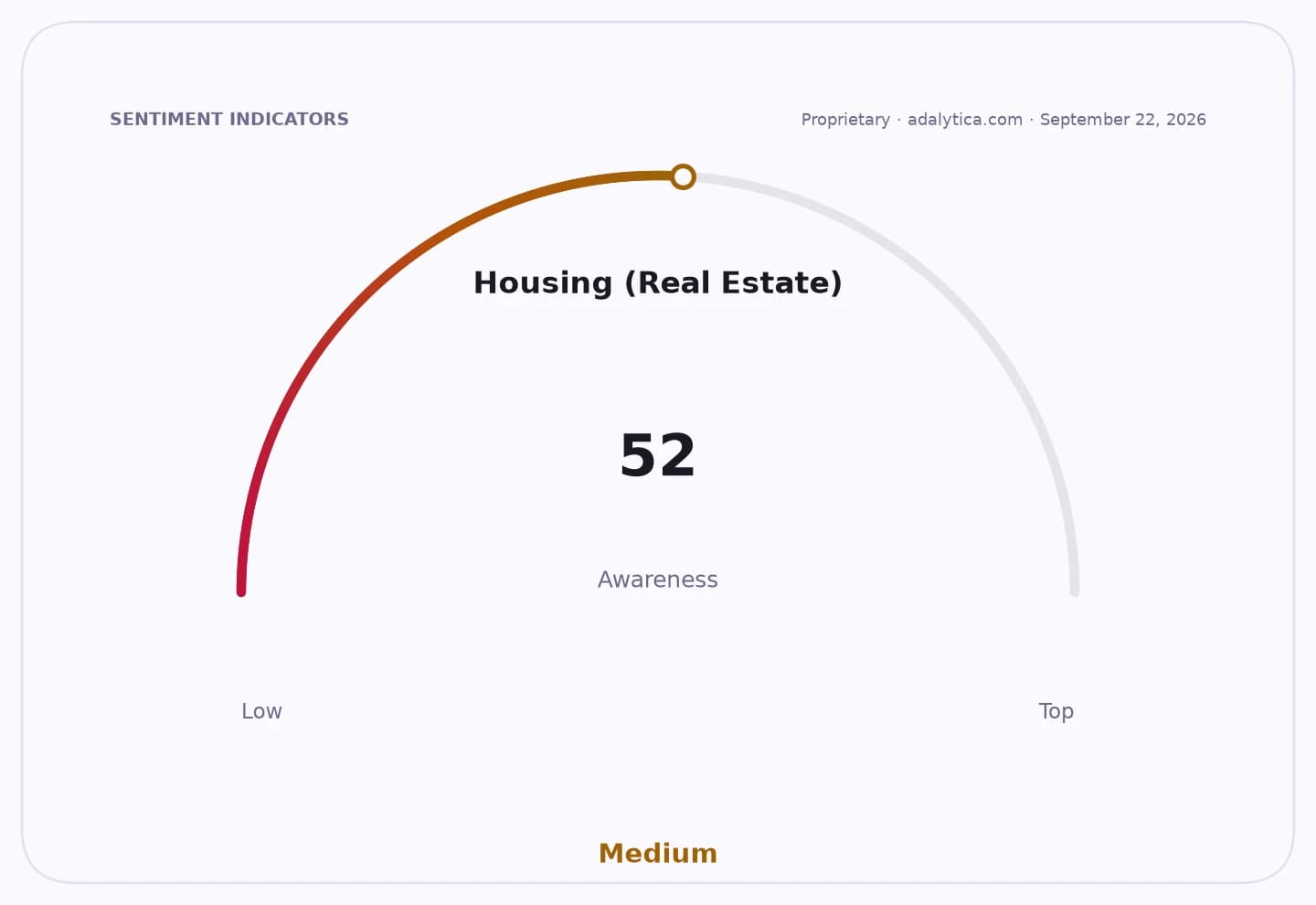
Sentiment IndicatorsⓘProprietary · adalytica.com · September 22, 2026
This is a snapshot — live sentiment, awareness and momentum for 130+ markets update continuously in the dashboard.Open AlphaPulse
The fund manager and financial adviser said 83 offline investors managing 529 allocation accounts submitted bids for 2.23677 billion units, with offers ranging from 2.800 yuan to 3.054 yuan per unit. The median bid came in at 3.0540 yuan, while the weighted average was 3.0528 yuan, leaving the final issue price just below the top of the range.
For a housing-related REIT, that is economically important beyond the headline multiple. It suggests investors are willing to look through near-term volatility in Chinese property and focus on the structural appeal of packaged rental assets, especially when policy support and clearer pricing frameworks improve the market’s investability. The message is not that housing is suddenly booming. It is that capital is still available for assets with visible distributions and a cleaner yield profile than developers or speculative land bets.
The broader backdrop is supportive. China’s property sector remains in a slow repair phase, but public REIT-style vehicles offer a different proposition: regulated access to income-producing assets rather than balance-sheet risk tied to new construction. That distinction matters for long-term investors because it changes the equation from cyclical home-price betting to compounding from distributions.
The move also fits a wider REIT market narrative in Asia, where investor appetite has been deepening as regulators refine valuation rules and more asset types come to market. In that setting, a 355-times oversubscribed offer is not just a one-off squeeze; it is a sign that income assets are becoming more tradable and more sought after as a portfolio diversifier.
Still, investors should keep their expectations grounded. Heavy subscription can support a strong debut, but it does not guarantee sustained returns. The long-term case will depend on portfolio quality, occupancy, distribution stability and whether the REIT can keep delivering cash flow through different property cycles. For buy-and-hold investors, that is the real story to watch.
| Entity | Gains | Losses |
|---|---|---|
| Hangzhou Security Tax Housing REIT | ▲Strong pricing power | ▼Little room for a cheap debut |
| Institutional bidders | ▲Access to yield asset | ▼Lower allocation risk |
| Chinese property developers | ▲More capital attention for REITs | ▼Less appetite for speculative exposure |
| Income-focused investors | ▲Visible cash-flow vehicle | ▼Growth seekers |