The price of the gold pound rose in Egypt on Sunday, with the 8-gram coin climbing to 52,760 pounds as local bullion tracked another move higher in gold prices and kept the market’s haven bid alive.
Gold pound rises in Egypt as bullion climbs
That matters because gold is still acting as a hedge against a cocktail of inflation, currency weakness and geopolitical risk — exactly the forces that keep Egyptian consumers, jewelers and investors paying up for physical metal even when demand is patchy. The move also reinforces how local gold pricing is being driven less by retail jewelry demand and more by the broader macro backdrop, including global rates, the dollar and speculative positioning.
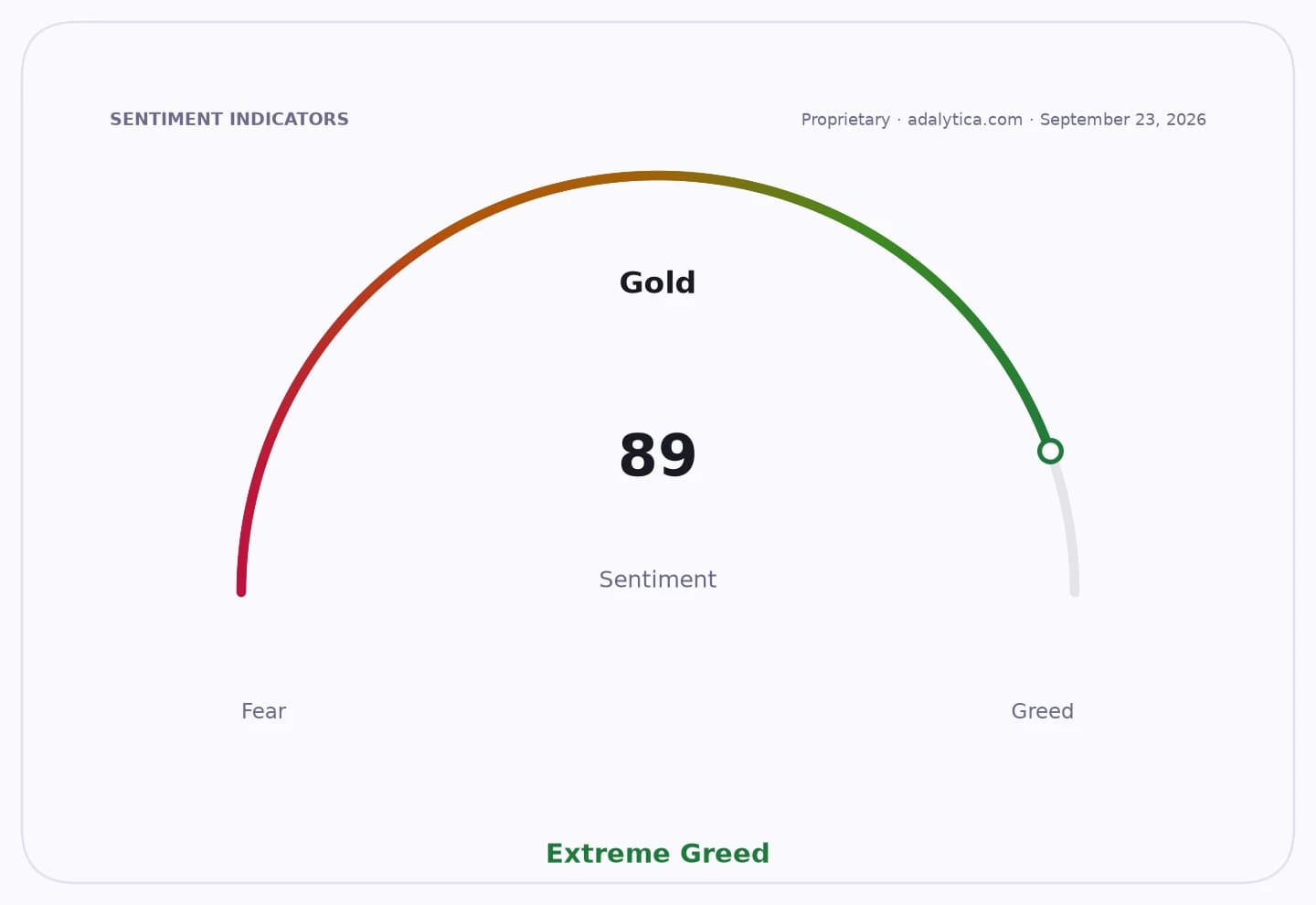
Sentiment IndicatorsⓘProprietary · adalytica.com · September 23, 2026
This is a snapshot — live sentiment, awareness and momentum for 130+ markets update continuously in the dashboard.Open AlphaPulse
In the goldsmiths’ market, the quarter-pound coin, which weighs 2 grams, was priced at 13,190 pounds, while the half-pound coin at 4 grams reached 26,380 pounds. The full 8-gram gold pound settled at 52,760 pounds, underlining a broad-based rise across commonly traded retail weights.
The gains came alongside higher local gold quotes for the main karat categories. Twenty-four-karat gold was selling at 7,308.5 pounds a gram, 21-karat at 6,395 pounds and 18-karat at 5,481.5 pounds, according to the latest market update. An ounce of gold was priced at $4,378.57, keeping bullion close to elevated global levels.
For investors, the key point is that gold remains in a powerful uptrend even after sharp runs earlier this year. GLD, the SPDR Gold Shares ETF, is still trading near $400, while proprietary Adalytica.com sentiment for gold has surged to 89, classified as “Extreme Greed,” a sign that flows remain aggressive even if short-term momentum has cooled. Technical readings show the ETF sitting below its 200-day moving average, but still well above many spring levels, suggesting the bigger trend has not broken.
That is why the rally matters beyond the jewelry counter. When gold climbs in local currency terms, it usually signals either stronger global bullion prices, a weaker domestic currency, or both — and all three can compress purchasing power while pushing savers toward hard assets. In markets like Egypt, that can translate into stronger demand for coins and bars as households look for store-of-value protection rather than spending into inflation.
The broader investment narrative is straightforward: gold is still the cleanest trade on policy uncertainty, sticky inflation and the risk that central banks stay behind the curve. If rates fall later and the dollar softens, bullion can extend higher. If risk sentiment worsens, it has another leg up. Either way, the bias remains constructive, and the local gold pound price is simply the retail expression of that global macro trade.
For investors, the actionable takeaway is to stay positioned for further strength in bullion and gold-linked assets, with physical coin demand, gold ETFs and miners likely to remain the main beneficiaries if the current macro backdrop persists.
| Entity | Gains | Losses |
|---|---|---|
| Gold buyers/savers | ▲Inflation hedge | ▼Higher entry cost |
| Egyptian jewelers | ▲Higher turnover | ▼Margin pressure |
| Gold miners/ETFs | ▲Stronger gold prices | ▼Little if prices reverse |
| Cash holders | ▲None | ▼Purchasing power erosion |