Glencore has suspended a senior executive as part of an internal review of his ties to an iron ore trader, a move that puts governance scrutiny over one of the world’s biggest commodities groups back in focus at a time when iron ore markets are already fragile.
Glencore suspends executive in governance review
The suspension matters because Glencore’s trading business depends on trust, counterparties and tight control over conflicts of interest. Any suggestion that a senior employee may have had undisclosed links to a trader can quickly become more than a personnel issue: it can affect how miners, steelmakers, banks and regulators view the firm’s controls, and it can raise the cost of doing business in a sector where relationships are often as valuable as cargoes.
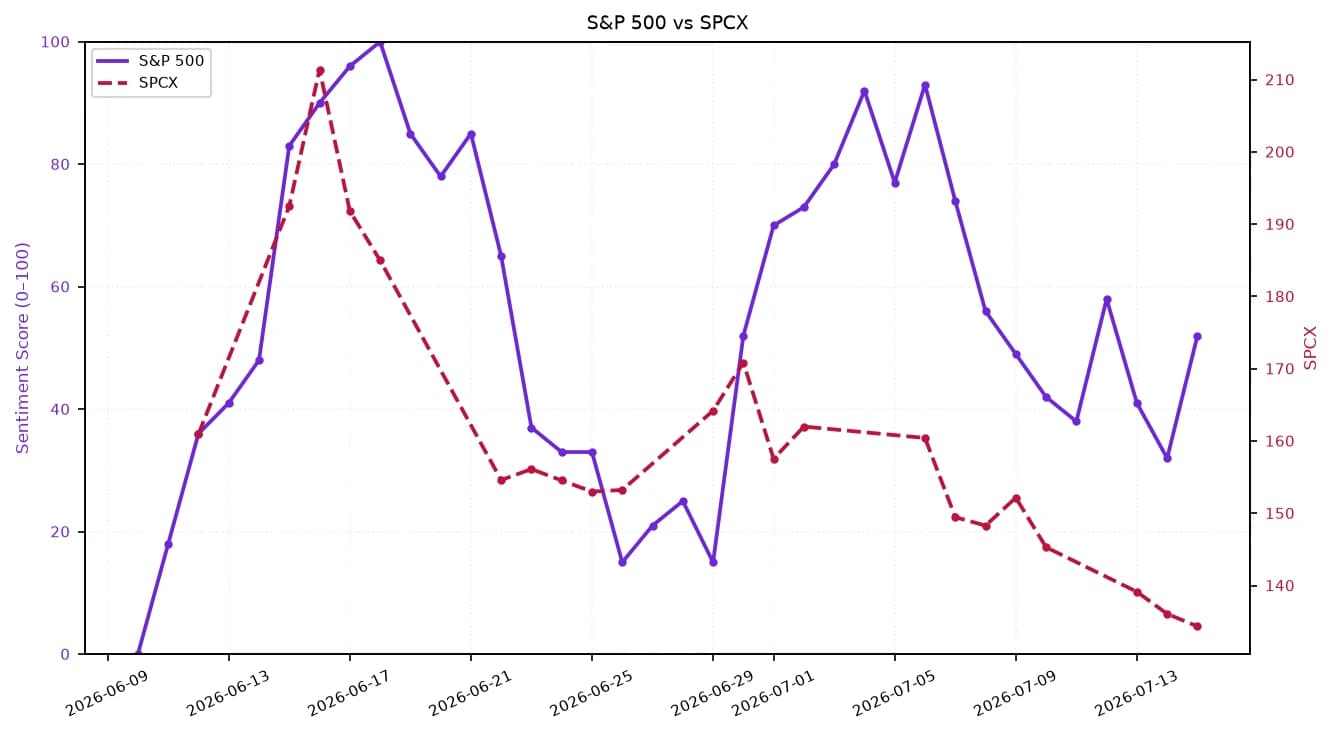
Sentiment IndicatorsⓘProprietary · adalytica.com · September 19, 2026
This is a snapshot — live sentiment, awareness and momentum for 130+ markets update continuously in the dashboard.Open AlphaPulse
For investors, the immediate risk is not necessarily a direct hit to earnings, but a reputational overhang that can widen into legal, compliance and client-retention concerns. Glencore shares have been volatile alongside the broader miners group, and the stock was trading at 14.94 on the latest close after a sharp run earlier this year, leaving the market more sensitive to governance headlines after a strong move that had taken the shares well above the 50-day moving average. The recent pullback also comes as the stock’s relative strength has eased from overbought levels, suggesting investors are less willing to pay up for bad news.
The episode lands against a mixed backdrop for iron ore itself. Prices have held up better than many expected this week, helped by lower freight costs and a firmer yuan, but the underlying demand picture remains weak as Chinese steel mills curb output and port inventories rebuild. That combination has left the market vulnerable to consolidation rather than a sustained rebound, which makes any disruption to trading flows or counterparty confidence more important for Glencore than for a miner with a simple production model.
The broader sector context is also relevant. BHP and Rio Tinto, the dominant listed iron ore producers, have seen their shares retreat from recent highs as technical indicators cooled, reflecting the same uncertainty around Chinese demand and supply discipline. In that setting, Glencore’s value proposition is its trading flexibility, not just physical output. A governance lapse, or even the appearance of one, can undermine the premium investors assign to a business built on information, access and execution.
If the review remains narrow, the financial impact may prove limited. But if it exposes weaknesses in controls or expands into external scrutiny, the market is likely to treat it as another reminder that in commodities trading, compliance risk can move just as fast as prices.
| Entity | Gains | Losses |
|---|---|---|
| Glencore management | ▲Can show compliance action | ▼Faces reputational damage |
| Iron ore traders | ▲Stronger scrutiny on ties | ▼Higher compliance burden |
| Counterparties and banks | ▲Tighter risk controls | ▼Short-term uncertainty |
| BHP and Rio Tinto | ▲Relative governance premium | ▼Weaker sector sentiment |