Germany’s far-right breakthrough in Saxony-Anhalt is not just another regional protest vote — it is a warning that Europe’s political center is losing its ability to contain an anti-system force that now has real national and economic consequences.
Germany AfD Rise in Saxony-Anhalt Raises Policy Risk

That matters because Germany is the anchor of the continent’s industrial model. Hungary’s own economy sends roughly a quarter of its exports to Germany, and the same German manufacturing engine underpins supply chains across central and eastern Europe. When the country that decides so much of Europe’s industrial output starts normalizing a hard-right challenger, investors have to think beyond polling and toward policy continuity, labor flows, trade, and capital allocation.
The AfD’s strong showing in Saxony-Anhalt — close to 44% in the election cited by local commentary — is the latest sign that the far right is no longer a fringe disruption but a durable political bloc. Across Europe, radical-right parties are now the most popular family of parties, with support levels that would have been unthinkable a generation ago. The French National Rally, Norway’s Progress Party and Britain’s Reform UK have all posted strikingly high readings in recent summer surveys, underscoring that Germany is part of a broader continental realignment rather than an isolated case.
For markets, the implication is not a simple binary on who governs next. It is that European policy risk is becoming chronic. Investors have long priced Germany as the region’s stabilizer — the country that quietly absorbs shocks, protects the euro area’s industrial base and preserves the rules-based framework that multinational supply chains depend on. A sustained far-right advance makes that assumption less reliable. It raises the odds of harder rhetoric on migration, greater pressure on fiscal policy, more confrontation over Brussels, and a more volatile backdrop for companies exposed to European domestic demand.
That is why the reaction to the Saxony-Anhalt result matters even beyond Germany. Street protests against the far right and sharp criticism from mainstream leaders show that the political firewall is still standing — but only barely. The real issue is not whether one state vote changes government policy tomorrow. It is whether the center can still offer a persuasive economic answer to voters who see stagnation, bureaucracy and insecurity as the status quo.
The market underestimates how much this benefits investors positioned for fragmentation and policy churn. Defense, border-security, industrial automation and select domestic infrastructure names stand to gain if Europe keeps hardening politically and strategically. Exporters with heavy exposure to Germany’s manufacturing cycle may face more uncertainty, while firms tied to social stability, logistics resilience and sovereign-capital spending can become the hidden winners of a more anxious continent.
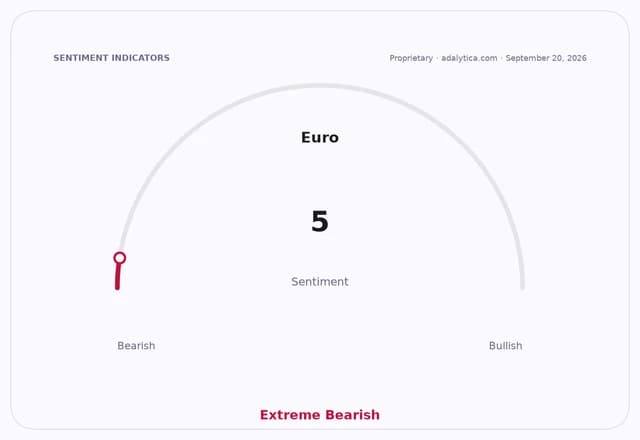
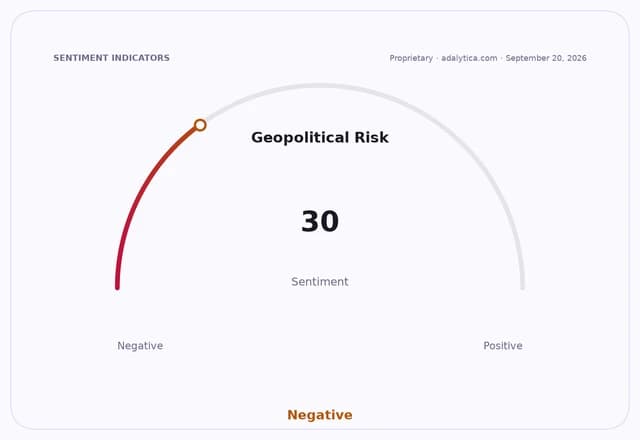
Adalytica’s Global Stability Sentiment reading has dropped to 30, with “Fear” now the prevailing label, while the euro trade signal sits at just 5 — “Extreme Fear.” That doesn’t prove a selloff is imminent, but it does show how quickly political stress is feeding into macro positioning. When Europe’s largest economy becomes a stage for systemic political drift, the risk premium on the euro area rises.
The key takeaway is simple: the far right’s rise in Germany is not just a political story, it is an investable macro regime shift. The firewall may still exist on paper, but the market should assume Europe’s center is weaker, the policy path is less predictable and the winners will be those owning the assets that profit from instability, security spending and industrial self-reliance.
| Entity | Gains | Losses |
|---|---|---|
| Defense and security stocks | ▲Higher spending tailwind | ▼None from status quo politics |
| Industrial automation firms | ▲More reshoring demand | ▼Slower policy clarity |
| Eurozone exporters | ▲Short-term demand stability | ▼Higher policy volatility |
| Mainstream centrist parties | ▲Protest against extremes | ▼Eroding voter trust |