Sterling is vulnerable to another leg lower against the dollar if UK retail sales soften again, with traders already marking down the pound after back-to-back central bank meetings left the Federal Reserve comparatively more hawkish than the Bank of England.
GBP/USD Near 7-Week Low Before UK Retail Sales

GBP/USD was last trading around 1.3380 after touching a seven-week low earlier in the session, underscoring how quickly the pair has moved from holding above 1.35 to testing the lower end of its recent range. The immediate risk is that a weak August retail sales print would confirm that British consumers are still pulling back, reinforcing concerns that the UK economy is losing momentum just as the BoE is edging toward a more cautious stance on rates.
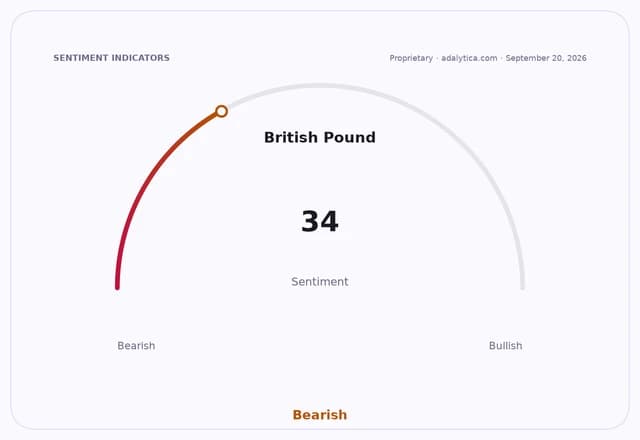
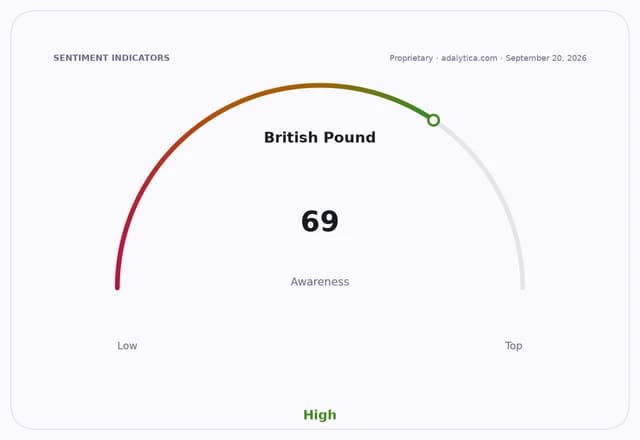
Sentiment IndicatorsⓘProprietary · adalytica.com · September 20, 2026
This is a snapshot — live sentiment, awareness and momentum for 130+ markets update continuously in the dashboard.Open AlphaPulse
That matters because retail spending is one of the clearest real-time gauges of domestic demand, and sterling has struggled whenever growth data fail to justify tighter policy. Economists are looking for a 0.2% decline in August sales after a 0.5% fall in July. Another negative reading would imply that consumer demand is not stabilizing, making it harder for investors to price a durable floor in UK growth or a meaningful rebound in Bank of England policy expectations.
The pound’s weakness also reflects a broader interest-rate gap now tilting in favor of the dollar. The Federal Reserve raised rates to 4% in a unanimous decision and struck a hawkish tone, while the BoE held rates steady in a 6-3 vote that was only slightly softened by its warning over inflation risks linked to the war in Iran. The result is a market that sees the US as offering firmer policy support, while the UK is increasingly exposed to disappointing activity data.
Dollar support may also come from the real economy. A modest rise in US industrial production would reinforce the view that the American economy is still outpacing peers, helping to keep Treasury yields elevated and the dollar bid. That backdrop has already left the pound trading with fragile technicals: GBP/USD is below both its 50-day and 200-day moving averages, while the relative strength index is in oversold territory, showing the pair has little momentum to absorb another negative surprise without probing lower.
There is still a counterargument for sterling bulls. If retail sales surprise to the upside, the market could be forced to unwind some of the recent bearish pricing, especially given how oversold the pound appears on short-term charts. But with sentiment on the pound weakening sharply in Adalytica’s gauges and the dollar flashing extreme greed, the path of least resistance remains lower unless UK data deliver a clear upside shock.
For investors, the near-term trade is straightforward: weak UK demand data would strengthen the case for a softer pound, while firmer US activity would deepen the dollar’s advantage. The key question now is whether Friday’s retail sales report confirms that sterling’s recent slide is a temporary washout or the start of a more persistent repricing of UK growth and rate expectations.
| Entity | Gains | Losses |
|---|---|---|
| US dollar | ▲Hawkish policy support | ▼If UK data surprise higher |
| Sterling bulls | ▲Oversold rebound potential | ▼Weak retail sales, dovish BoE |
| UK exporters | ▲More competitive currency | ▼Higher import costs |
| UK consumers | ▲Cheaper exports abroad | ▼Rising imported inflation |