A new lithium and geothermal project in northern Alsace is forcing France to confront a toxic legacy buried for decades in the old Pechelbronn oil field, where about 80,000 cubic metres of chemical waste were dumped into abandoned wells and underground galleries after the site stopped producing oil.
France Pechelbronn waste risk hits lithium project
The issue matters because the project at Durrenbach and Walbourg, led by Lithium de France, is not being planned on a blank slate. It sits only a few kilometres from Pechelbronn, once the cradle of France’s oil industry and later turned into what critics called a “mine-poubelle” — a rubbish mine — after industrial waste was pumped underground between 1964 and 1974 with state approval. That history now raises questions about whether new drilling could disturb contaminated layers, complicate permitting and slow a technology that is supposed to support Europe’s energy transition.
For investors, the story is less about a local environmental dispute than about the execution risk facing geothermal and lithium projects that depend on subsurface access. The business case for extracting lithium-brine and heat from deep formations hinges on predictable geology, community acceptance and regulatory speed. If those ingredients weaken, financing costs rise, timelines slip and the appeal of resource-recovery projects — already capital intensive and technically complex — falls sharply.
The Pechelbronn site shows why. After oil extraction ended in the early 1960s, authorities allowed chemical firms and refineries to use four of eight abandoned shafts as a disposal network. The waste spread through more than 400 kilometres of interconnected galleries, according to the historical account cited in the source, and included chlorinated products, phenols, acids, bases, salts and heavy metals. The BRGM, France’s geological survey, later estimated the volume at roughly 80,000 cubic metres. Some of the material was liquid, but paste-like waste and solid debris were also dumped, highlighting how little control existed over the disposal process.
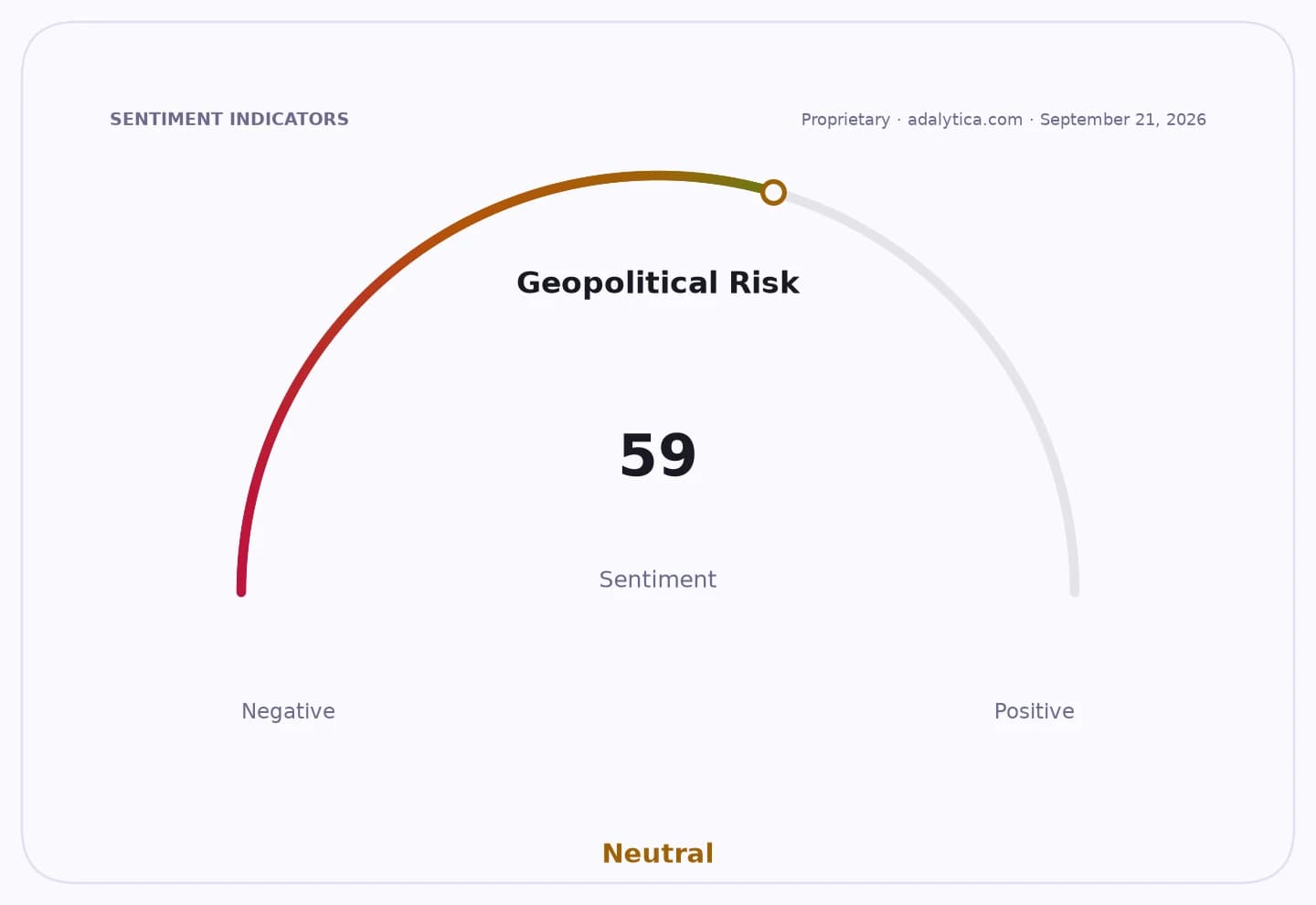
Geopolitical Risk — 30-day sentimentadalytica.com
Explore this data interactively — full history, time series and cross-market comparisons.Open AlphaPulse
The concern today is not only historical. Underground voids, corroded supports and legacy contaminants can interact unpredictably with new drilling, especially in projects that seek to circulate fluids at depth. Even if the new wells are sited outside the most sensitive zones, the reputational and legal burden can be heavy. Residents in Durrenbach and nearby communes are already asking what the planned drilling could mean for buried waste that has sat in place for more than half a century.
That puts Lithium de France at the intersection of two competing narratives. On one side is the strategic case for domestic lithium and low-carbon heat, both of which Europe wants more of as it tries to reduce import dependence and electrify industry. On the other is the unresolved environmental liability of the old oil era, where disposal practices were dictated by speed and convenience rather than long-term containment. The BRGM has monitored the site continuously only since 2006, underscoring how long the risk was allowed to linger in the background.
The broader lesson for energy investors is that the transition is increasingly constrained not by demand but by access to land, subsoil rights and social licence. Projects that tap the same geology once used for hydrocarbon extraction may offer attractive economics, but they also inherit a liability stack that can be hard to quantify. In that sense, Pechelbronn is not just a French environmental story; it is a reminder that the carbon transition will often have to negotiate with the industrial waste left behind by the fossil-fuel age.
| Entity | Gains | Losses |
|---|---|---|
| Lithium de France | ▲Access to geothermal/lithium resources | ▼Permitting and reputational risk |
| Local residents | ▲Greater scrutiny of pollution legacy | ▼Anxiety over subsurface contamination |
| Old chemical waste dump | ▲None | ▼Could face renewed disturbance |
| France’s energy transition | ▲Domestic low-carbon resources | ▼Slower project timelines |