Inflation is still the Federal Reserve’s main problem, and Minneapolis Fed President Neel Kashkari made clear on Sunday that he sees the battle as far wider than the latest swings in oil prices.
Fed Kashkari Says Inflation Still Too High
That matters because investors trying to call the end of the Fed’s tightening cycle need to understand the central bank is not watching gasoline alone. Kashkari said prices are “too high” across the economy even after stripping out food and energy, a reminder that sticky core inflation is what will keep policy restrictive and borrowing costs elevated for longer.
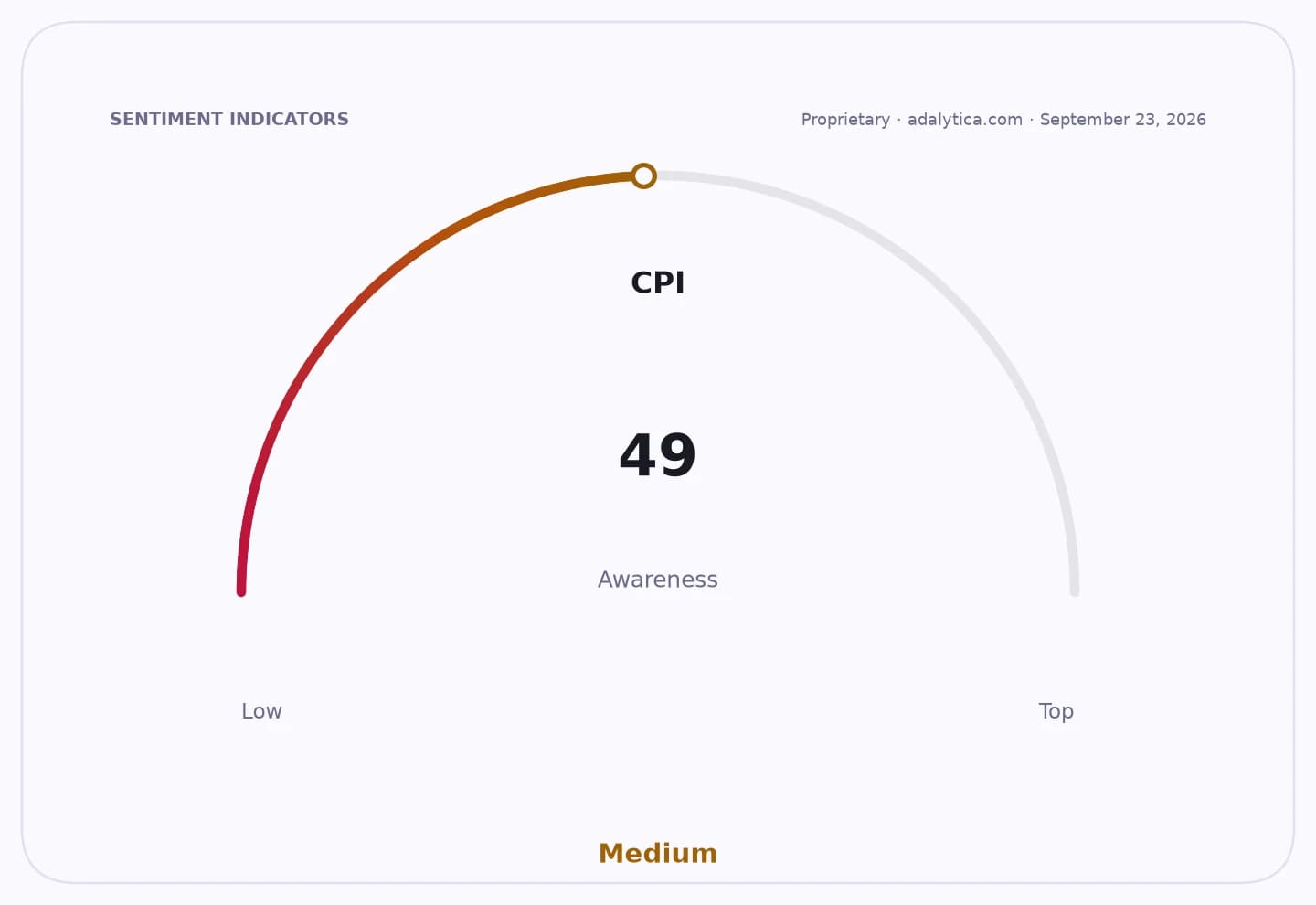
Sentiment IndicatorsⓘProprietary · adalytica.com · September 23, 2026
This is a snapshot — live sentiment, awareness and momentum for 130+ markets update continuously in the dashboard.Open AlphaPulse
Kashkari’s comments on Fox News reinforce the message from last week’s unanimous quarter-point rate increase, which took the fed funds target range to 3.75%-4.00%. For households and businesses, that means financing costs are still climbing at the same time wages, rent, services and other everyday expenses remain under pressure. For the broader economy, it means the Fed is still prioritizing inflation control over growth, even as slower activity becomes more likely.
The central banker’s remarks also underline an important distinction for markets: a temporary drop in oil does not automatically translate into relief from inflation. Energy can swing sharply, as the recent rise in U.S. crude prices shows, but the Fed is focused on whether price gains are spreading through the rest of the economy. That is why core measures matter so much more to policy than headline moves at the pump.
CPIAUCSL vs CPILFESL — macro contextadalytica.com
Explore this data interactively — full history, time series and cross-market comparisons.Open AlphaPulse
Investors should read this as a warning against betting too early on an easy pivot from the Fed. Higher rates tend to pressure valuations first, then credit conditions, then the real economy. That’s not a reason to panic, but it is a reason to favor companies with pricing power, strong free cash flow and durable demand rather than speculative businesses that depend on cheap money.
The long-term takeaway is straightforward: inflation is still the force shaping monetary policy, and policy will keep shaping markets until the data convincingly cools. Kashkari’s remarks suggest the Fed is not ready to declare victory, which means patience may be rewarded more than timing. For investors building wealth over years, not weeks, that usually argues for staying diversified, keeping expectations realistic and watching the next inflation prints closely.
| Entity | Gains | Losses |
|---|---|---|
| Fed officials | ▲Credibility on inflation fight | ▼Pressure for a quick policy pivot |
| Savers and cash holders | ▲Higher yields | ▼No immediate relief from tight policy |
| Borrowers and rate-sensitive stocks | ▲— | ▼Higher financing costs |
| Energy consumers | ▲Potential help if oil eases | ▼Still face broad price pressures |