A Siena schoolteacher’s commute has become a warning sign for Europe’s labor market: when diesel costs double, the real pay cut reaches far beyond the pump.
Diesel Costs Hit Italian Teacher Commute Budget
Mirco Giacalone’s story is not just a human-interest piece about sacrifice. It shows how persistent fuel inflation keeps squeezing workers whose jobs require long-distance travel, especially in regions where public transport is thin and housing near workplaces is expensive. For a teacher driving roughly 700 kilometers a week between Impruneta and Siena, the jump in monthly fuel spending from about 150 euros to 300 euros is equivalent to a meaningful loss of disposable income, even before mortgages, utilities and taxes are counted.
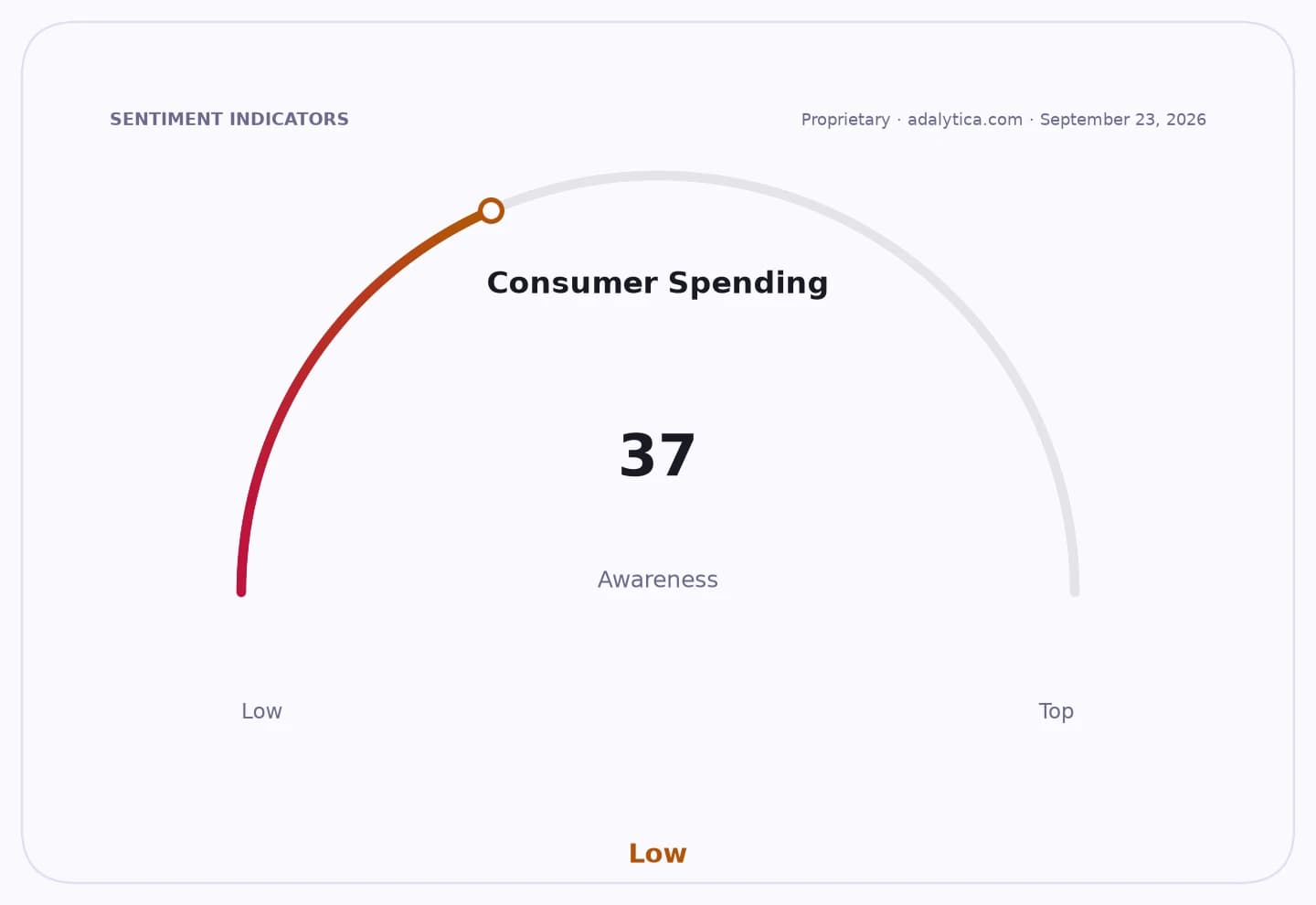
Sentiment IndicatorsⓘProprietary · adalytica.com · September 23, 2026
This is a snapshot — live sentiment, awareness and momentum for 130+ markets update continuously in the dashboard.Open AlphaPulse
That matters economically because transport costs are still feeding through to household budgets even as headline inflation has cooled in some places. U.S. consumer prices, measured by the CPI, are still near 334 on the latest reading after a sharp rise over recent years, underscoring how sticky living costs remain. In Italy and across Europe, diesel remains especially sensitive because it powers not only private commutes but logistics, agriculture and school transport — the kinds of everyday costs that shape wage demands and consumer spending.
It also matters to investors because fuel pressure changes who wins and who loses in the real economy. Higher diesel prices can support energy producers and freight operators with fuel surcharges, but they punish commuters, retailers and discretionary spending. Adalytica’s Consumer Spending Sentiment is flashing Extreme Greed at 93, yet Retail Goods Spending Sentiment sits at a far more cautious 41, a split that suggests consumers may still talk confidently while selectively cutting back. That divergence is exactly where investors should look for the next trade: resilient pricing power and pass-through models on one side, margin compression on the other.
The broader narrative is that fuel is again becoming a hidden tax on work. Giacalone’s case also highlights a structural issue in Italy’s public sector and in many regional labor markets: workers often have to choose between accepting long commutes or leaving jobs they value. That creates friction in labor supply, raises hiring costs and makes wage negotiations more difficult for employers already facing tight budgets.
The market underestimates how quickly this kind of pressure can spread. If diesel stays elevated, the winners are likely to be fuel-surcharge logistics names, energy suppliers and infrastructure-linked transport operators. The losers are commuter-heavy households, consumer-facing retailers and any employer dependent on a dispersed workforce.
For investors, the takeaway is simple: follow the cost of diesel, because it is still one of the cleanest real-time gauges of household stress and margin pressure. In a world where fuel can double a worker’s commuting bill, the next opportunity is not in the pain itself, but in the companies positioned to monetize the logistics and energy bottlenecks it creates.
| Entity | Gains | Losses |
|---|---|---|
| Energy producers | ▲Higher fuel pricing | ▼Commuters |
| Freight/logistics firms with surcharges | ▲Pass-through revenue | ▼Consumer retailers |
| Employers with remote labor pools | ▲None | ▼Workers’ disposable income |
| Fuel-intensive households | ▲None | ▼Purchasing power |