The Dax is entering the week with one of its main macro supports still intact: equity investors have largely absorbed a Brent oil price above $100 a barrel, while the next test is whether German business confidence and election fallout will confirm or challenge the market’s view that growth remains resilient.
DAX Faces Oil, Ifo, and Germany Election Risks
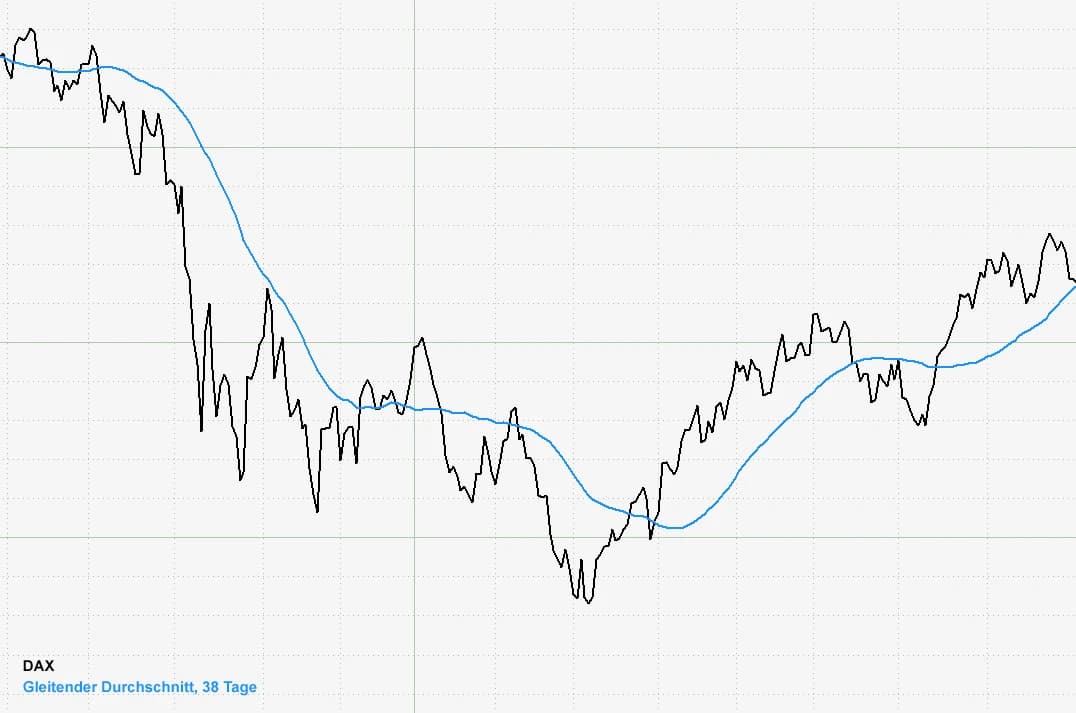
That matters because the combination of expensive energy, tighter US monetary policy and fresh political instability in Germany has the potential to change the earnings outlook for Europe’s biggest economy. For now, the market is treating the oil shock more as an inflationary nuisance than a systemic threat, helped by the fact that volatility gauges have not flashed the kind of stress seen during the first oil spike in March.
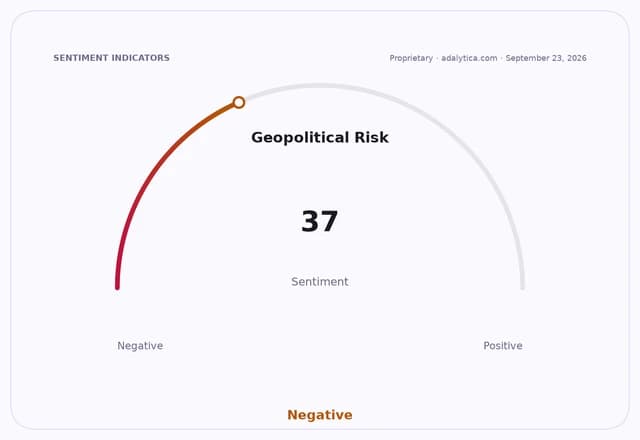
Sentiment IndicatorsⓘProprietary · adalytica.com · September 23, 2026
This is a snapshot — live sentiment, awareness and momentum for 130+ markets update continuously in the dashboard.Open AlphaPulse

Higher crude prices feed directly into transport, manufacturing and consumer costs, making it harder for central banks to declare victory over inflation and squeezing households already facing slower real income growth. Yet equities have so far found support in the argument that listed companies can pass on at least part of those costs, and that corporate margins at index level have remained broadly stable. Helaba said earnings revisions for the next 12 months remain skewed to the upside globally and for Dax companies, a view that helps explain why the index has been able to look through the energy squeeze.
The bigger near-term risk is not just the oil price itself, but what it does to sentiment. Brent’s move back above the symbolic $100 level has revived concern about tanker attacks and energy infrastructure in the Middle East, while a reported meeting between Donald Trump and Gulf state officials on the sidelines of the UN General Assembly underscores how quickly geopolitical headlines can move European markets. The bullish case is that diplomacy cools the risk premium and Europe’s exporters continue to benefit from global growth. The bearish case is that the current calm breaks if supply fears intensify or if oil’s rise starts feeding through to inflation expectations and rate policy again.
Geopolitical Risk — 30-day sentimentadalytica.com
Explore this data interactively — full history, time series and cross-market comparisons.Open AlphaPulse
That is why Thursday’s Ifo business climate survey is the week’s key macro marker. After the Federal Reserve and European Central Bank have already responded to firmer inflation, investors are likely to focus again on the underlying growth trend in Germany and across the Atlantic. Robert Greil, chief strategist at Merck Finck, said early indicators are likely to show only a mild slowdown, with purchasing manager surveys expected to weaken modestly because of higher energy costs.
Politics adds another layer of uncertainty. CDU defeats in Mecklenburg-Vorpommern and Berlin have revived scrutiny of Chancellor Friedrich Merz’s authority and the durability of his reform agenda. Markets do not typically price every regional election result, but they do care when political weakness raises the odds of slower policy execution or more contentious coalition bargaining. The Berlin result may matter especially for property stocks such as Vonovia, after the Left party renewed its demand for the expropriation of large housing groups. That keeps the German real estate debate alive at a time when the sector is already under pressure from high rates and weak valuations.
The set-up for investors is therefore a balancing act: oil is still a headwind, but not yet a market-breaker; the Dax has held up because earnings resilience and global growth are cushioning the blow; and the next move is likely to depend on whether Ifo and the election aftermath reinforce or undermine confidence in Germany’s outlook. If business sentiment stays firm, cyclical and export-heavy names should remain better supported. If the survey disappoints and political noise starts to erode confidence, defensives and rate-sensitive stocks could regain relative favour.
| Entity | Gains | Losses |
|---|---|---|
| Dax exporters | ▲Higher inflation pass-through | ▼Margin pressure from oil |
| Energy producers | ▲Stronger crude pricing | ▼Demand-slowdown risk |
| German property stocks | ▲Lower political noise if coalitions moderate | ▼Expropriation rhetoric |
| Consumers and airlines | ▲ | ▼Fuel and cost inflation |