Croatia’s government is forcing traders and service providers to display “anchor” prices from Sept. 10 starting Oct. 1, a move that gives consumers a new way to compare price hikes but also adds compliance costs, operational complexity and fresh political friction in the fight against inflation.
Croatia anchor price rule adds costs for businesses
The rule is meant to make price increases more visible at a time when governments across Europe are under pressure to show they are doing something about living costs. But for small businesses, the practical burden may matter just as much as the policy intent: many will have to change labels, websites, pricing systems and recordkeeping with little time to prepare, while facing fines of up to 30,000 euros for violations.
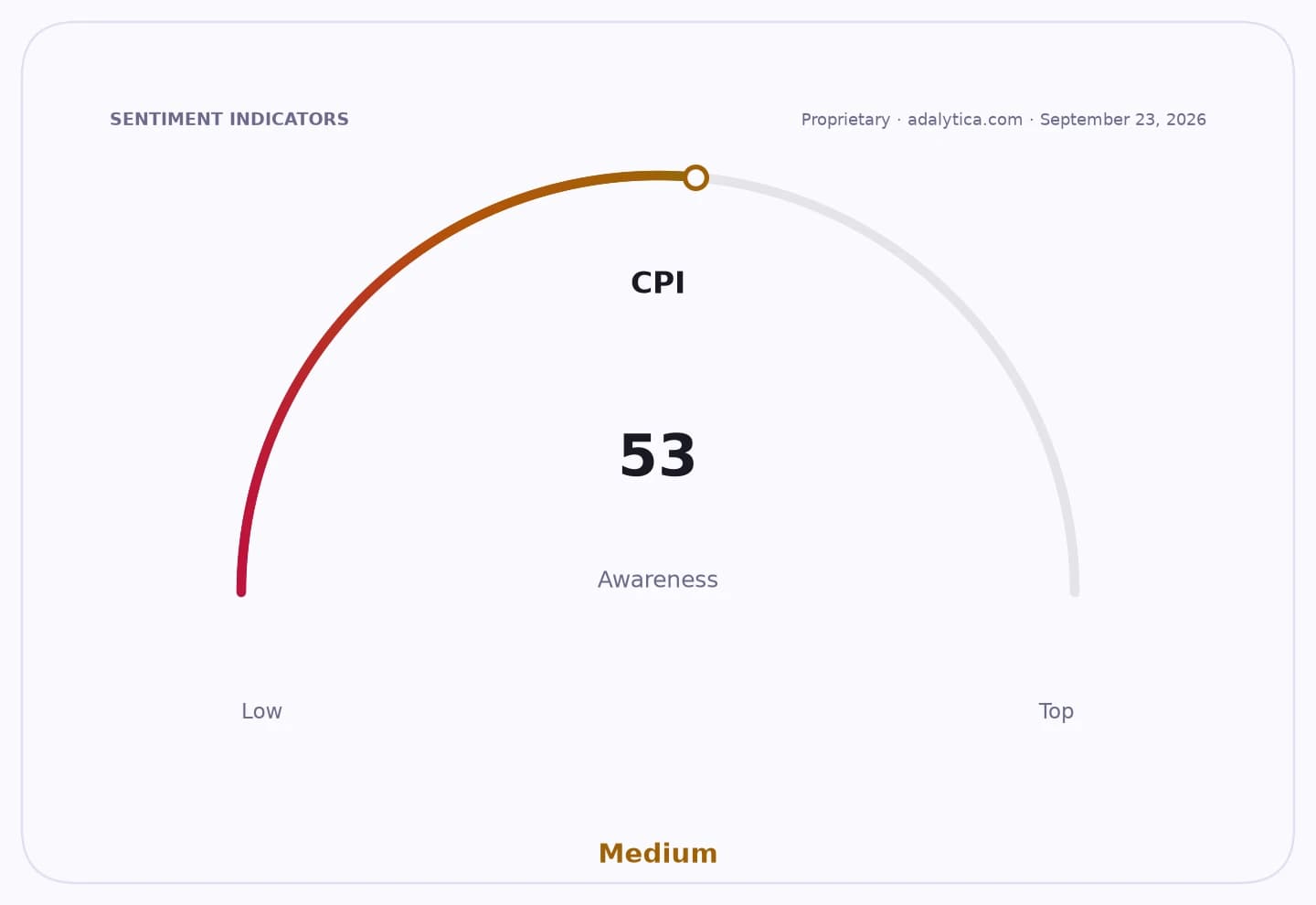
Sentiment IndicatorsⓘProprietary · adalytica.com · September 23, 2026
This is a snapshot — live sentiment, awareness and momentum for 130+ markets update continuously in the dashboard.Open AlphaPulse
The Croatian Chamber of Trades and Crafts has already told members to get ready even as it asks the government to scrap the measure. It says the deadline is too short, that businesses may have to adjust twice in 47 days because a broader consumer-protection rule on base prices takes effect on Nov. 17, and that some firms will now have to show as many as four prices on one item when discounts, prior prices, lowest-30-day prices and anchor prices all overlap.
That is why the dispute goes beyond signage. It touches the cost of doing business in a high-inflation environment, where governments are increasingly turning to rules and disclosure requirements instead of tax cuts or spending restraint to calm public anger. Critics, including business groups and opposition parties, argue the state is shifting the burden onto companies and entrepreneurs rather than addressing the public-sector drivers of inflation.
The government says the rules will let shoppers see who is raising prices and when, which in theory should improve market discipline. In practice, the measure could hit small retailers, salons, mechanics and caterers hardest because they lack the IT and administrative capacity of larger chains, even though the rule is broad enough to cover most consumer-facing businesses.
Investor relevance is less about Croatia alone than about the broader policy template. Price controls and transparency mandates can squeeze margins, add overhead and create compliance risk for consumer-facing firms, while doing little to fix imported inflation, energy shocks or state spending pressures that are often the real drivers of price growth.
With the new regime due in days and the challenge to it still building, the next test is whether the government softens the rollout or whether businesses absorb the cost and pass some of it on to consumers. Either outcome keeps inflation politics, rather than inflation economics, at the center of the story.
| Entity | Gains | Losses |
|---|---|---|
| Consumers | ▲More visible price comparisons | ▼More confusing shelf pricing |
| Government | ▲Claims progress on inflation transparency | ▼Blame if compliance costs rise |
| Small businesses | ▲Little | ▼Higher admin and IT costs |
| Large retailers | ▲Better able to absorb compliance | ▼Margin pressure from scrutiny |