Consumer confidence in Costa Rica held broadly steady between June and August, but the latest survey suggests households are still wary about inflation, fuel costs and the economy’s longer-term outlook.
Costa Rica Consumer Confidence Edges Up in August
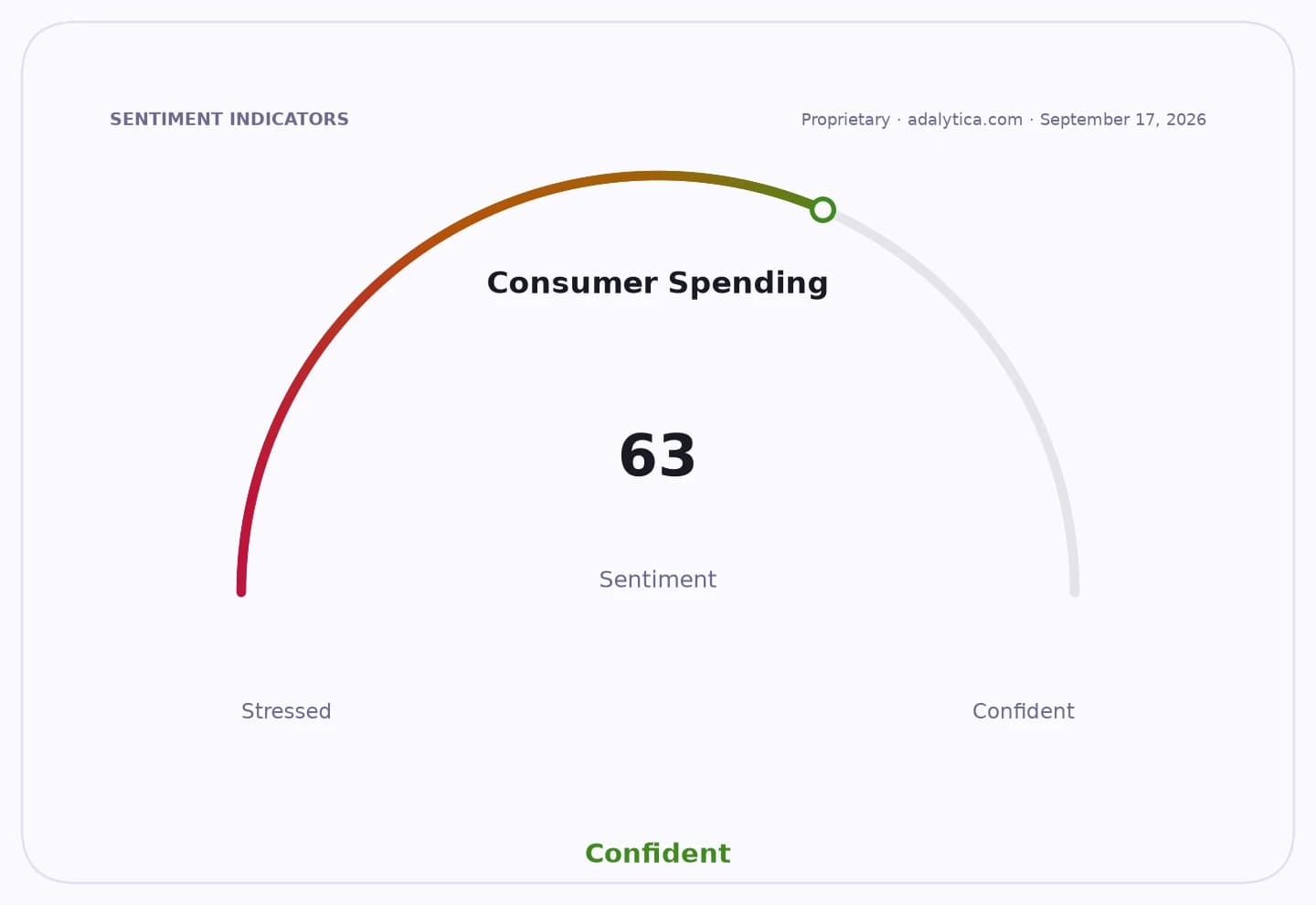
The University of Costa Rica’s consumer confidence index rose to 55.9 in August from 54.8 in May, a modest 1.1-point increase that leaves sentiment below the 60.7 reached in February after the election period. The school said the post-election jump had been a temporary distortion, and that the latest readings point to a return to more normal patterns rather than a sustained improvement.
That matters because consumer confidence is one of the clearest gauges of household willingness to spend, and in a small open economy such as Costa Rica, domestic demand can quickly feel the effects of shifting sentiment. The survey showed a split picture: people were a little more positive about current conditions, but expectations for the medium term were little changed, while long-term anxiety actually rose.
The current-conditions subindex climbed 5.2 points to 55.7, helped by a drop in the share of respondents saying their household finances were worse than a year earlier, from 23.1% to 18.1%. The proportion saying it is a bad time to buy big household items also fell sharply, from 42.7% to 32.0%, a sign that some spending restraint may be easing at the margin.
But the expectations component was almost flat at 56.0, underscoring the lack of conviction behind the stabilization. While 47.0% of respondents said they expected their family to be better off in 12 months, up from the previous survey, and 24.9% saw better conditions for companies, the share expecting economic crises over the next five years jumped 5.9 percentage points to 42.8%.
Energy costs remain a key drag on that outlook. Some 60.3% of consumers said they expect gasoline and diesel prices to rise in the coming months, a concern the report linked to the prolonged US-Iran conflict. For households, that is not just a fuel-pump issue: higher transport costs tend to filter into food, goods and services, and can quickly erode any improvement in spending power.
The survey, based on 1,204 interviews with adults across roughly 97% of the population and carrying a 95% confidence level, shows a consumer sector that is not deteriorating further, but is also not yet confident enough to drive a strong demand rebound. The balance of responses — 48.0% ambivalent, 39.0% optimistic and 13.3% pessimistic — suggests caution remains the dominant mood.
For investors, the message is that Costa Rica’s domestic demand picture looks stable rather than strong. Retailers, lenders and consumer-facing businesses may take some comfort from improving current-condition readings, but any sustained pickup in spending will likely depend on lower fuel pressures, more durable income gains and a clearer improvement in long-term expectations. Until then, the economy may keep growing, but without the broad-based consumer confidence usually needed to power a faster expansion.
| Entity | Gains | Losses |
|---|---|---|
| Costa Rican households | ▲Slightly better current conditions | ▼Long-term confidence |
| Retailers and consumer firms | ▲More willingness to buy big-ticket items | ▼Weak medium-term demand visibility |
| Fuel importers/pass-through businesses | ▲Higher pricing power | ▼Consumers facing higher transport costs |
| Policymakers | ▲Evidence of stabilization | ▼Signs of five-year economic anxiety |