China is opposing a U.S. plan to impose an additional 7.5% tariff on Chinese imports, warning it may take “all necessary measures” to defend its interests as the two biggest economies keep trade friction elevated.
China Opposes U.S. Plan for 7.5% Tariff on Imports
The Ministry of Commerce said the proposed levy amounts to unilateralism and protectionism and objected to Washington’s use of a Section 301 investigation that also covers 16 economies. Beijing’s response matters because even a relatively modest tariff increase can ripple through supply chains, raise import costs for U.S. companies and consumers, and sharpen pressure on already-fragile trade talks.
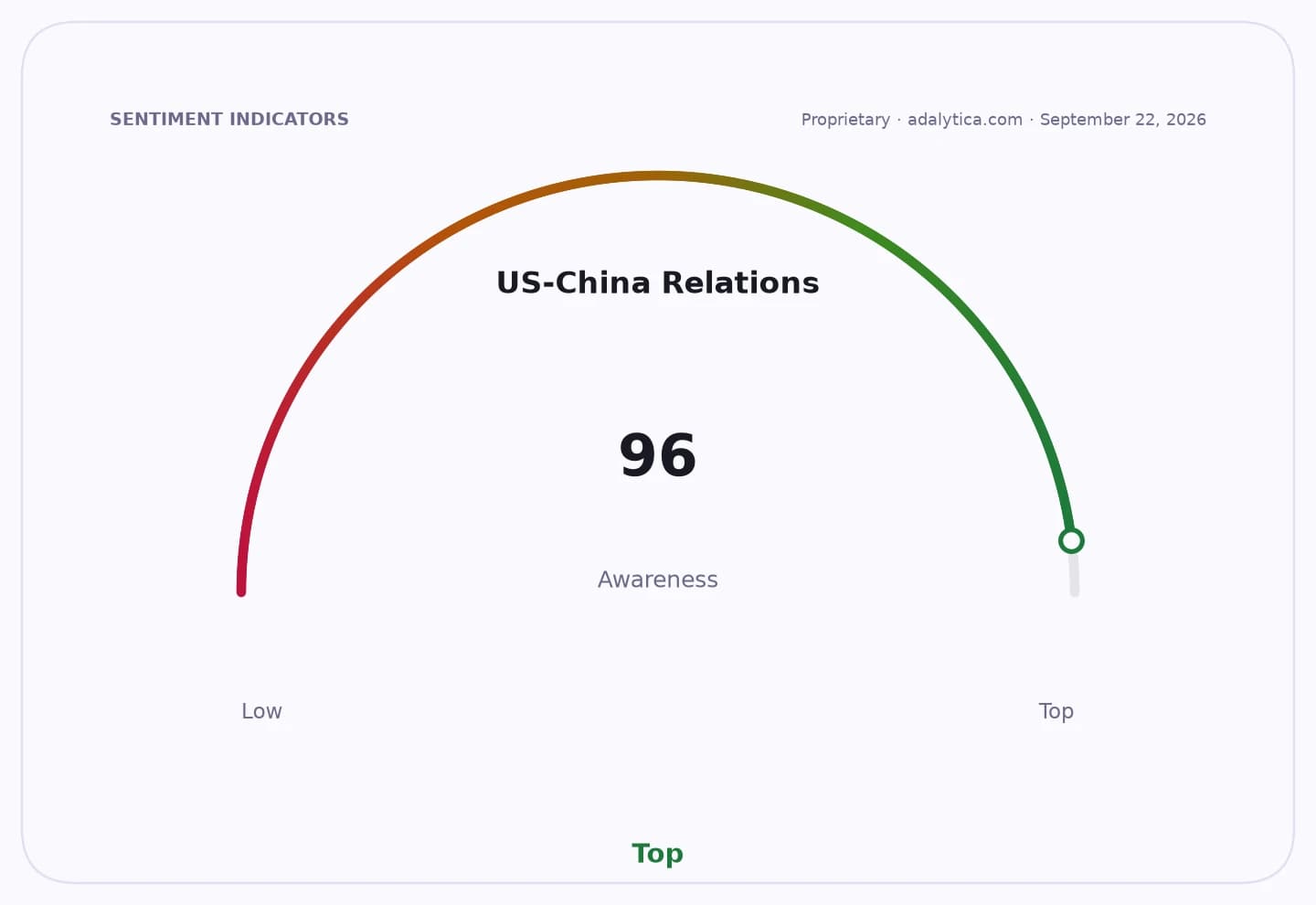
Sentiment IndicatorsⓘProprietary · adalytica.com · September 22, 2026
This is a snapshot — live sentiment, awareness and momentum for 130+ markets update continuously in the dashboard.Open AlphaPulse

For investors, the immediate issue is not just the size of the tariff but the prospect of escalation. Any broader retaliation from China could hit sectors tied to cross-border manufacturing, industrial commodities and global technology supply chains, while keeping volatility elevated in China-focused assets.
Chinese stocks linked to the mainland and Hong Kong have already been under pressure, with the FXI China ETF trading at $34.94 on Tuesday, below its 50-day moving average of $35.20 and its 200-day moving average of $36.25. The ETF’s relative strength index was 45.9, suggesting the fund is not yet in oversold territory but remains in a weak technical trend.

The leveraged YINN ETF, which magnifies moves in Chinese large caps, closed at $27.16, also below its 50-day moving average of $28.91 and far under its 200-day average of $34.34. That leaves it exposed to further swings if tariff rhetoric intensifies or if Beijing responds with countermeasures.
The broader backdrop is still highly sensitive. Adalytica’s U.S.–China Relations Sentiment gauge shows “Greed” at 85, with awareness at “Extreme Greed” at 96, reflecting how quickly headlines on tariffs and retaliation can move markets. China’s policy-direction snapshot is even more elevated, underscoring that traders are treating the latest tariff talk as a live policy risk rather than background noise.
With the WTO already warning that expanding tariffs and trade blocs could hurt all sides, the next catalyst is whether Washington formally advances the 7.5% measure and whether Beijing answers with targeted retaliation or diplomacy. Any move in either direction is likely to feed into currency, equity and commodity markets almost immediately.
| Entity | Gains | Losses |
|---|---|---|
| U.S. protectionist policymakers | ▲tariff leverage | ▼trade stability |
| Chinese exporters | ▲no immediate tariff hike | ▼higher import costs |
| U.S. consumers and importers | ▲— | ▼higher prices |
| FXI and YINN bulls | ▲policy de-escalation | ▼tariff escalation |