China’s Communist Party filled 10 Central Committee vacancies at its latest plenum without elevating a single military alternate, underscoring how President Xi Jinping’s leadership reshuffle remains centered on civilian loyalists even as the party tightens discipline and rotates a new generation of officials into key posts.
China Party Plenum Fills Central Committee Seats
The move matters because the Central Committee sits near the top of China’s political hierarchy, shaping policy personnel, economic management and the balance of influence between the civilian bureaucracy and the armed forces. By bypassing higher-ranked alternates again, the party also signaled that promotion is being driven less by the formal vote order and more by political reliability, a pattern investors increasingly read as part of Xi’s consolidation of control.
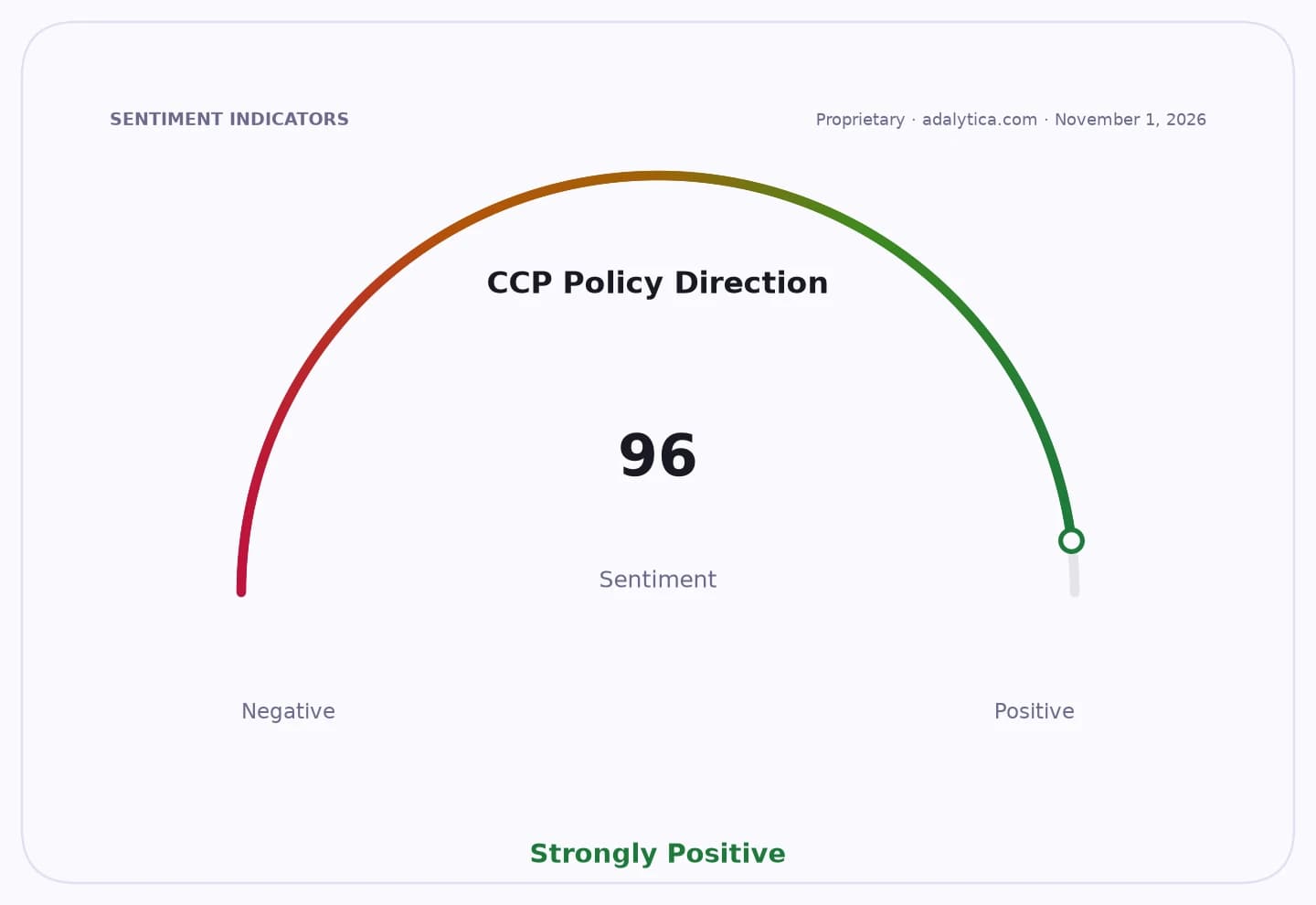
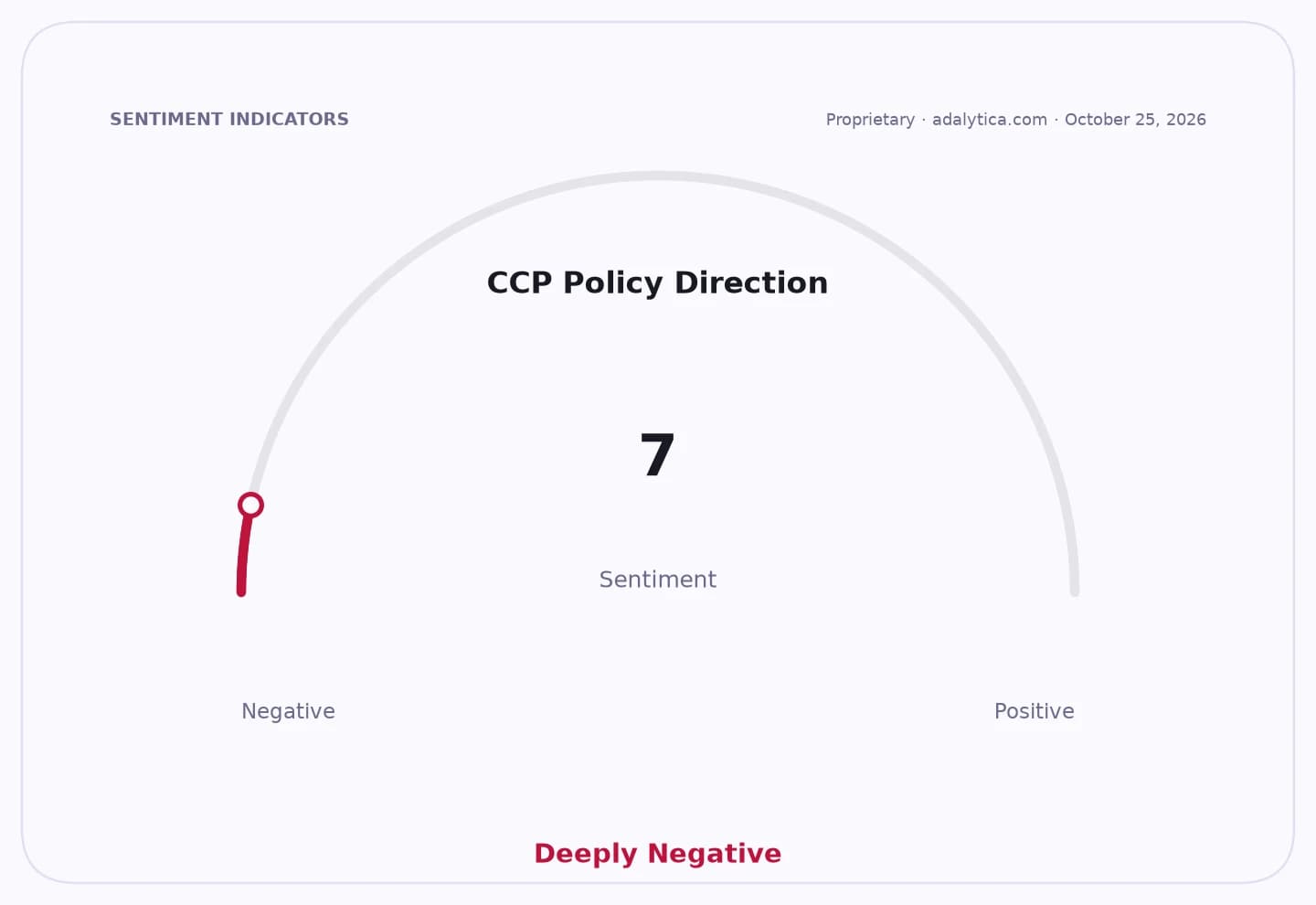
Sentiment Indicators
The latest round, announced by state news agency Xinhua after the fifth plenary session of the 20th Central Committee, is the third since the 2022 congress. It lifted 10 civilian officials, following two earlier rounds that elevated 14 alternates. All of the new members come from civilian institutions, with four at full provincial rank and six at deputy provincial or ministerial level. The committee meeting was attended by 162 full members and 117 alternates.
The absence of military promotions stands out against a broader backdrop of purges and personnel churn. The party has been removing senior figures seen as politically unreliable, while also broadening representation from sectors tied to the state economy and regional administration. That includes officials with finance, steel, power and industrial backgrounds — a reminder that leadership changes in Beijing are not only about ideology but also about how China intends to run growth, industry and local governance.
Several appointments carry particular significance for investors watching China’s policy direction. Shanxi Governor Lu Dongliang, 52, becomes the youngest full Central Committee member and the youngest official at full provincial or ministerial rank. Zhejiang Governor Liu Jie and ICBC President Liu Jun also entered the body, reinforcing the role of technocratic and financial figures in the upper ranks. Qu Yingpu of China Daily and China Datang chairman Lü Jun broaden the list of state-media and state-owned enterprise officials now inside the committee.
The promotion of Bao Gang, chairman of Inner Mongolia’s regional government, and Xing Shanping, deputy party secretary of Shaanxi, also shows the party continuing to mix regional administrators with central institutions as it manages a slowing economy and stronger political scrutiny. Meanwhile, the promotion of Liu Qiang, Shandong’s deputy party secretary and Jinan party chief, extends the presence of finance-trained cadres in local leadership.
For markets, the direct effect is limited, but the signal is not. A leadership system that prioritizes loyalty and discipline over institutional predictability can support policy continuity in the near term, yet it also raises the risk of more centralized decision-making and fewer visible constraints on Beijing’s responses to growth, property stress and external tensions. That is why China-linked assets often react more to what the party does with personnel than to formal policy language.
The latest reshuffle leaves investors looking for clues on whether the next phase of leadership consolidation will bring sharper support for growth, continued pressure on private-sector confidence or a stronger role for the security and military apparatus in state policy. For now, the message is that Xi is still building a more tightly controlled political order, with the civilian bureaucracy and state sector supplying the next layer of elite management.
| Entity | Gains | Losses |
|---|---|---|
| Xi Jinping / party leadership | ▲tighter control | ▼internal checks |
| Civilian technocrats | ▲promotion prospects | ▼military influence |
| State-owned enterprises | ▲closer policy access | ▼merit-based autonomy |
| China investors | ▲policy continuity | ▼institutional predictability |