Brazil’s inflation cooled enough in January to keep prices comfortably below the central bank’s ceiling, and the biggest reason was cheaper electricity — a welcome offset to rising fuel costs that still keeps policymakers cautious about cutting rates too fast.
Brazil Inflation Cools as Power Bills Fall
The IPCA consumer price index rose 0.33% in January, matching December’s pace, as residential power bills fell 2.73% after the tariff flag moved from yellow to green. That helped blunt a 2.06% increase in gasoline, which was the month’s biggest upward force after a higher ICMS tax took effect at the start of the year. Over 12 months, inflation reached 4.44%, a level that remains manageable but still close enough to the target band to matter for monetary policy.
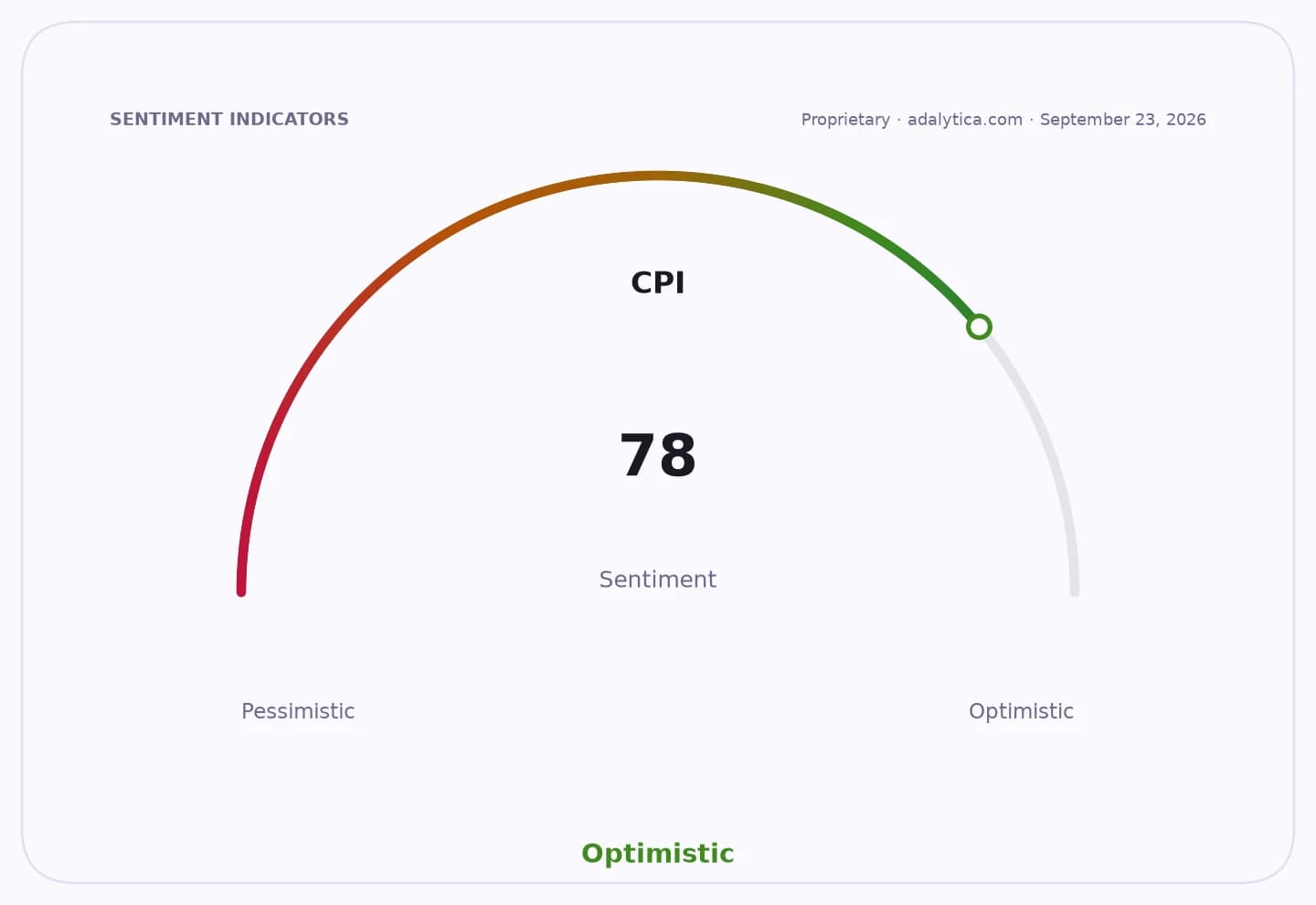
Sentiment IndicatorsⓘProprietary · adalytica.com · September 23, 2026
This is a snapshot — live sentiment, awareness and momentum for 130+ markets update continuously in the dashboard.Open AlphaPulse
For investors, this is the kind of report that can steady Brazilian assets rather than turbocharge them. Lower-than-feared inflation supports the case for the central bank to keep easing gradually, but it does not clear the runway for aggressive rate cuts. Brazil has already been balancing softer domestic inflation against a tougher global backdrop, including higher U.S. yields and more volatile commodity prices. A print like this suggests the disinflation trend is intact, but not so strong that policymakers can ignore energy and transport pressures.
The details matter because they show where inflation is coming from — and where it is not. Housing was the main drag, while transport posted the biggest increase, pressured by fuels and higher urban bus fares in several capitals. Food inflation also eased, helped by lower milk and egg prices, though tomatoes and some meats still rose. That mix is important for household spending, because lower utility bills can free up cash for consumption even when fuel and transport costs stay sticky.
Brazil’s lower-income households also got some relief, though not as much. The INPC index, which tracks inflation for lower-income families, rose 0.39% in January and was up 4.30% over 12 months. That tells investors the consumer backdrop is improving, but unevenly — and that wage gains will still need to do some heavy lifting if demand is going to strengthen meaningfully.
For long-term investors, the bigger takeaway is that Brazil remains a market where inflation control and rate policy can quickly change the valuation picture. A stable inflation profile can support banks, consumer stocks and local-currency assets, while high rates still favor income-oriented trades. Energy names are more complicated: cheaper power helps inflation, but gasoline-linked and fuel-sensitive businesses remain exposed to tax and commodity swings. In other words, Brazil is still a market to watch with patience, not chase with urgency.
| Entity | Gains | Losses |
|---|---|---|
| Brazilian consumers | ▲Lower power bills | ▼Higher gasoline costs |
| Central bank | ▲More room to ease gradually | ▼Less urgency for rate cuts |
| Retailers and banks | ▲Better spending backdrop | ▼Sticky transport inflation |
| Fuel-sensitive sectors | ▲Higher pricing power on fuels | ▼Households and commuters |