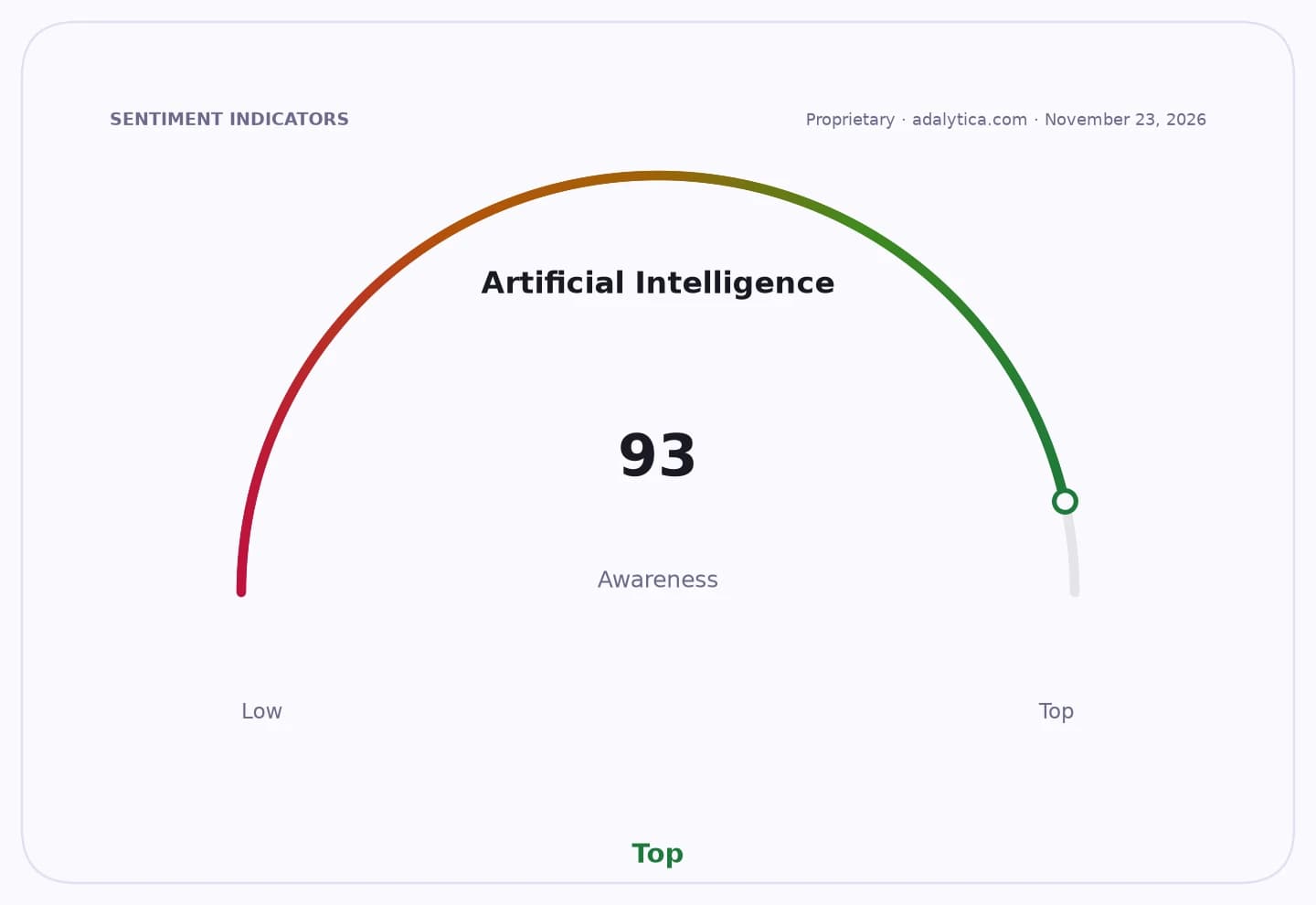
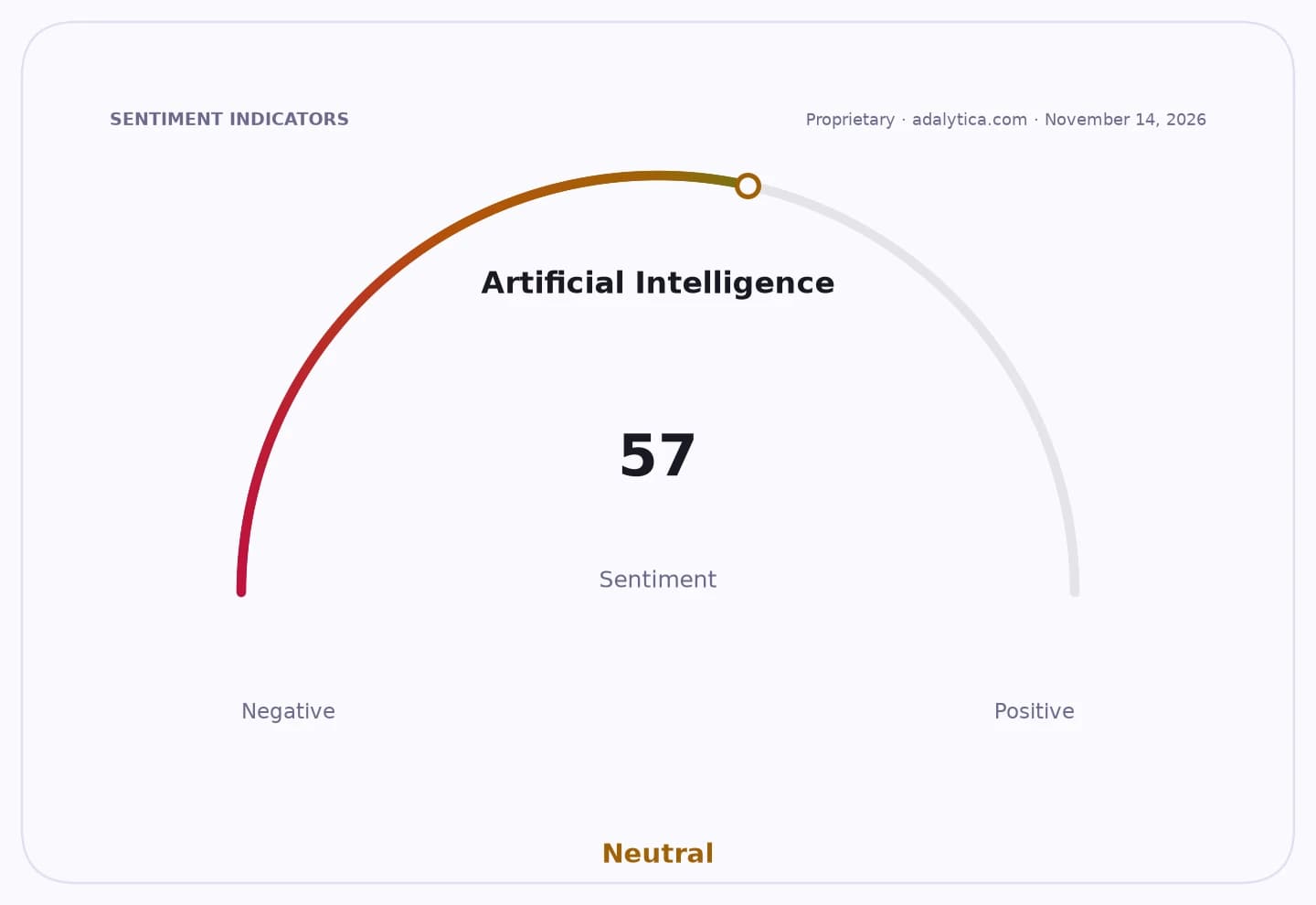
AI is rapidly becoming part of how Brazilian students prepare for the ENEM, giving candidates cheaper access to tutoring-style explanations, practice essays and personalized study plans just as the exam season begins. That matters because it can widen access to preparation, but it also raises the risk that students build confidence on answers that are fluent rather than correct.
Brazil ENEM students use AI for exam prep
Artificial Intelligence
For investors, this is a useful window into a much larger shift: generative AI is moving from novelty to everyday productivity tool in education, a category that should support demand for software subscriptions, cloud services and digital learning platforms over time. The winners are the companies that can turn AI into trusted workflow tools, while the losers are plain-vanilla study aids that do not adapt fast enough.
Sentiment Indicators
At schools in Porto Alegre, teachers are already using AI to generate physics simulations, infographics, maps and adapted ENEM questions that would once have taken days or weeks to produce. One teacher said a visual simulation that used to require a team of 10 to 15 people working for a month can now be created with a single prompt in Gemini, Google’s AI assistant. That is the real economic story here: AI is compressing the cost of customized content creation and making higher-value instruction more scalable.
Students are using the same tools in practical, very human ways. Some rely on ChatGPT or Gemini to visualize abstract physics concepts, organize study schedules, identify gaps in humanities subjects and check grammar in essays. Others use it to build a revision plan around course choices, target schools and available study hours. The appeal is obvious: when time is scarce and competition is intense, AI can act like a private tutor on demand.
But the caveat is just as important. Students themselves are warning that AI can confidently produce wrong answers, and that overreliance can distort essay arguments or teach the wrong method. That is where the long-term market opportunity lies as well: the best products will not just generate content, they will validate it, cite sources and align with curricula or testing standards. In other words, trust will be the moat.
Brazil’s Education Ministry is leaning into that idea with MEC Enem, a free platform that uses AI to offer study trails, simulations, a virtual assistant and even essay scoring in about 60 seconds. That is significant because it shows how public-sector adoption can accelerate AI normalization, especially in mass-market use cases where scale matters more than luxury features.
The bigger takeaway for investors is that AI’s most durable early gains may not come only from headline-making corporate automation, but from small productivity leaps repeated across millions of students, teachers and workers. Education is one of those markets where adoption can compound quietly before it becomes obvious in earnings.
For long-term investors, that makes AI infrastructure and education software worth watching, along with platform companies that can earn trust in high-stakes applications. The lesson for students is the same as for shareholders: use AI as an amplifier, not a crutch.
| Entity | Gains | Losses |
|---|---|---|
| Students using AI | ▲Faster prep, cheaper guidance | ▼Risk of wrong answers |
| Teachers and schools | ▲Easier content creation, better visuals | ▼More pressure to verify accuracy |
| Google, OpenAI and AI platforms | ▲More everyday usage | ▼Scrutiny over hallucinations |
| Traditional tutoring and prep services | ▲Wider AI adoption helps some hybrid models | ▼Basic rote-study products, manual correction work |