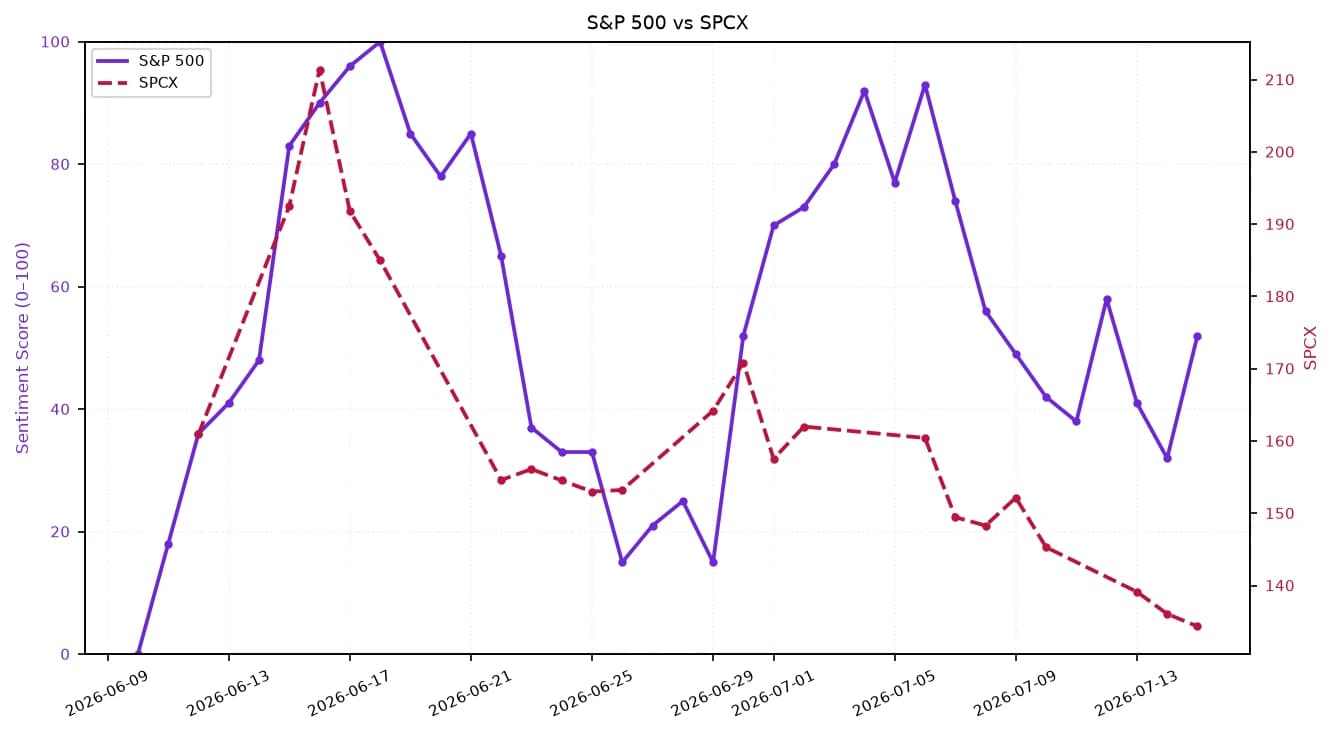
Asian stocks rallied on Friday as a drop in US Treasury yields and a softer Wall Street tone lifted risk appetite, with investors quickly reloading into technology and other growth trades after the Federal Reserve’s latest rate hike.
Asia stocks rise as Treasury yields ease
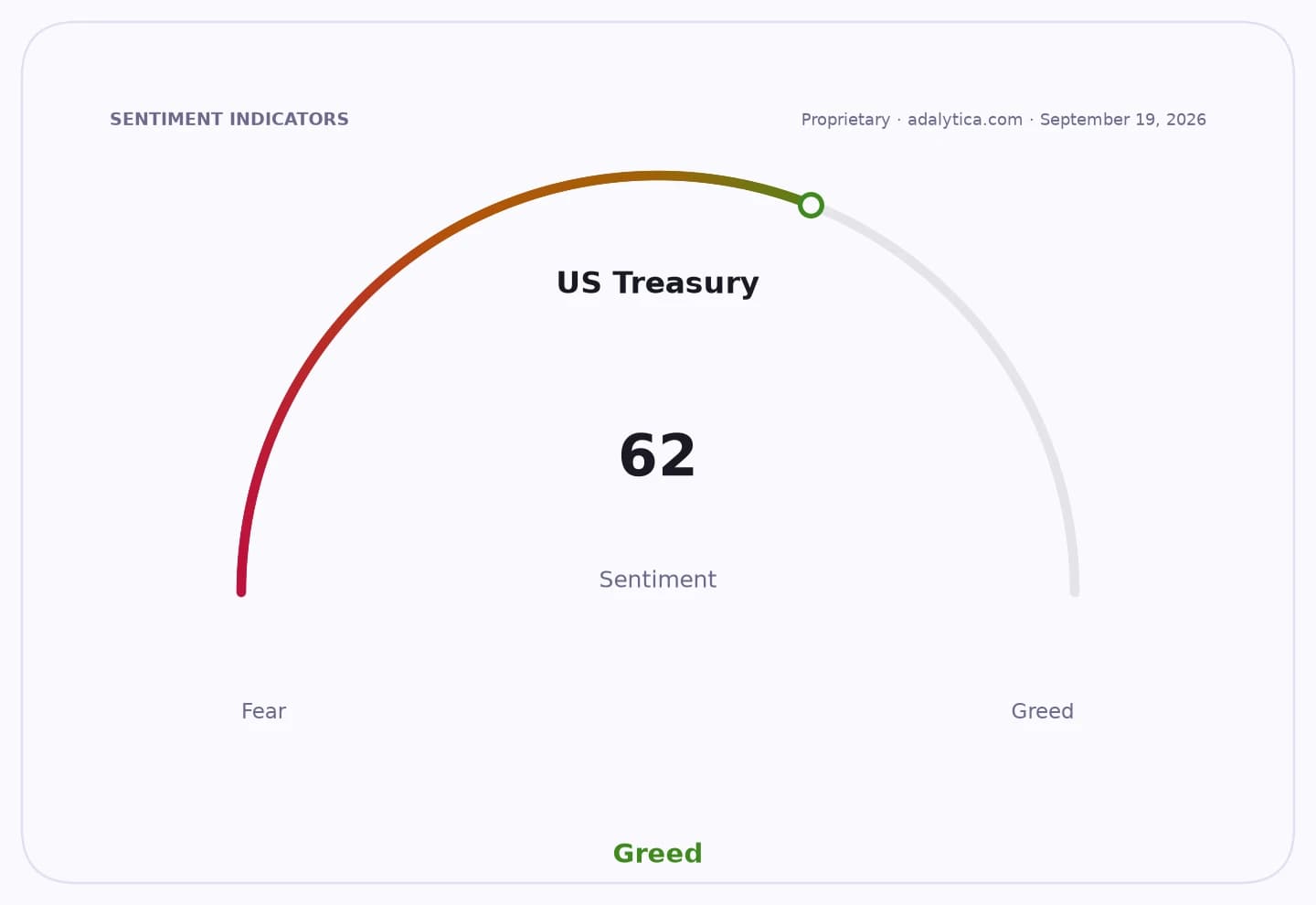
The move matters because the market is trading less on last week’s policy headline and more on the real driver of valuations: the discount rate. When Treasury yields ease, especially after a stretch of relentless gains, the pressure on equity multiples fades immediately — and Asia’s most rate-sensitive markets respond first. That is exactly what happened as Japanese, South Korean and Australian shares advanced, while US tech stocks extended the rebound that began after Wednesday’s Fed decision.
Sentiment IndicatorsⓘProprietary · adalytica.com · September 19, 2026
This is a snapshot — live sentiment, awareness and momentum for 130+ markets update continuously in the dashboard.Open AlphaPulse
Japan’s Nikkei 225 rose 1%, South Korea’s Kospi jumped 2.3% and Australia’s ASX 200 gained 0.41%. In the United States, the Dow Jones Industrial Average added 0.6% on Thursday, the S&P 500 climbed 1.1% and the Nasdaq surged 1.7%, a sign that investors were willing to look past the prospect of higher-for-longer rates and back into the artificial intelligence buildout that has become the market’s dominant growth narrative.
That rotation is the real story. The market is telling you that AI capex, not rate cuts, remains the bigger catalyst for equity leadership. Brian Levitt, global market strategist at Invesco, said the current cycle will not end simply because the Fed has taken rates higher or because oil prices rise. His point is crucial: the bull case for the market’s biggest winners now hinges on whether hyperscalers keep spending heavily on compute, data centers and infrastructure. As long as that capital spending wave remains intact, investors are likely to keep buying the suppliers of picks-and-shovels rather than hiding in cash or government bonds.
DGS10 vs T10Y2Y — macro contextadalytica.com
Explore this data interactively — full history, time series and cross-market comparisons.Open AlphaPulse
The bond market backdrop is also doing part of the work. The 10-year US Treasury yield has been hovering near 5%, its highest in years, but recent easing in yields — along with lower oil prices — has given equities room to breathe. That helps explain why Asia’s technology-heavy and export-linked markets are leading the move higher. Lower yields reduce pressure on valuations, improve risk appetite and make growth stocks more attractive than they were just a day earlier.
There is still a policy overhang. Fed Governor Michelle Bowman and Kansas City Fed President Jeffrey Schmid are due to speak, and investors will comb through every line for clues after the central bank delivered a unanimous rate increase on Wednesday and signaled at least one more hike in 2026. But the market is already making a judgment: unless Fed officials sound far more aggressive than expected, the combination of resilient AI spending and easing Treasury yields should keep the path of least resistance pointed toward equities.
For investors, that keeps the trade clear. Stay aligned with the beneficiaries of falling yields and persistent AI infrastructure spending — semiconductor makers, data-center suppliers, power and cooling plays, and the Asian markets most exposed to global technology demand. The risk remains that Treasury yields turn higher again or that hyperscaler spending slows, but until that happens, this is a dip-buying environment for growth assets, not a reason to retreat from the theme.
| Entity | Gains | Losses |
|---|---|---|
| Asian stock markets | ▲Valuation relief | ▼Bond-market pressure eases |
| AI and chip suppliers | ▲Renewed risk appetite | ▼Rate-sensitive discounting |
| US Treasury bonds | ▲Softer yields support prices | ▼Yields near 5% cap upside |
| Fed hawks | ▲Tighter policy narrative | ▼Softer market pricing |