Argentina’s hard left took its protest campaign against President Javier Milei to Plaza de Mayo on Saturday, escalating pressure on the government at a time when labor unrest, pensioner anger and budget cuts are converging into a broader political fight over the direction of the economy.
Argentina protests pressure Milei austerity plan
The demonstration matters less as a single march than as a sign that opposition to Milei’s austerity program is trying to move from scattered sectoral grievances to a coordinated street and labor campaign. Organizers used the rally to call on the country’s main union federation, the CGT, to declare a general strike and to frame the president’s spending cuts, labor reforms and debt policy as part of a deeper social adjustment that is hitting wages, jobs and public services.
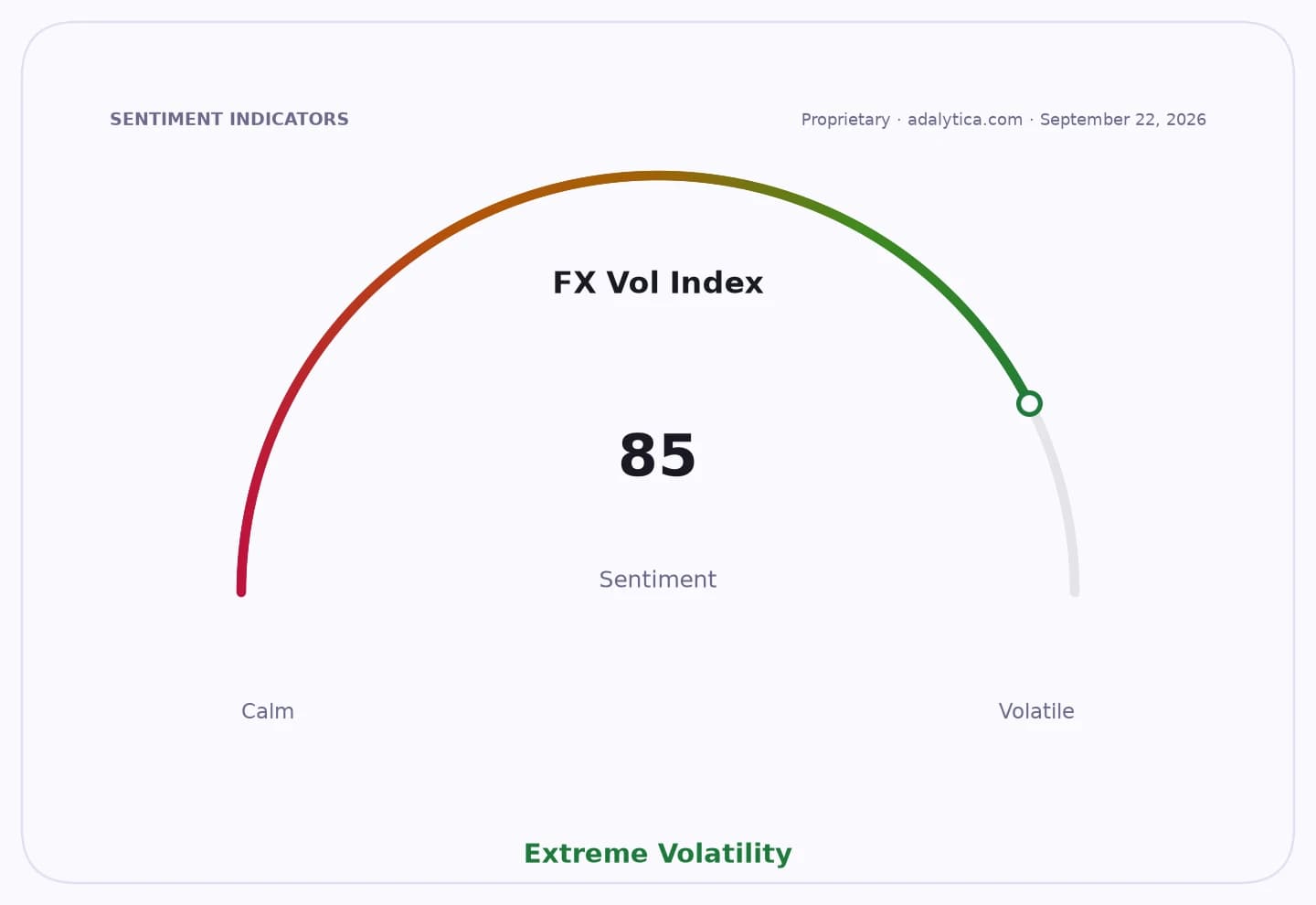
Sentiment IndicatorsⓘProprietary · adalytica.com · September 22, 2026
This is a snapshot — live sentiment, awareness and momentum for 130+ markets update continuously in the dashboard.Open AlphaPulse
That message is aimed squarely at the economic trade-offs underpinning Milei’s program. The protesters denounced company closures, job losses, cuts to hospitals and universities, and reductions in disability and social programs, arguing that the fiscal squeeze is being financed through lower household incomes and weaker public provision. They also attacked provincial governors and union leaders, accusing them of tolerating or enabling the government’s agenda.
For investors, the significance lies in the risk that social resistance to austerity becomes more organized and more disruptive just as Milei relies on political discipline to sustain budget consolidation, deregulation and eventual market confidence. Street mobilization alone does not derail policy, but it can complicate reform sequencing, raise the odds of labor stoppages, and force the government into a more defensive posture on pensions, wages and public spending.
Geopolitical Risk — 30-day sentimentadalytica.com
Explore this data interactively — full history, time series and cross-market comparisons.Open AlphaPulse
The rally was led by the PTS, with Myriam Bregman and Nicolás del Caño among the most visible figures, and drew support from human rights groups, pensioner organizations and class-struggle unions. It also drew artists and public figures who amplified the call on social media, helping broaden the protest’s reach beyond traditional far-left circles. Organizers said the demonstration had replicas in 60 cities, underscoring that the backlash is no longer confined to Buenos Aires.
The political message was sharpened by the demand for a national strike. In Argentina, the CGT remains one of the few institutions with the capacity to turn social discontent into a macroeconomic event by interrupting transport, logistics and services. If labor pressure intensifies, it could complicate the government’s attempt to contain inflation, preserve fiscal surpluses and keep market confidence intact.
The broader narrative is that Milei’s economic overhaul is entering a more politically sensitive phase. Supporters see the protests as the predictable reaction to a painful adjustment needed to restore credibility. Critics see a government pushing the burden of stabilization onto workers, retirees and public institutions. Either way, the street response suggests the contest over Argentina’s reform path is widening, and the next test will be whether the opposition can turn protest energy into an actual shutdown of the economy.
| Entity | Gains | Losses |
|---|---|---|
| Milei government | ▲Reform mandate if protests fade | ▼Political room if strikes spread |
| CGT unions | ▲Bargaining power | ▼Credibility if passive |
| Left parties | ▲Visibility and mobilization | ▼Limited reach beyond base |
| Workers and pensioners | ▲Protest platform | ▼Lost income from disruption |