When people get busier, they tend to spend more on convenience, and that behavioral shift is increasingly visible in the businesses that sell back time.
Amazon, Uber, DoorDash and busy consumer spending
The underlying economics are straightforward: time pressure makes consumers place a higher value on speed, ease and reduced effort, even when the price is higher. That dynamic helps explain why delivery platforms, ride-hailing services and quick-commerce businesses can keep growing even in periods when households say they are watching spending more closely. It also helps show why “busy spending” is less a question of discipline than of utility — consumers are buying time, not just food, transport or laundry.
A 2026 study published in the British Journal of Psychology, based on four surveys of 831 people, found that when respondents felt short of time they were more likely to prioritize convenience and less attentive to downside risk. In practice, that means a 30-minute saved can feel worth a meaningful premium. A restaurant meal becomes a delivery order; a short trip becomes a ride-hail booking; and a chore becomes a paid service. Each decision looks small, but repeated across a month it can materially lift discretionary outflows.
That matters because convenience spending is structurally sticky. It does not always feel like consumption in the moment, which is part of the appeal. A 50,000 dong food-delivery fee or a modest ride charge rarely registers as a “big purchase,” yet they are exactly the sort of incremental expenses that can push household budgets higher. The behavioral research also aligns with earlier findings from Harvard Business School and the University of British Columbia that buying back time can raise life satisfaction, which means these services are not simply indulgences; they are often rational trade-offs for consumers under pressure.
For investors, the story is that time scarcity can be as important as income growth in driving spending patterns. Amazon, Uber and DoorDash all sit in the path of this demand for convenience, and their share prices have reflected how quickly sentiment can swing around that thesis. Amazon closed at $253.71 on Sept. 18, above its 200-day moving average of $240.30, while Uber ended at $70.50, still below its 200-day average of $75.67. DoorDash, which had climbed as high as $236.74 in late August, fell to $192.94, well below its 50-day average of $205.38, showing how quickly the market can reassess growth expectations even when the convenience trade remains intact.
The broader investment implication is that “busy consumer” demand can support revenue, but it does not guarantee multiple expansion. These businesses still face the usual constraints: competitive intensity, promotion pressure and the risk that consumers eventually trade down if disposable income weakens. Uber has already warned that lower-income conditions can push riders toward lower-priced products, while DoorDash has highlighted the need to spend more on marketing and promotions to defend its position. In other words, convenience demand is real, but it is not free from margin pressure.
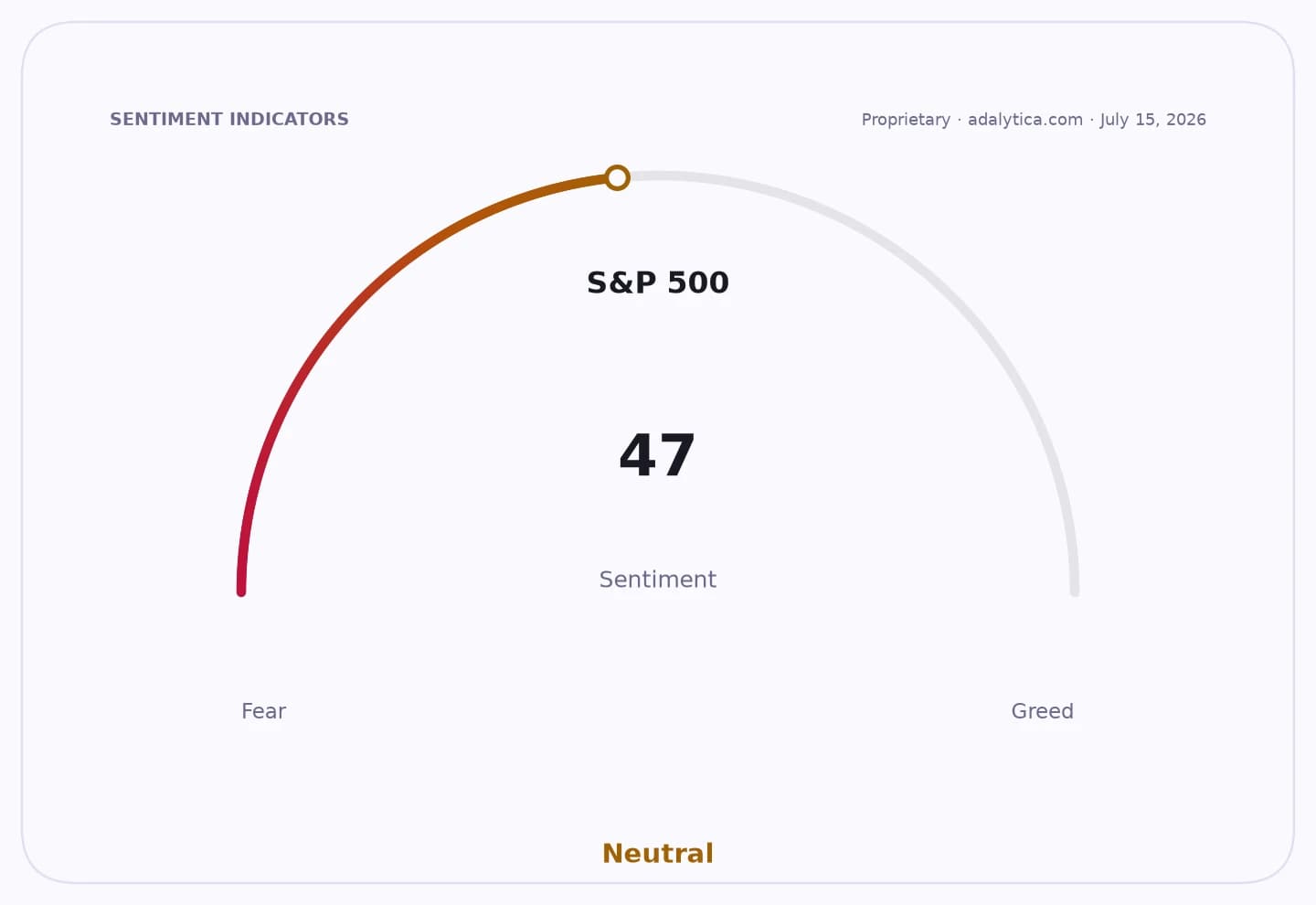
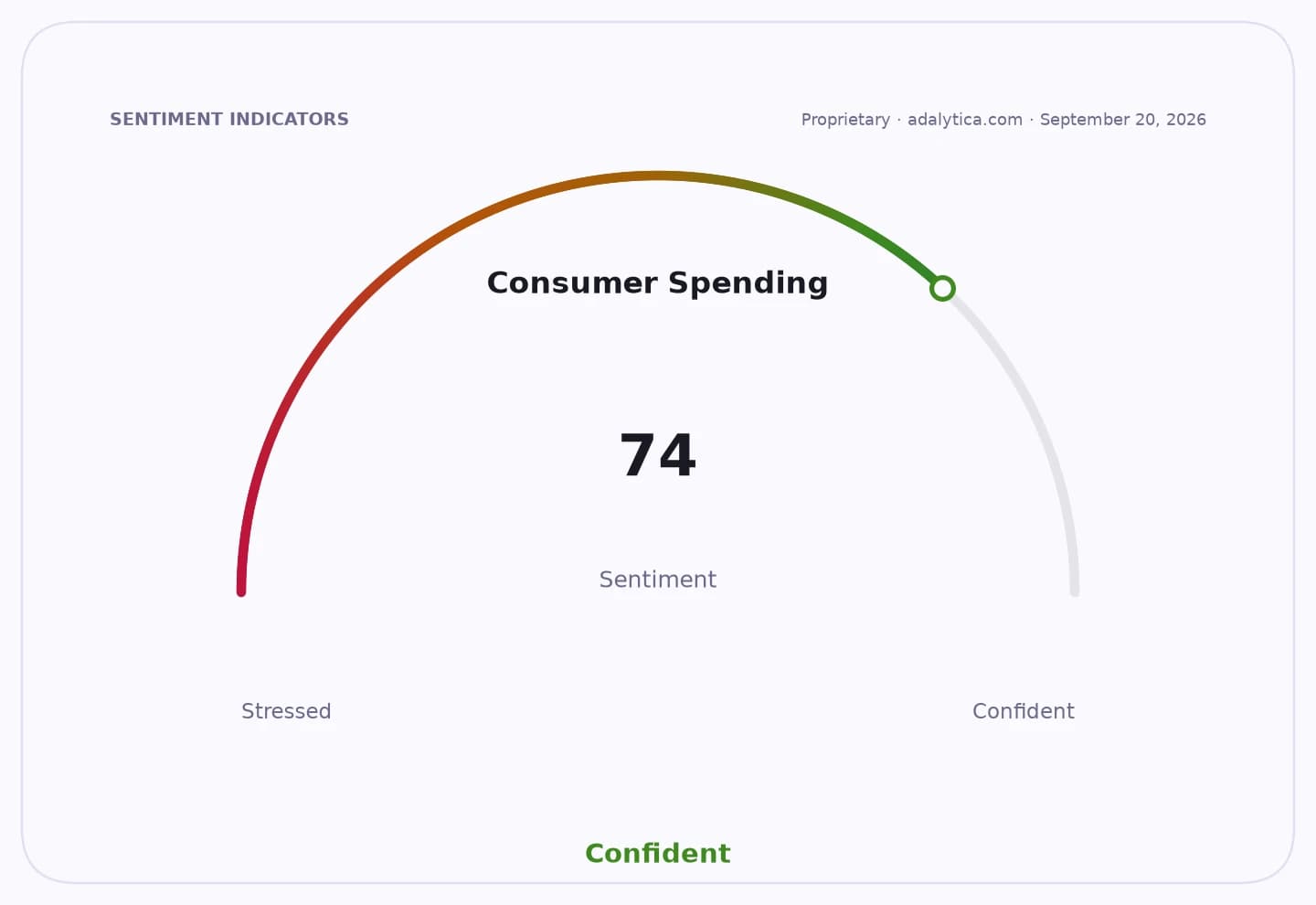
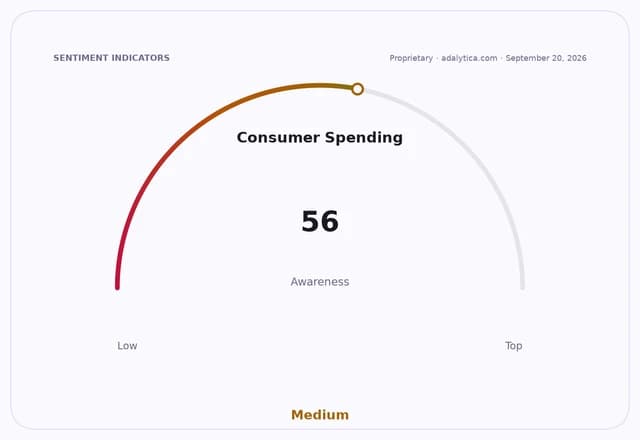
Adalytica’s consumer spending sentiment snapshot underscores that tension. The model shows a reading of 74, labeled “Greed,” suggesting consumers remain willing to spend, but the S&P 500 trade-signal snapshot sits at 27, or “Fear,” indicating investors are less convinced the environment is stable. That divergence matters: households may continue paying for convenience while markets remain wary of whether that spending can be converted into durable profits.
The practical conclusion for consumers is also the central lesson for investors: being busy is not inherently expensive, but letting busyness set spending habits is. For companies selling time-saving services, that creates a large addressable market. For investors, it creates a growth theme with a built-in caution flag — demand can be resilient even as budgets get stretched and margins remain vulnerable.
| Entity | Gains | Losses |
|---|---|---|
| Convenience platforms | ▲Higher order frequency | ▼Margin pressure |
| Busy consumers | ▲Saved time | ▼Higher monthly outlays |
| Uber / DoorDash / Amazon | ▲Demand for speed | ▼Trade-down risk |
| Budget-conscious households | ▲Occasional efficiency | ▼Overspending drift |