AI is speeding up work, but it is also stripping away one of the most valuable assets young engineers need: the habit of thinking through problems on their own.
AI training and skills risks for tech teams
That warning, from IIT Delhi professor Mausam, goes to the heart of a bigger economic shift now running through technology companies, universities and corporate training rooms. The issue is no longer whether AI can help software teams move faster. It can. The real question is whether a generation that grows up leaning on AI tools will develop enough depth to debug systems, frame problems and make good decisions when the machine gets it wrong.
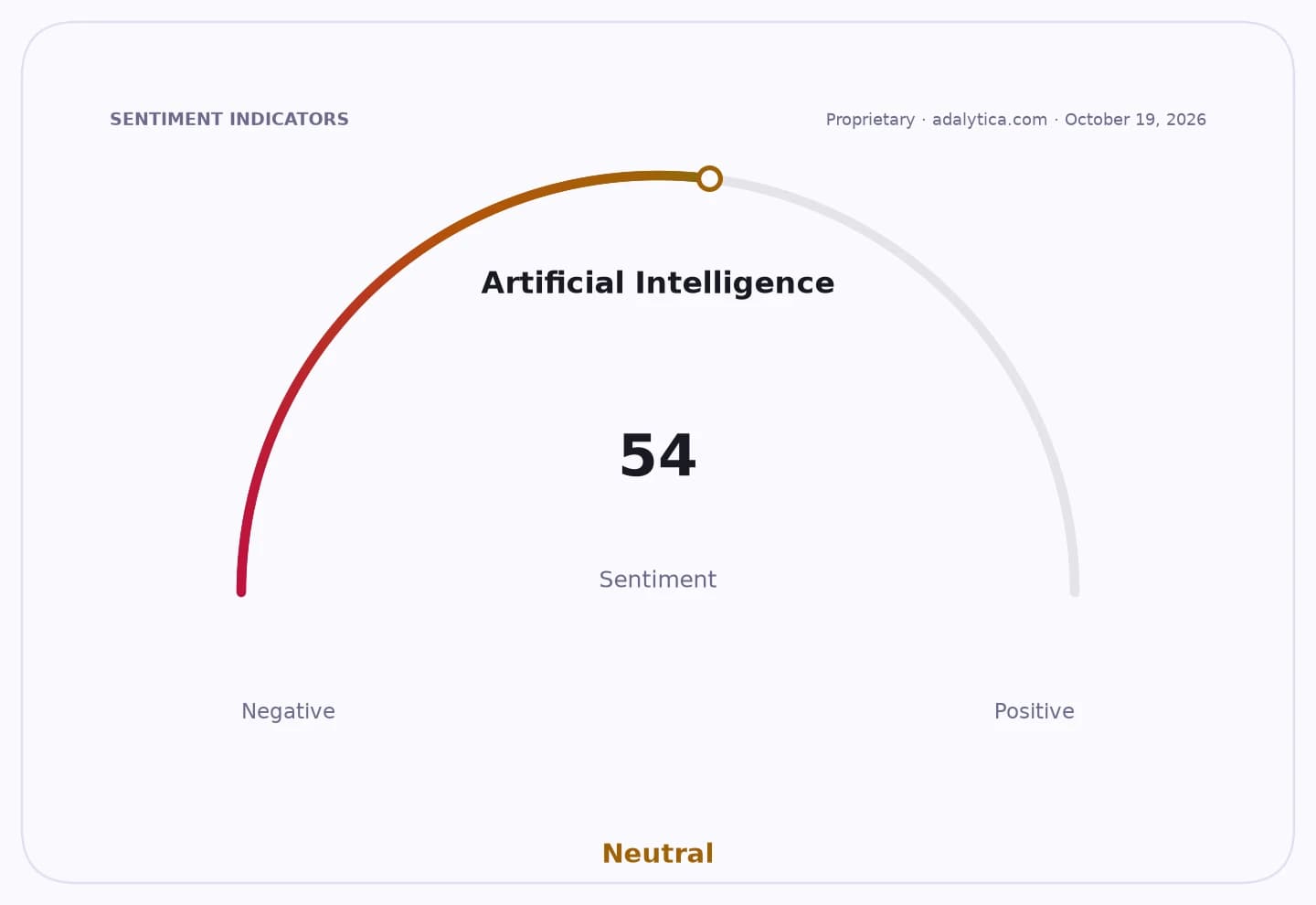
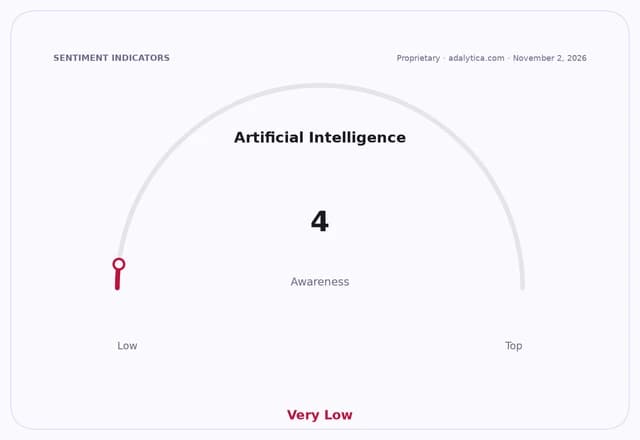
Sentiment Indicators
For investors, that matters because the AI boom is not just a chip story or a cloud story. It is also a productivity story, and productivity gains only compound if workers understand the work they are automating. If junior engineers stop building fundamentals, companies could end up with faster output in the short term but weaker teams, more rework and a thinner talent pipeline over time.
Mausam said this is the first year he has seen IIT students do project work without really thinking, relying entirely on AI and then unable to explain failures when they happen. That is a warning sign for employers that are racing to embed AI across engineering, operations and support functions. As he put it, older workers who learned the basics first know how to use AI as an augmenter. Younger workers who start with AI may get more done quickly, but learn less in the process.
That distinction matters because the workplace itself is being reorganized around a “hybrid workforce,” in the words of Harrick Vin, chief technology officer at TCS. Rather than replacing people outright, AI is changing job design: software engineering roles that had been split into front-end, back-end, database, cloud and security work are being pushed back toward broader full-stack roles, while technology operations are also being consolidated. In other words, AI is making breadth more important, not less.
But breadth without fundamentals is a fragile advantage. Vin said people are shifting from being doers of work to collaborators with machines, reviewers of machine output and owners of critical thinking and creativity. That shift sounds efficient, and it is, but it also raises the bar for judgment. The more companies automate routine tasks, the more valuable it becomes to have employees who can decide what to do, when to do it and why.
That is where corporate training becomes strategically important. Priya Cherian, head of HR at Walmart Global Tech, argued that companies should stop trying to predict every future role and instead build organizations that adapt continuously. Walmart’s 5,000 associates in India recently went through an AI accelerator program with IIT Kharagpur, but the real test was whether they could apply what they learned to actual business problems. That is the kind of training that sticks, and it is likely the kind of training companies will need if AI is to lift productivity without hollowing out judgment.
The investment angle is straightforward. AI leaders such as Nvidia, Microsoft and Alphabet still stand to benefit from rising enterprise adoption, but the next leg of value creation depends on whether companies can turn AI into durable operating leverage rather than a temporary speed boost. Microsoft and Alphabet both flag AI as central to future growth in their filings, while Nvidia remains at the center of the infrastructure buildout. Yet the long-term winners will not just sell the tools. They will help customers use them well.
There is also a risk investors should not ignore: if AI-trained workers become too dependent on generated answers, companies may face hidden costs in quality control, supervision and retraining. That would not derail the AI cycle, but it could slow the return on all the spending now going into chips, cloud and software. The better-managed enterprises will be the ones that combine AI with strong fundamentals, psychological safety and performance systems that reward outcomes instead of merely rewarding tool use.
For long-term investors, the message is encouraging, not bearish. AI is still a historic technology shift, but the real compounding comes from human judgment working with machines, not from automation alone. That means the best businesses will keep investing in people as aggressively as they invest in models and infrastructure. Watch for the companies that can train workers, redesign roles and preserve critical thinking while scaling AI. Those are the ones most likely to turn today’s hype into lasting earnings power.
| Entity | Gains | Losses |
|---|---|---|
| Companies that train workers well | ▲Higher productivity, fewer errors | ▼Higher upskilling costs |
| AI leaders like Nvidia, Microsoft, Alphabet | ▲More enterprise demand | ▼Scrutiny over ROI and usage quality |
| Young engineers leaning on AI alone | ▲Faster output now | ▼Weaker fundamentals later |
| Employers ignoring continuous adaptation | ▲Short-term labor savings | ▼Rework, supervision, talent gaps |