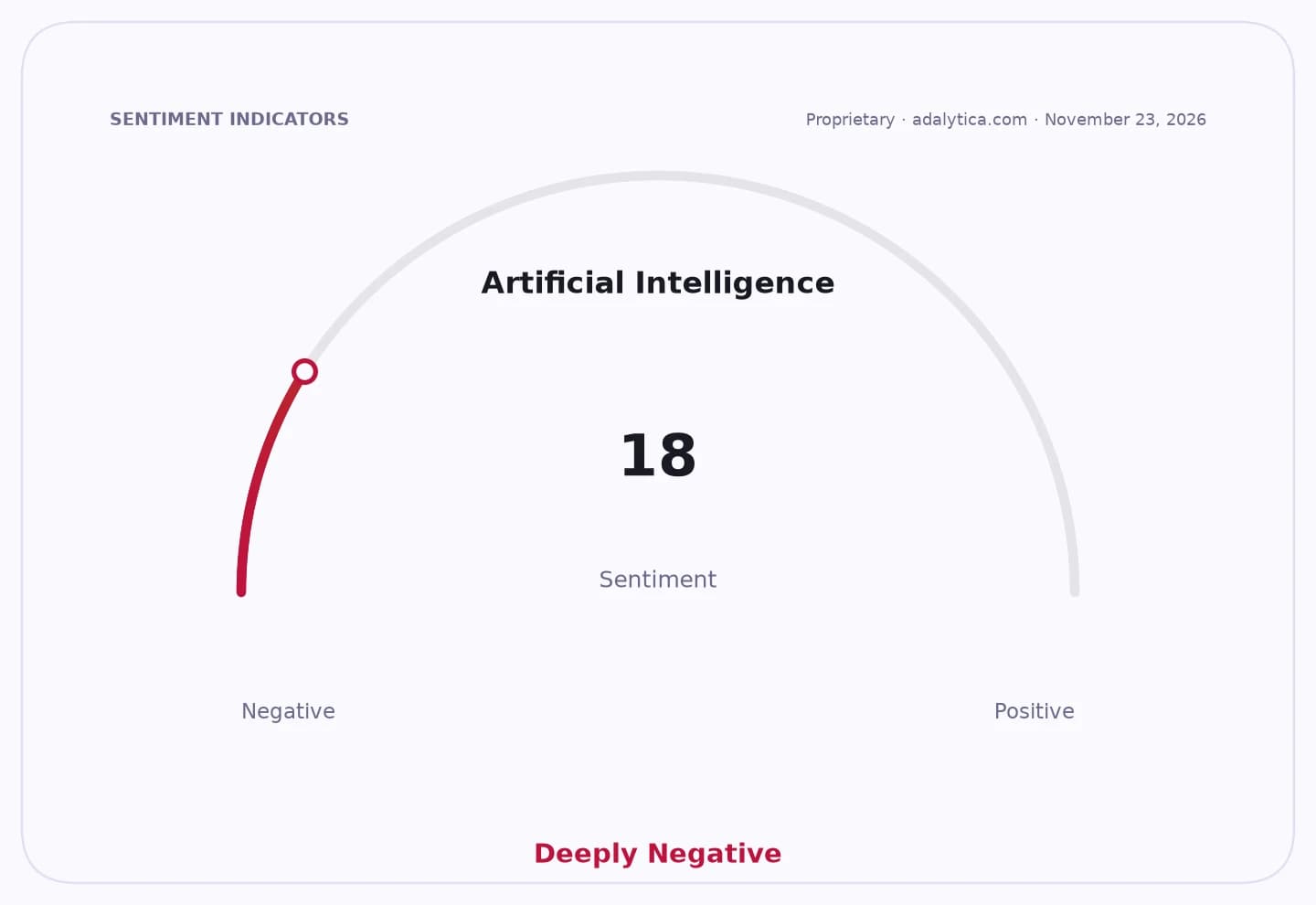
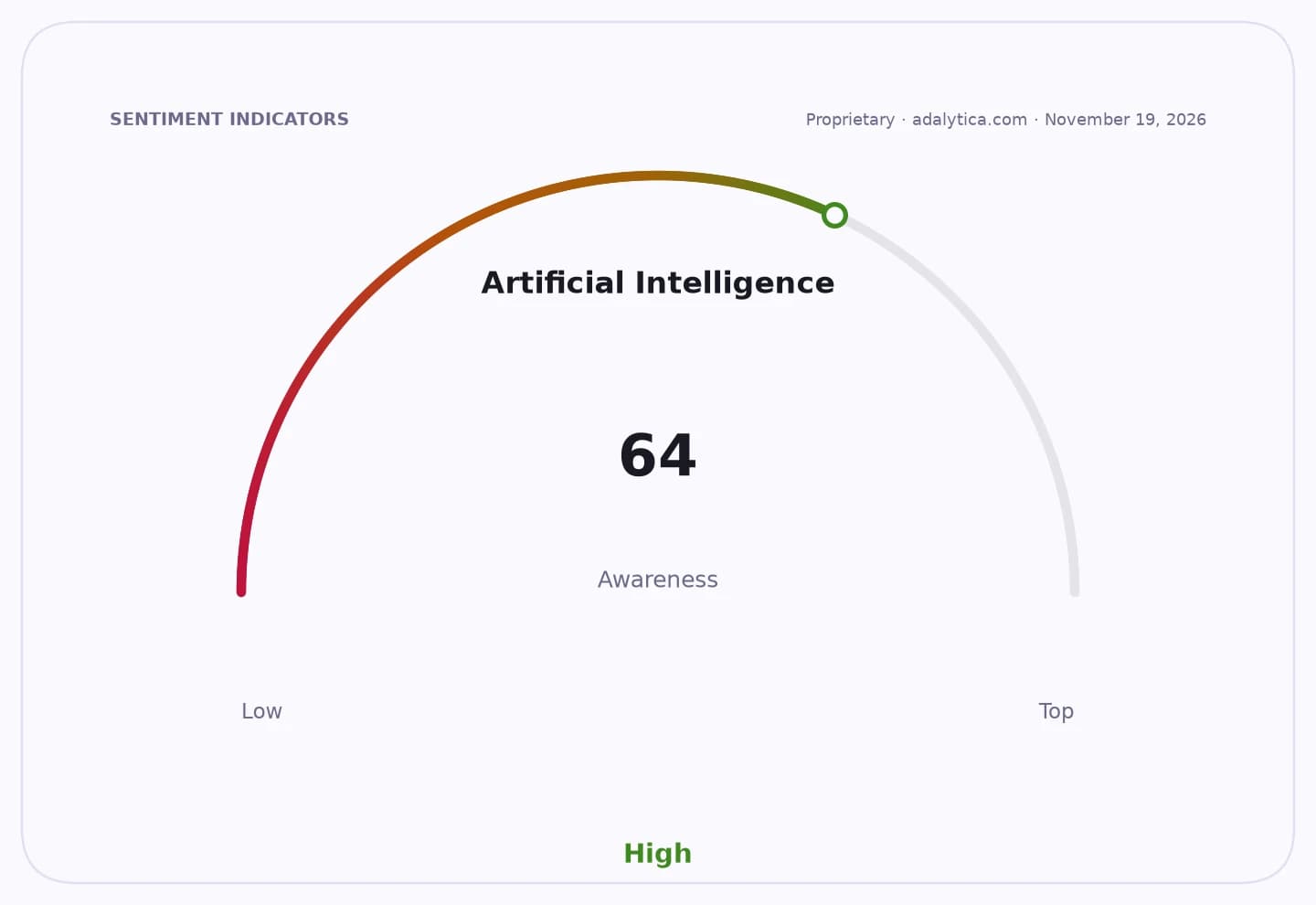
A new study suggests the biggest risk in the AI marketing boom is not technical failure but a trust gap: consumers increasingly say they do not want brands to lead with artificial intelligence in their communications, even as companies lean harder on it to reach them.
AI marketing trust gap hits consumer brands
That matters because marketing only works when people believe the message. If shoppers tune out anything that sounds machine-made, companies that overuse AI in brand copy, customer outreach or content creation could weaken conversion rates, damage loyalty and waste advertising spend. For long-term investors, that turns AI from a simple efficiency story into a branding and economics question.
Sentiment Indicators
WordPress VIP’s survey of 2,000 people found that 60% of consumers find references to AI in marketing messages off-putting, while 86% said they trust original sources more than automatically generated content. The study also found that 74% think the digital world feels less authentic than it did a decade ago, underscoring a broader backlash against synthetic-feeling content.
The tension is clear: businesses are rapidly adopting AI tools, but consumers are not necessarily rewarding that adoption. The survey found that 60% of organizations reported more traffic from AI-based platforms, a sign that companies are seeing the technology gain reach even as end users remain skeptical about the content itself.
For investors, that divide matters across the digital economy. Alphabet, Meta and Amazon all depend on advertising and commerce ecosystems where trust, relevance and engagement determine pricing power. If AI makes brands more efficient but less credible, the winners will be companies that use the technology quietly in the background, not those that advertise it as a feature. That also helps explain why technology groups keep emphasizing accuracy tools, red-teaming and safer deployment of AI systems: trust is becoming part of the product.
The longer-term takeaway is simple. AI is still a powerful competitive tool, but in consumer-facing businesses, authenticity may prove just as valuable as automation. Brands that use AI to improve speed, targeting and service without sounding robotic are likely to keep their edge. For investors, that makes disciplined, brand-aware AI adoption worth watching — and the companies that balance both may deserve the premium.
| Entity | Gains | Losses |
|---|---|---|
| Brands using AI quietly | ▲Efficiency and scale | ▼Less need for disclosure-led marketing |
| Brands leading with AI | ▲Faster content production | ▼Consumer trust and engagement |
| Alphabet, Meta, Amazon | ▲Better ad and commerce tools | ▼Risk of weaker brand credibility if overused |
| Consumers | ▲More relevant automation | ▼More synthetic-feeling communication |