The U.S. housing trade is once again under pressure, with the homebuilder ETF XHB falling to 96.60 as rate expectations, weak sentiment and affordability strain demand.
XHB Falls Below 50-Day Average as Housing Slows
Housing (Real Estate)
That matters because housing is one of the most rate-sensitive parts of the economy, and the latest move suggests buyers are still being squeezed even as Treasury yields stabilize. XHB’s decline comes alongside a sharp deterioration in sentiment gauges tied to the housing market, while macro data still show unemployment near 4.1% to 4.2% and benchmark home prices at record highs, underscoring how expensive ownership remains despite a softer economy.
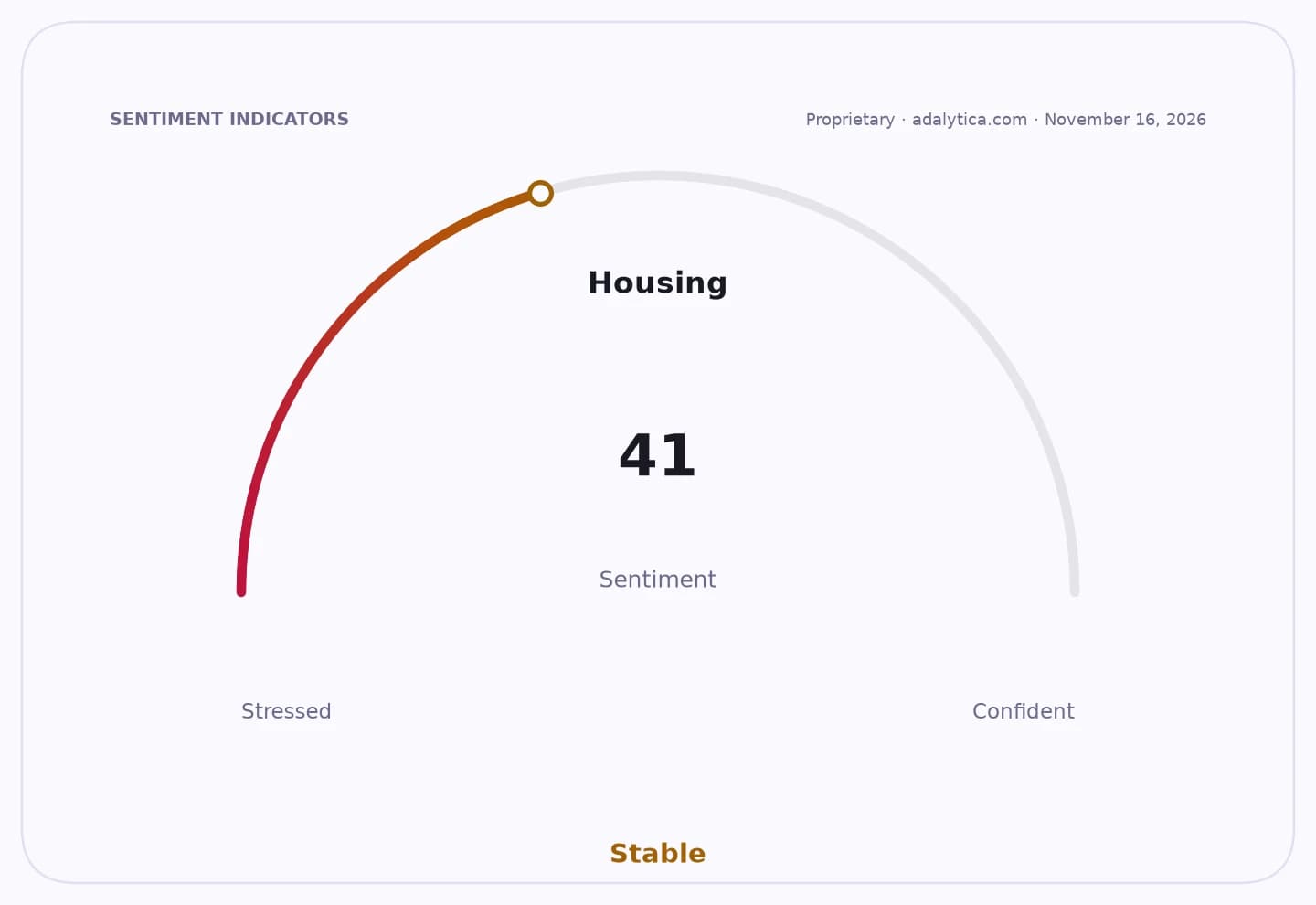
Sentiment Indicators
XHB has now slipped back below its 50-day moving average of 98.38 and is hovering just under its 200-day average of 103.80, a sign that investors are treating the group defensively again after an earlier rebound. The ETF’s relative strength index has fallen to 37.2, close to oversold territory, while its MACD has flattened near zero after turning positive earlier in the year. In other words, the technical picture matches the fundamental one: momentum has faded and traders are waiting for a clearer catalyst.
The broader backdrop is still mixed. The U.S. unemployment rate at 4.1% in October points to a labour market that is cooling but not collapsing, which keeps mortgage demand from seizing up entirely. But home prices, tracked by the S&P CoreLogic Case-Shiller index, remain near historic highs at 336.741 in August, up sharply from pre-pandemic levels. That leaves affordability stretched even before financing costs are layered on top. A separate housing-and-rent inflation gauge from Adalytica shows sentiment in “Greed” territory at 79, reflecting persistent cost pressure rather than relief for buyers.
For builders, that combination is awkward. Data from sector names and filings show elevated competitive conditions, with price cuts, mortgage-rate buydowns and other incentives still being used to keep absorption moving. Higher resale inventory in some markets is giving buyers more choices, which may help volume but tends to cap pricing power. That is why investors have been rotating cautiously between homebuilders, mortgage-related names and broader cyclicals as they look for evidence that lower rates can finally unlock demand.
The bull case is that the recent pullback in XHB leaves room for a recovery if mortgage rates ease further and builders can keep supporting sales without large margin damage. The bear case is that if rates stay elevated and affordability remains stretched, the group will keep trading as a value trap: volumes may stabilize, but profits and valuations will stay under pressure.
For now, the message from the housing tape is clear: investors are not yet willing to pay up for a sector that still depends on lower borrowing costs to regain traction.
| Entity | Gains | Losses |
|---|---|---|
| Homebuyers | ▲more inventory choices | ▼continued affordability pressure |
| Homebuilders | ▲potential volume support | ▼weaker pricing power |
| Rate-sensitive investors | ▲possible rebound if yields fall | ▼near-term momentum losses |
| Existing sellers | ▲may benefit from scarce supply | ▼face tougher competition from new homes |