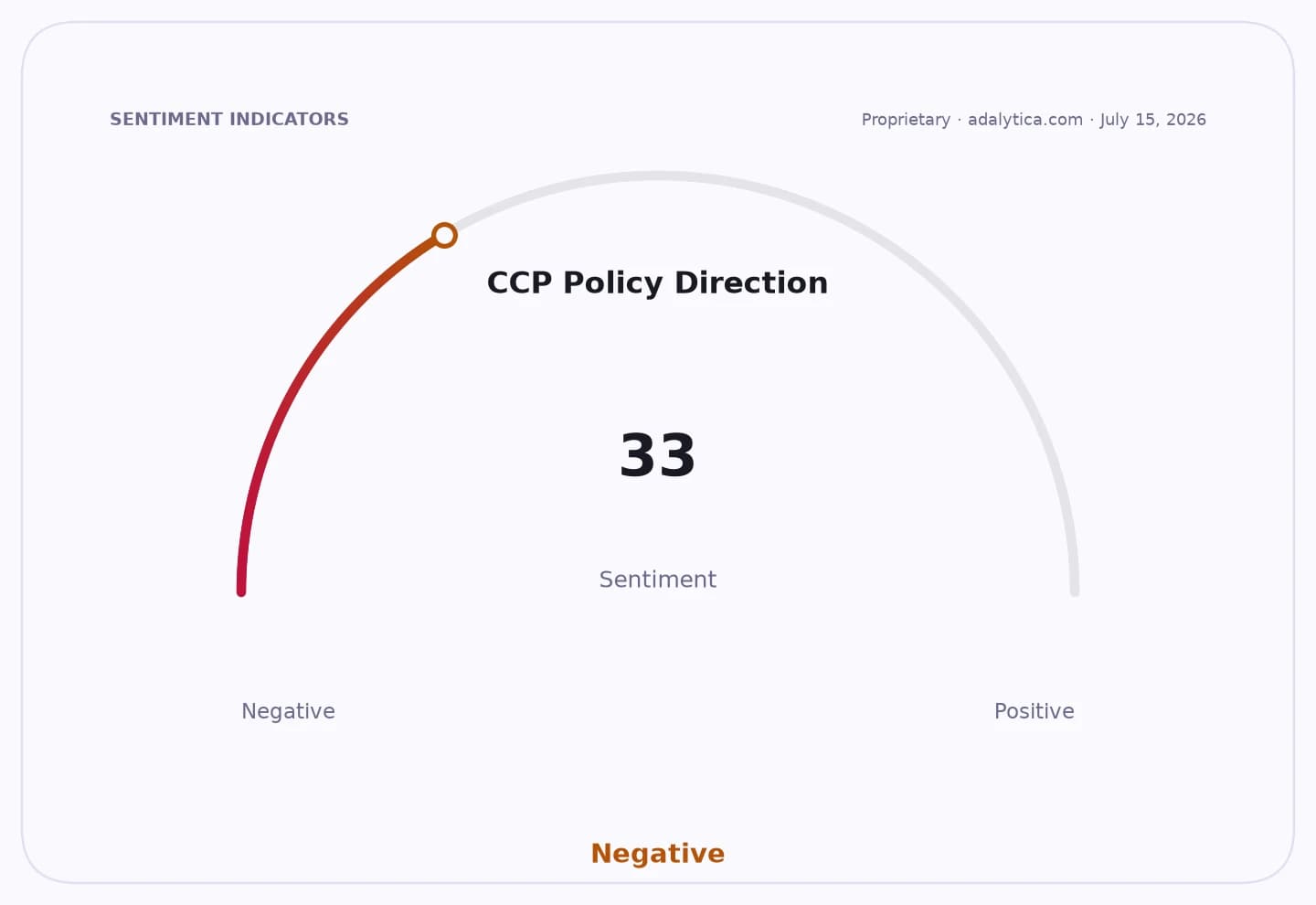
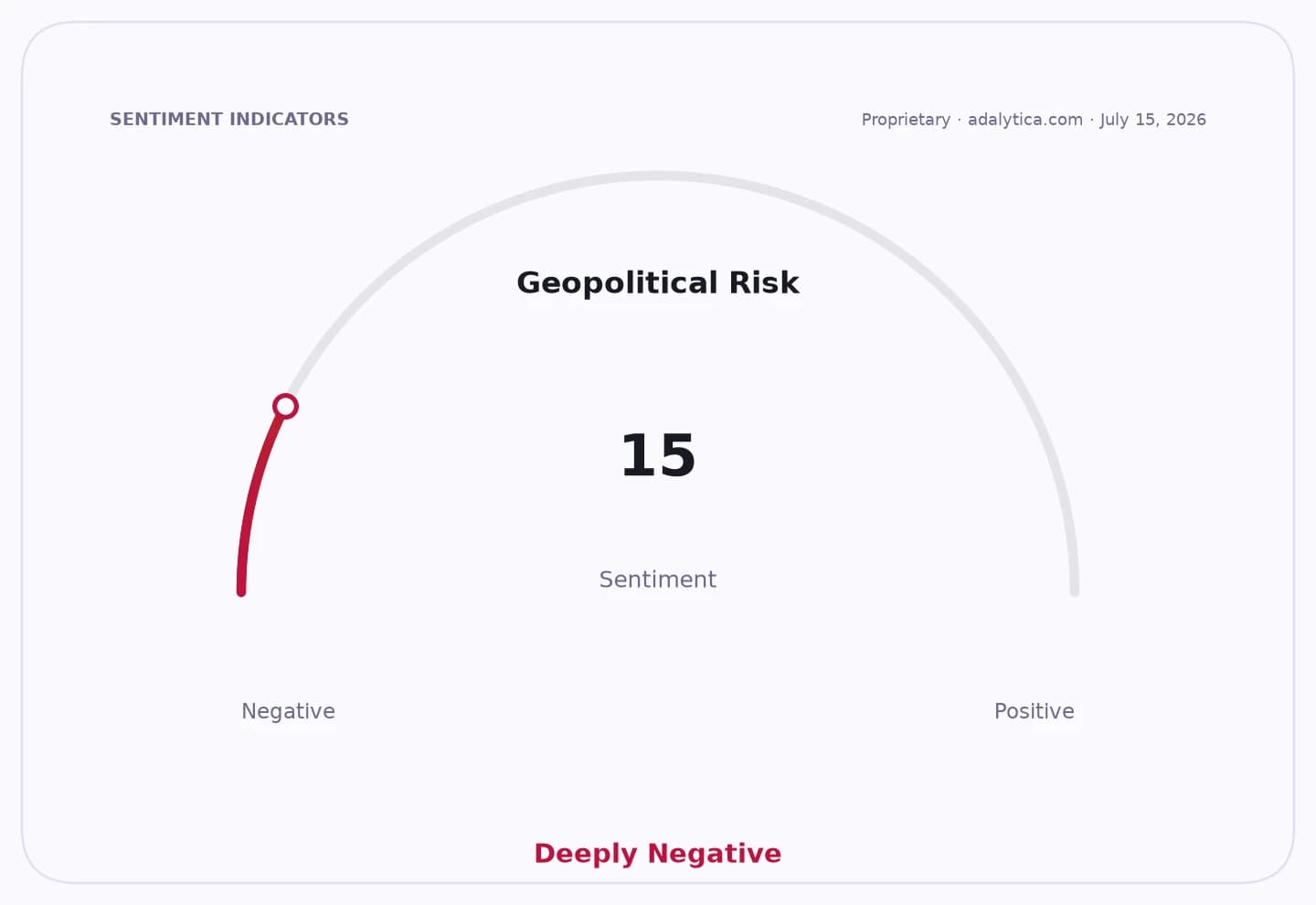
The White House barred Politico, CNN and MS NOW reporters from the presidential complex Saturday, escalating President Donald Trump’s fight with the press into a direct access fight that raises fresh First Amendment risks and could trigger more legal and political blowback.
White House Bars Politico, CNN, MS NOW Reporters

Politico said its White House reporter Cheyenne Haslett was denied entry and had her badge confiscated after Trump said on social media that he was “banning” the three outlets because of what he called “fake news.” CNN’s Betsy Klein and MS NOW’s Akayla Gardner were also turned away, with both networks saying their badges had been deactivated.
Sentiment IndicatorsⓘProprietary · adalytica.com · September 22, 2026
This is a snapshot — live sentiment, awareness and momentum for 130+ markets update continuously in the dashboard.Open AlphaPulse
The move matters economically because it sharpens the confrontation between the administration and the media industry at a moment when access, licensing and regulatory leverage are already under pressure. Trump has increasingly used administrative tools and court fights against outlets he dislikes, and the latest ban broadens the conflict beyond one-off disputes into a recurring Washington risk for news organizations that depend on White House access for traffic, subscription growth and television viewership.
For investors, the key issue is not just headline noise. News businesses tied to political coverage can see spikes in audience attention when access fights intensify, but they also face operational risk if the White House begins narrowing pool access, slowing reporting or selectively excluding reporters. The dispute also adds legal uncertainty for media groups already navigating Trump-era actions involving the AP, The New York Times, The Wall Street Journal, the BBC and ABC.
Trump said Friday that he was barring the three outlets over reporting he disliked, then repeated in the Oval Office that their coverage was “fake news.” The administration had already blocked AP reporters from the Oval Office, Air Force One and other events last year after the outlet refused to adopt Trump’s preferred name change for the Gulf of Mexico, a case that is still in court.
Media law experts called the latest move a severe test of press freedom, while CNN described it as a direct threat and MS NOW said it would take “any and all steps necessary” to defend its rights. The broader narrative is a White House increasingly willing to turn editorial disputes into access punishment, putting the news industry, press-freedom advocates and the courts on a collision course as Trump’s second term grows more aggressive.
The next catalyst is likely to be whether the affected outlets sue, and whether the White House widens the ban or backs off under legal pressure.
| Entity | Gains | Losses |
|---|---|---|
| Trump White House | ▲Leverage over coverage | ▼Press-freedom scrutiny |
| CNN, MS NOW, Politico | ▲Audience attention | ▼White House access |
| Media litigants | ▲Legal precedent if they win | ▼Operational uncertainty |
| White House press corps | ▲Clearer challenge lines | ▼Broader access risk |