Vietnam’s property lobby HoREA has urged lawmakers to create a dedicated housing policy for state officials, civil servants and public employees, a move that would formalize access to homes for a workforce the group says is being left behind by a shortage of social housing and long commutes.
Vietnam Housing Law Targets Civil Servant Housing
The proposal matters because it would push housing policy beyond the current broad social-housing framework and toward a more targeted scheme for a politically important segment of the labor force. HoREA argues that many civil servants earn modest incomes, often face cumbersome application procedures for social housing and, in practice, cannot afford the time needed to compete for limited units.
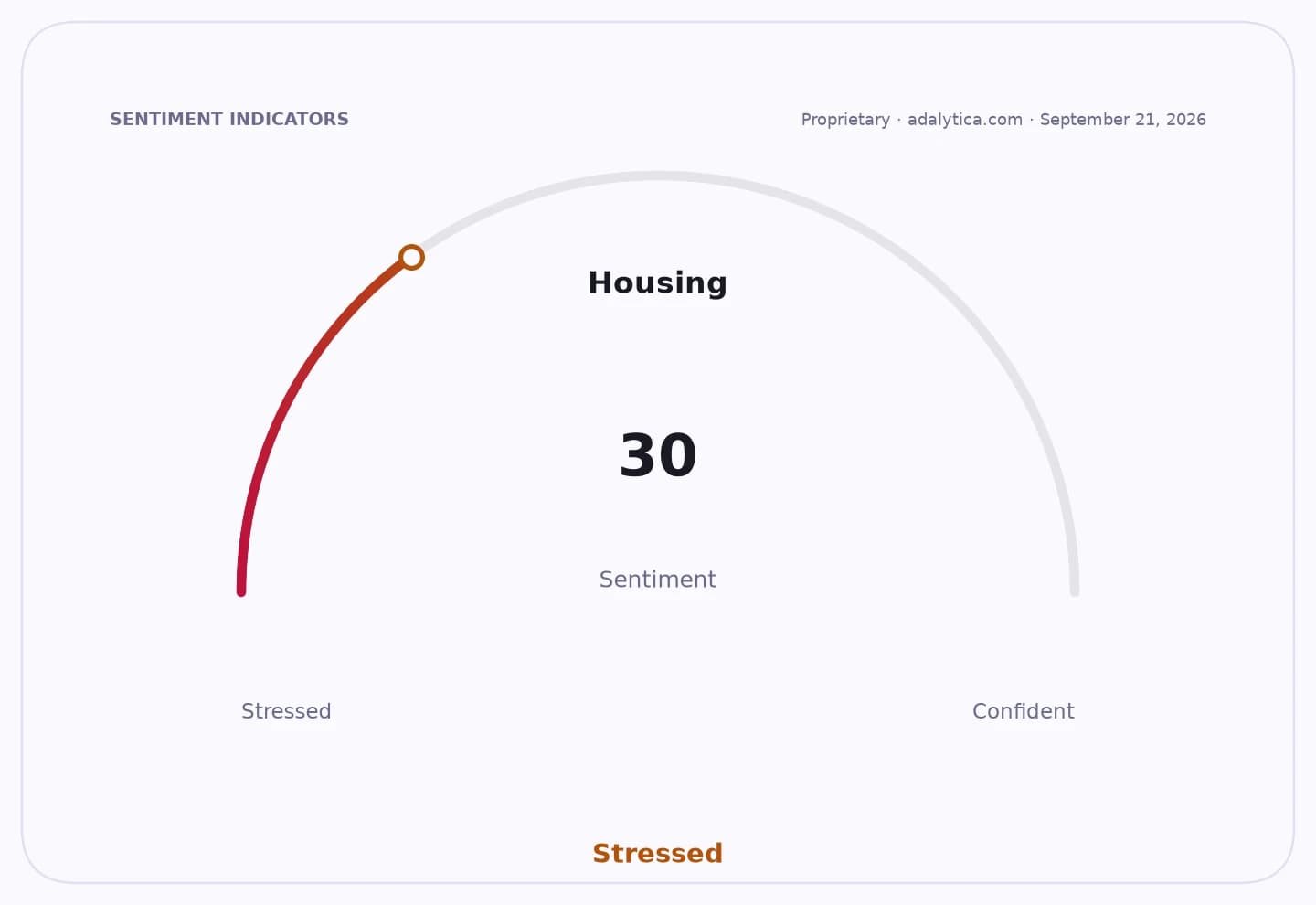
Sentiment IndicatorsⓘProprietary · adalytica.com · September 21, 2026
This is a snapshot — live sentiment, awareness and momentum for 130+ markets update continuously in the dashboard.Open AlphaPulse
That is not just a social-welfare issue. For Vietnam’s public sector, housing access affects recruitment, retention and productivity, especially as local governments are being reorganized and merged. HoREA says the need is most acute for workers living 15 to 20 kilometers from their workplaces, or spending 1 to 1.5 hours commuting each day. In a country trying to improve administrative efficiency and support urban expansion, that kind of daily time loss translates into weaker labor efficiency and higher friction for public services.
The proposal would add a new section to the draft Housing Law titled “Housing for state officials, civil servants and public employees,” with a new article setting out that the government would define beneficiaries, eligibility, priority order and procedures. In other words, the association is not asking for an immediate subsidy program, but for a legal basis that would let the state design a dedicated allocation channel later.
For investors, the significance is twofold. First, the proposal underscores continued policy support for Vietnam’s housing sector, particularly the social-housing and urban-affordable segments, which have been constrained by limited supply. Any move to ring-fence demand from public employees could improve project visibility for developers and lenders if it is paired with clearer funding and implementation rules. Second, it reinforces the view that housing remains a policy lever for labor stability, not just a real-estate issue, which increases the odds that authorities will keep intervening in supply, land use and allocation rules.
The bullish case is that a narrower, better-defined demand pool could help accelerate social-housing deployment and reduce bottlenecks in public-sector workforce housing. The bearish case is that another special-category policy could add complexity without solving the core constraint: too few units. If supply does not rise, a new priority list may simply redistribute scarcity rather than ease it.
For the market, that means the key issue is not the proposal itself but whether it is matched by land, financing and approval fast-tracking. HoREA’s intervention points to a broader policy trend in Vietnam: housing is increasingly being treated as infrastructure for labor mobility and administrative reform. The next catalyst will be whether the Housing Law draft incorporates the new category, and whether Hanoi and major cities can turn that into actual projects rather than another layer of eligibility rules.
| Entity | Gains | Losses |
|---|---|---|
| Civil servants/public employees | ▲Better housing access | ▼Longer wait times if supply stays tight |
| Social-housing developers | ▲Clearer demand channel | ▼More regulatory complexity |
| State employers/local governments | ▲Better staff retention | ▼Higher policy implementation burden |
| Private buyers competing for units | ▲Fewer qualified competitors | ▼Less access to scarce stock |